
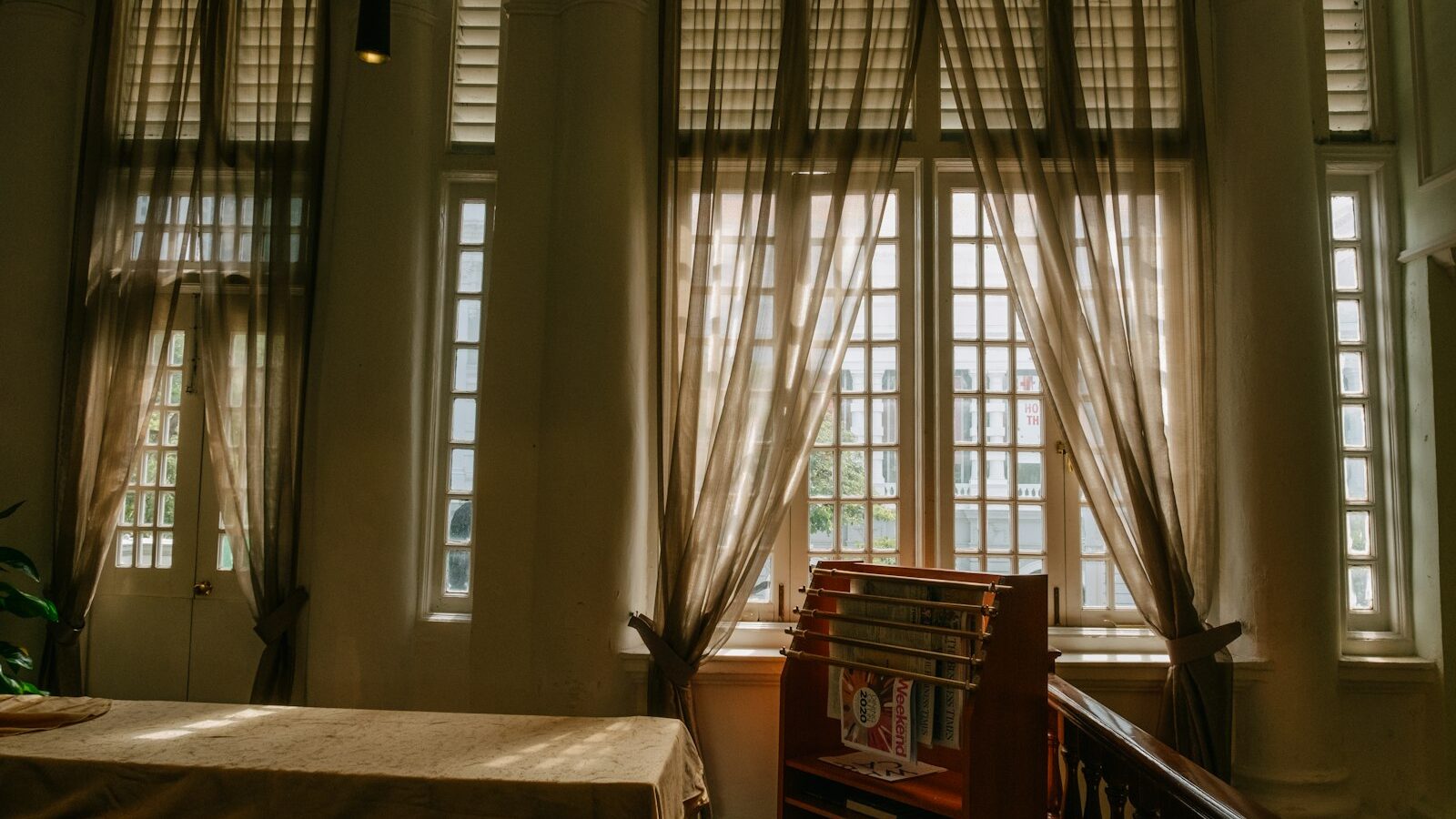
Window treatments are one of the last things people plan and one of the first things visitors notice. They control the fierce afternoon sun, give you privacy from the block opposite, and soften a room that otherwise echoes with hard floors and bare walls. Choosing curtains and blinds singapore homes need is less about taste alone and more about how a specific window faces, how much light you want, and how easy the fabric is to keep clean in a humid climate. This guide walks through the main options, what they cost to consider, and how to measure before you order.
Curtains, Blinds, or Both
The first decision is the type of treatment. Curtains are fabric panels that hang from a track or rod and draw sideways. Blinds are firmer coverings that raise, lower, or tilt, usually mounted inside or just above the window recess. Neither is strictly better. They suit different windows and different rooms.
- Curtains soften a room, absorb sound, and suit bedrooms and living rooms where you want warmth and a finished look.
- Blinds are neat and space saving, ideal for kitchens, studies, bay windows, and anywhere a bulky fabric stack would get in the way.
Many homes combine the two. A common pairing is a sheer curtain for daytime privacy layered with a heavier blackout curtain for night, or a roller blind for function with a decorative sheer on top. Layering gives you fine control over light through the day without committing to one look.
Understanding Fabric and Light Control
How much light a treatment blocks is the property most people care about, especially in a west facing bedroom that bakes in the late afternoon. Fabrics are usually described by how they handle light.
- Sheer fabrics filter light and soften glare while keeping the room bright. They give privacy by day but little at night when your lights are on.
- Dimout fabrics block most light and give good privacy, but a faint glow still passes through.
- Blackout fabrics stop nearly all light, which suits bedrooms, nurseries, and anyone who works shifts and sleeps by day.
In our humidity, also weigh how a fabric wears. Heavier lined curtains hold their shape but take longer to dry if they absorb moisture near a bathroom or kitchen. Lighter fabrics and blinds are easier to wipe or air. If anyone in the home has dust sensitivity, blinds and washable panels are simpler to keep clean than deep pleated drapes.
Comparing the Main Window Treatments
The table below sets the popular options side by side so you can match them to each room.
| Type | Best for | Light control | Cleaning |
|---|---|---|---|
| Sheer curtains | Living rooms, daytime privacy | Filters light, low privacy at night | Machine wash, hang dry |
| Blackout curtains | Bedrooms, nurseries | Blocks nearly all light | Machine wash or dry clean |
| Roller blinds | Kitchens, studies, small windows | Dimout or blackout versions available | Wipe down |
| Day and night blinds | Living and dining, flexible light | Alternating sheer and solid bands | Wipe down |
| Venetian blinds | Studies, service areas | Adjustable slats, precise control | Wipe slat by slat |
Day and night blinds, sometimes called zebra blinds, deserve a mention because they suit Singapore living so well. Two layers of alternating sheer and solid fabric slide over each other, letting you shift from full view to full privacy without swapping anything out.
Tracks, Mounts, and Motors
The mechanism matters as much as the fabric. Curtains hang from either an exposed rod, which is decorative, or a recessed track hidden in a ceiling pelmet, which looks cleaner and is common in newer flats. If you want that concealed look, plan the pelmet during renovation because it is hard to add later. This is worth coordinating with your built-in carpentry so the pelmet and cabinetry share one clean line.
Blinds mount inside the recess for a trim finish or outside it to cover the whole opening and block side light. For tall windows, bay windows, or hard to reach spots above a kitchen counter, motorised tracks and blinds are increasingly affordable and can run on a remote or a timer. Consider the following before you commit:
- Power access. Motorised options need a nearby point or a rechargeable battery.
- Weight. Heavy blackout curtains need a sturdier track than light sheers.
- Child safety. Choose cordless or motorised blinds in homes with young children, as looped cords are a strangulation hazard.
- Stack space. Thick curtains bunch up at the sides, so allow wall room beyond the window.
What It Costs to Consider
Window treatments are priced by size, fabric grade, and mechanism, so a whole home order can range widely. Rather than a single figure, budget around these drivers:
- Window count and size. Full height living room windows use far more fabric than a small kitchen opening.
- Fabric grade. Branded blackout and textured fabrics cost more than basic ranges.
- Custom versus ready made. Made to measure fits perfectly but costs more than off the shelf panels you take up yourself.
- Motorisation. Motors and smart control add a clear premium per window.
Get a supplier to quote per window with the fabric and mechanism named, so you can trade down in less used rooms while keeping blackout quality in bedrooms. If you are furnishing a compact home, our guide to small space living in Singapore shows how the right blinds keep a room feeling open.
Measuring and Ordering Without Mistakes
Most ordering errors come from bad measurements. If you use a supplier, ask them to come and measure, because they carry the responsibility if the fit is wrong. If you measure yourself for ready made panels, follow a simple routine:
- Measure the width and drop of the window recess, then decide whether the treatment sits inside or outside it.
- For curtains, add width so the fabric gathers rather than stretches flat, and decide if they end at the sill or fall to the floor.
- Note any obstructions like handles, aircon ledges, or a bay window angle.
- Measure each window separately even if they look identical, as older flats are rarely perfectly square.
Order fabric samples and view them in your actual light, morning and evening, before you commit. A colour that looks calm in a showroom can read very differently against your walls and flooring. Coordinating the tone with your flooring and overall scheme keeps the room feeling pulled together rather than piecemeal.
Explore More
Window treatments are the finishing layer of a renovation, so slot them into the wider plan. Set the scheme with interior design styles in Singapore, match tones to your flooring options, and coordinate pelmets with your built-in carpentry for a seamless finish.