
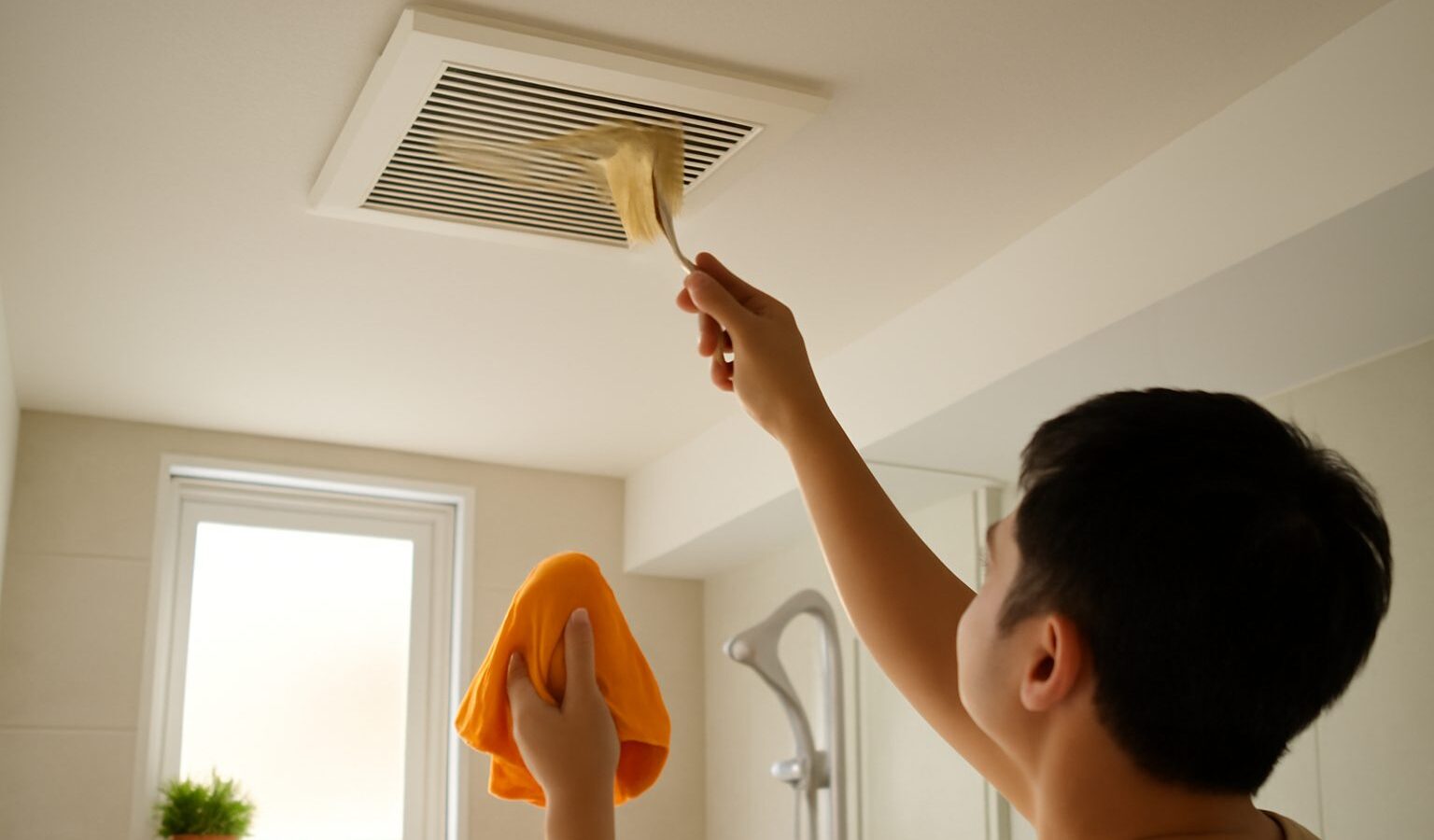
The bathroom exhaust fan is the quiet workhorse that pulls damp air out of your bathroom and helps keep mould at bay. In our humid climate it runs hard, and over time the cover and blades clog with dust that has bonded with moisture into a grey, sticky film. A clogged fan moves far less air, which means more damp, more mould and more of that musty smell. Cleaning a bathroom exhaust fan singapore homes depend on is a simple job you can do yourself, as long as you follow one strict safety rule first.
This guide covers the safe, simple steps a homeowner can do, and it is clear about where you should stop and call a professional.
Safety first: switch off the power
Before you touch anything, turn off the power to the fan at the wall switch. This is not optional. You are going to remove the cover and work near an electrical fitting in a wet room, so the fan must not be able to start while your hands are inside it. Switch it off, then confirm it has actually stopped and stays off.
If your fan is hard-wired, if it shares a circuit you are unsure about, or if you cannot clearly identify the switch that controls it, do not go further. Turn off the relevant circuit at the consumer unit, or better still, call a licensed electrician. The same applies if the wiring looks damaged, if the unit is loose, or if you are simply not confident. Only carry out the simple, safe cleaning steps below. Anything involving the motor, the wiring or removing the whole unit is a job for a qualified professional, not a DIY task. If you ever need to work at the consumer unit, our guide to safely handling a tripped electrical circuit explains how to do that carefully.
Never spray water or liquid cleaner directly into the fan housing or at any electrical part. Everything here is done with a dry or barely damp approach, and the removable plastic parts are washed away from the ceiling unit.
Tools and the safe cleaning steps
You need very little: a step stool or stable ladder, a vacuum cleaner with a brush attachment, a microfibre cloth, an old toothbrush or a soft paintbrush for the blades, and some mild soapy water in a basin for the cover. Put on a dust mask if you are sensitive to dust, because the build-up on a bathroom fan can be surprisingly heavy and it will fall as you work.
With the power confirmed off, gently remove the cover. Most bathroom fan covers are held by two spring clips that you pinch together, or by a couple of screws. Ease it down slowly, as it will be dusty and sometimes held by a light grille. Do not yank it.
Take the cover to the sink. Wash it in warm, mild soapy water, using the toothbrush to work grime out of the vents, then rinse and set it aside to dry fully. It must be completely dry before it goes back up.
Now, at the ceiling with the power still off, use the vacuum brush attachment to draw dust off the visible fan blades and the inside of the housing. Work gently so you do not bend the blades. For stubborn grime on the blades, use a slightly damp cloth or the dry brush, never a dripping cloth, and keep all moisture away from the motor and any wiring. Wipe the visible blades and the surround, and that is as far into the unit as you should go. Do not dismantle the motor or detach the housing from the ceiling.
Once the housing is dust-free and the cover is bone dry, clip or screw the cover back into place. Only then, switch the power back on at the wall and run the fan for a minute to check it spins freely and quietly. If it rattles, hums oddly or does not start, switch it off and have an electrician look at it.
Frequency and the tropical mould angle
In Singapore, a bathroom fan works overtime, so give the cover and blades a clean every two to three months, and more often if your bathroom sees heavy use or if you notice the airflow weakening. A quick vacuum of the cover from below, without removing it, every few weeks slows the build-up between full cleans.
The reason this matters so much here is mould. A weak or clogged fan cannot clear the moisture your showers produce, and that damp air is exactly what mould and mildew need to spread across ceilings, grout and silicone seals. Keeping the fan clean is one of the most effective things you can do to keep a bathroom dry, which our guide to preventing mould and mildew at home explores further. Running the fan during and for a while after every shower makes a real difference, and our article on improving airflow and ventilation at home has more ways to keep humid rooms drier. While you are at it, the damp-loving grime on nearby tiles and seals is worth tackling too, which our guide to cleaning tile grout and bathroom surfaces covers.
Switch off the power, do only the simple cover-and-blade cleaning, call an electrician for anything more, and keep to a regular schedule. Do that and your exhaust fan will keep your bathroom dry and mould-free through the year.