
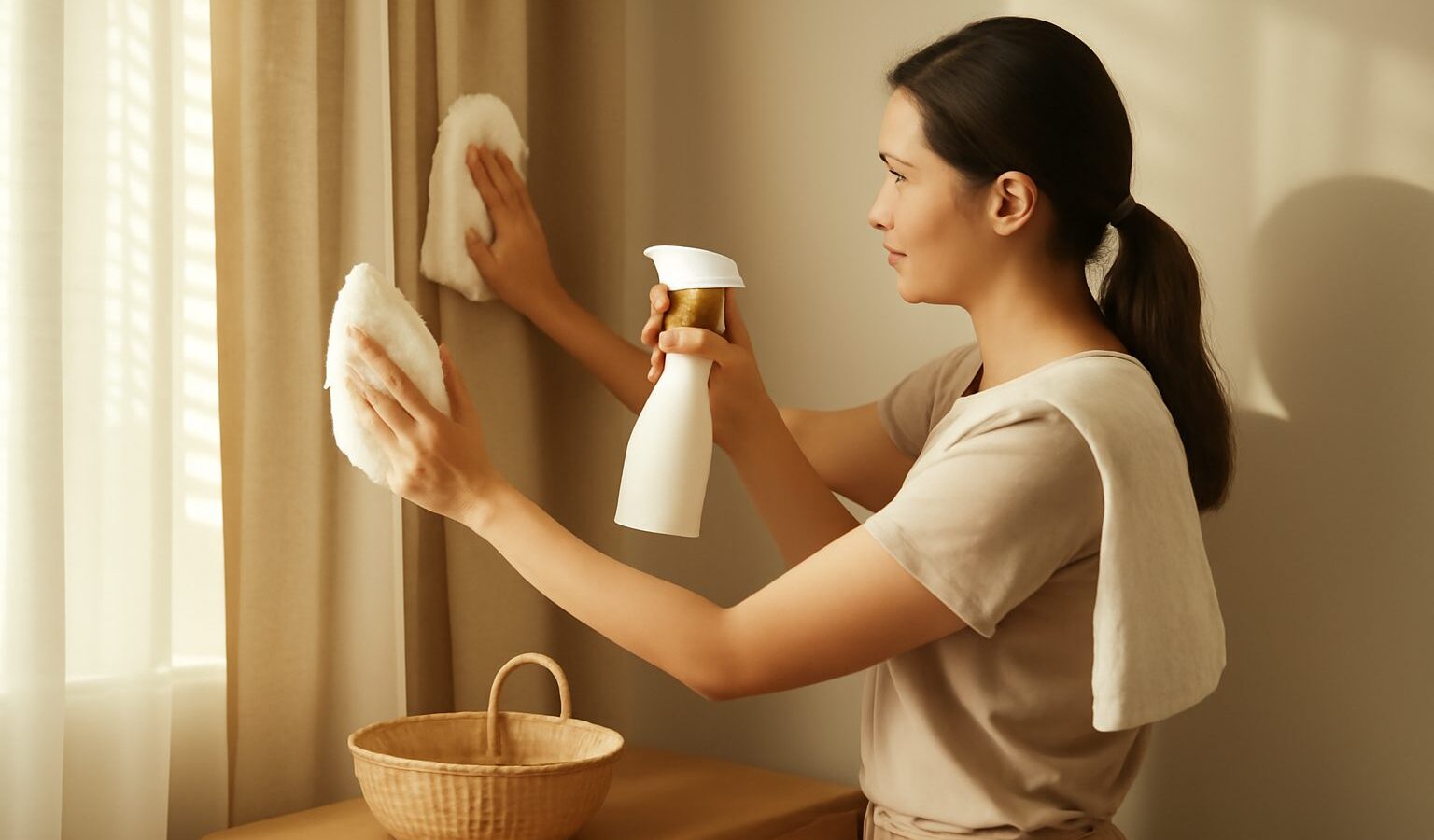
The soft stuff around your home quietly collects more than you think: dust, cooking film, pet hair, and in our climate, a faint mustiness if things stay damp. Cleaning curtains and blinds in Singapore, along with sofas, cushions and other soft furnishings, keeps rooms smelling fresh and helps with dust that can trigger sneezes and allergies. None of it is difficult once you know what each material can take. Some items go in the wash, some only need a good dusting, and a few call for a careful, low-moisture approach so you avoid shrinkage, watermarks or mould.
Wash and Refresh Your Curtains
Curtains act like giant air filters, catching dust and absorbing smells from cooking and the outdoors. How you clean them depends on the fabric, so always check the care label first.
Many everyday cotton and polyester curtains can be machine washed on a gentle, cool cycle. Take them down, shake off loose dust outdoors or vacuum them with a brush attachment, and unhook any rings or hooks before washing. Use a mild detergent, avoid overloading the drum, and do not wring them. In our humidity, drying is the tricky part: hang them where air moves freely, and if you can, rehang slightly damp so they straighten out under their own weight, which saves ironing.
Delicate, lined or heavier curtains are a different matter. Sheers can tear or shrink, and blackout linings may not survive a normal wash, so these are often better dry cleaned. Between washes, a monthly vacuum with the upholstery brush keeps dust down. If you spot mould near a window, deal with the damp source too, since a musty curtain in a poorly ventilated room will keep coming back.
Dust and Wipe Different Types of Blinds
Blinds rarely need washing, but they do need regular dusting because each slat is a shelf for dust. A quick weekly pass stops buildup from becoming a sticky film that is much harder to shift later.
- Venetian and aluminium blinds: Close the slats and wipe across them with a microfibre cloth or a dusting mitt, then tilt the other way and repeat. For grimy kitchen blinds, a cloth dampened with mild soapy water lifts grease; dry the slats afterwards to prevent water spots.
- Roller and vertical blinds: Vacuum gently with the brush attachment. Fabric versions can usually be spot-cleaned with a damp cloth and mild soap, tested on a hidden area first, but avoid soaking them.
- Wooden blinds: Treat these like wood furniture. Dust dry or use a barely damp cloth, and never let water sit, as moisture warps timber.
For all blinds, work top to bottom so dust falls onto areas you have not cleaned yet, and finish by wiping the window sill.
Care for Sofas, Cushions and Rugs
Upholstered furniture is where families spend the most time, so it collects crumbs, oils and dust mites, which love our warm, humid conditions. Vacuum sofas weekly with the upholstery tool, getting into crevices where crumbs hide. If your cushion covers are removable and labelled washable, launder them on a gentle cycle and rehang or reshape them slightly damp.
For spills on fixed upholstery, blot rather than rub, working from the outside of the spill inward so you do not spread it. Check the care code before using any cleaner, and always patch-test first. Baking soda sprinkled on fabric, left a short while, then vacuumed off, helps freshen and deodorise between deeper cleans. Rugs benefit from a regular vacuum on both sides and an occasional airing outdoors in the sun, which helps with dust mites and freshens the fibres. Turn rugs now and then so they wear evenly.
One important safety point applies whenever you reach for stronger products: never mix cleaners. Do not combine bleach with ammonia-based or acidic products, as the fumes are hazardous. On fabrics, gentler options are usually the safest choice anyway, since harsh chemicals can bleach or weaken fibres. Ventilate the room, wear gloves, and keep products away from children and pets.
Match Your Method to the Fabric
Choosing the right approach protects your furnishings and saves you redoing the job. Use this as a quick reference.
| Item | Best method | Rough frequency | Watch out for |
|---|---|---|---|
| Cotton or polyester curtains | Gentle cool machine wash | Every few months | Shrinkage, over-drying |
| Sheer or lined curtains | Dry clean or vacuum | As needed | Tearing, damaged linings |
| Venetian or aluminium blinds | Dust, then wipe if greasy | Weekly dusting | Water spots on metal |
| Wooden blinds | Dry dust or barely damp cloth | Weekly dusting | Warping from moisture |
| Sofas and cushions | Vacuum, wash covers if labelled | Weekly vacuum | Rubbing spills, wrong care code |
Beating Humidity and Knowing When to Outsource
Our climate is the real challenge with soft furnishings. Trapped moisture leads to musty smells and mould, so keep rooms ventilated, open curtains during the day to let light and air in, and address any damp patches near windows promptly. Airing cushions and rugs outdoors on a dry, sunny day works wonders. If you run air-conditioning often, occasional airflow through open windows helps everything dry out.
Some jobs are better handed over. Large or delicate curtains, heavily soiled sofas, and valuable rugs are worth entrusting to a professional cleaning service with the right equipment, especially when a wrong move could shrink or stain something expensive. For everything else, a light, regular routine keeps your fabrics fresh, and there is real satisfaction in a room that both looks and smells clean.
Explore more
Fabrics are only part of a healthy, fresh home. For the biggest fabric item you own, see our guide on cleaning your mattress, which tackles dust mites and humidity head-on. Pair curtain care with cleaning windows and glass at home for a brighter room, and reach the tops of curtain rails and pelmets with our tips on cleaning high and hard-to-reach places.