

A personal philosophy is simply your own considered set of values, principles, and beliefs about how to live well. It is the quiet framework you use to make decisions, handle setbacks, and decide what matters. You already have one, whether you have named it or not, shaped by your upbringing, culture, and experiences. Developing a personal philosophy means bringing it into the light: examining what you actually believe, keeping what serves you, and letting go of what you inherited without thinking. In a fast Singapore where the default script is study hard, work hard, and keep up, having your own philosophy helps you choose your path instead of just following the current.
Why a Personal Philosophy Matters
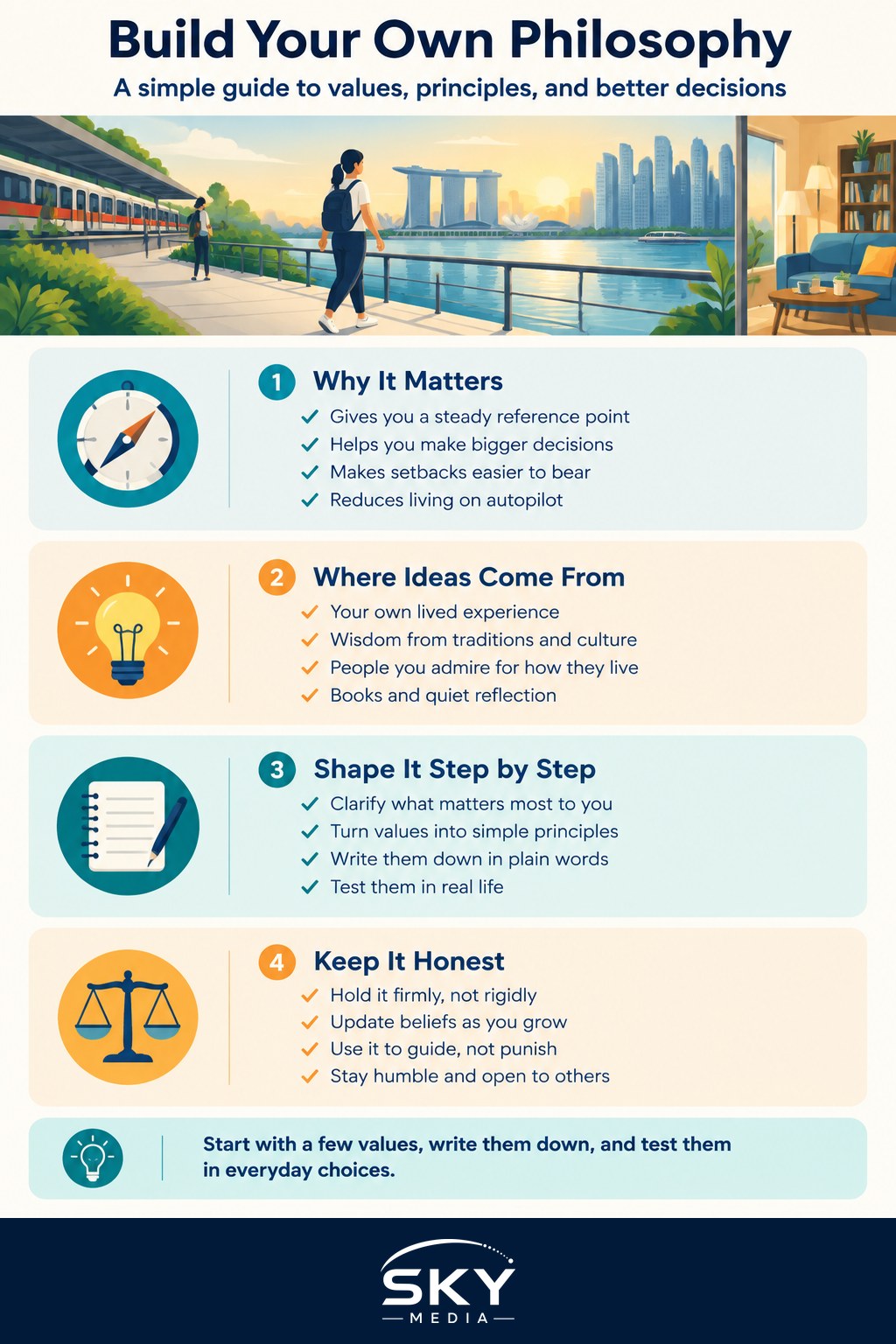
Without a clear philosophy, we tend to run on autopilot and borrowed goals. We chase what others chase, measure ourselves by other people’s yardsticks, and feel vaguely restless without knowing why. A personal philosophy gives you a reference point. When a big decision comes, whether to take the promotion, how to spend your weekends, how to treat people, you have something steady to check against.
It also makes hard times easier to bear. When you know what you stand for and why, setbacks feel less like the ground falling away. You can lose a job or a plan and still know who you are. Many enduring traditions, from Stoicism to various faiths and cultural wisdoms, exist precisely because a considered view of life steadies people through change. Interpretations differ across these traditions, and part of building your own philosophy is deciding, thoughtfully, what resonates with you.
Where to Draw Your Ideas From
You do not have to invent a philosophy from nothing. The richest personal philosophies borrow honestly from many sources and blend them into something that fits you.
- Your own experience. Notice what has actually made you feel proud, content, or at peace, and what has left you empty. Your life is data.
- Wisdom traditions. Philosophies like Stoicism, ideas like ikigai, and the values within your own culture and family offer tested perspectives. Take what genuinely fits and leave the rest.
- People you admire. Look at those you respect, not for their success but for how they live and treat others.
- Books and reflection. Reading widely exposes you to different views of a good life, which you can weigh against your own.
Exploring something like an introduction to Stoicism can give you a concrete starting framework to react to, agreeing with some parts and setting others aside. That reaction itself teaches you what you believe.
How to Develop Yours Step by Step
Building a personal philosophy is a gradual, ongoing process, not a weekend project. A few practical moves get you started.
Begin by clarifying your values. Ask what matters most to you when you strip away what you are supposed to want. This overlaps directly with finding your personal values, which is a natural first step. From your values, draw a few simple principles, short guiding sentences you can actually remember and use, such as be honest even when it costs you, or protect time with people you love.
Then write them down. A personal philosophy that lives only in your head stays vague. Putting it into words, even roughly, forces clarity. Some people go further and write a short statement of how they want to live, which connects to how to write a personal mission statement. Keep it plain and honest rather than grand.
Finally, test it against real life. Your philosophy is not a museum piece. Use it when you make decisions, then notice what happens. Refine it as you learn. A living philosophy grows with you.
Keeping It Honest and Flexible
A good personal philosophy is held firmly but not rigidly. It should guide you without becoming a cage. As you gain experience, some beliefs will deepen and others will need updating. That is a sign of growth, not weakness. Be wary of turning your philosophy into a stick to beat yourself with. Its purpose is to help you live well and treat others well, not to fuel harsh self-judgment.
Stay humble about it, too. Your philosophy is yours, shaped by your particular life, and other thoughtful people will hold different views for good reasons. Holding your beliefs with quiet conviction and genuine openness is itself a mark of maturity. This links naturally to how to think for yourself, which is about reasoning honestly rather than simply adopting whatever you are told.
Bringing It Into Singapore Life
You do not need a mountain retreat to develop a personal philosophy. It grows in ordinary moments: the decisions you make on the commute, how you treat a stressed colleague, what you do with a free weekend, how you respond when plans fall apart. Each choice is a chance to live your values or to drift from them.
Over time, a clear personal philosophy makes life feel less like reacting and more like choosing. You worry a little less about keeping up, because you know what you are actually aiming for. In a city that constantly tells you what success should look like, that inner compass is quietly powerful. Start small, write down a few values, live by them, and let your personal philosophy take shape one honest decision at a time.
Frequently Asked Questions
How long does it take to develop a personal philosophy? There is no fixed timeline, because it is an ongoing process rather than a project you finish. Many people sketch a first draft of values in an afternoon, then refine it over months and years as life tests it. Expect it to keep changing as you do.
Can my personal philosophy borrow from more than one religion or tradition? Yes, many people blend ideas from several sources, including faith, culture, family wisdom and schools like Stoicism. The key is to understand what you take and check that the pieces fit together. If you follow a faith, talking with someone knowledgeable in it can help.
What if my personal philosophy conflicts with my family’s expectations? This is common and does not have to mean a break. Start by understanding which values you share, then explain your reasoning calmly rather than arguing. You can respect your family while still making choices that fit what you believe.
How do I know my personal philosophy is not just a set of rationalisations? Check whether it actually shapes your choices, including costly ones, and whether you would apply it to others as well as yourself. If it conveniently excuses everything, revisit it. Honest feedback from a trusted friend can show blind spots.
Do I need to read philosophy books to build my own? No. Reading can offer useful ideas and language, but your own experience is the main material. Reflecting on what has felt meaningful or hollow, and writing a few principles down, is enough to begin.
Further reading: How to Develop Wisdom · How to Develop Integrity