

Being asked to run a workshop can feel daunting, especially the first time. You are not just presenting slides, you are guiding a room full of people to think together, make decisions, and leave with something useful. Facilitating a workshop is a distinct skill from speaking or managing, and it is one that quietly marks you out as someone who can get value from a group. Whether it is a planning session, a brainstorming meeting, or a training day, the core job is the same: create the conditions for good thinking and keep the group moving toward a clear outcome. In our workplaces, where people can be polite and reluctant to speak up, good facilitation matters even more.
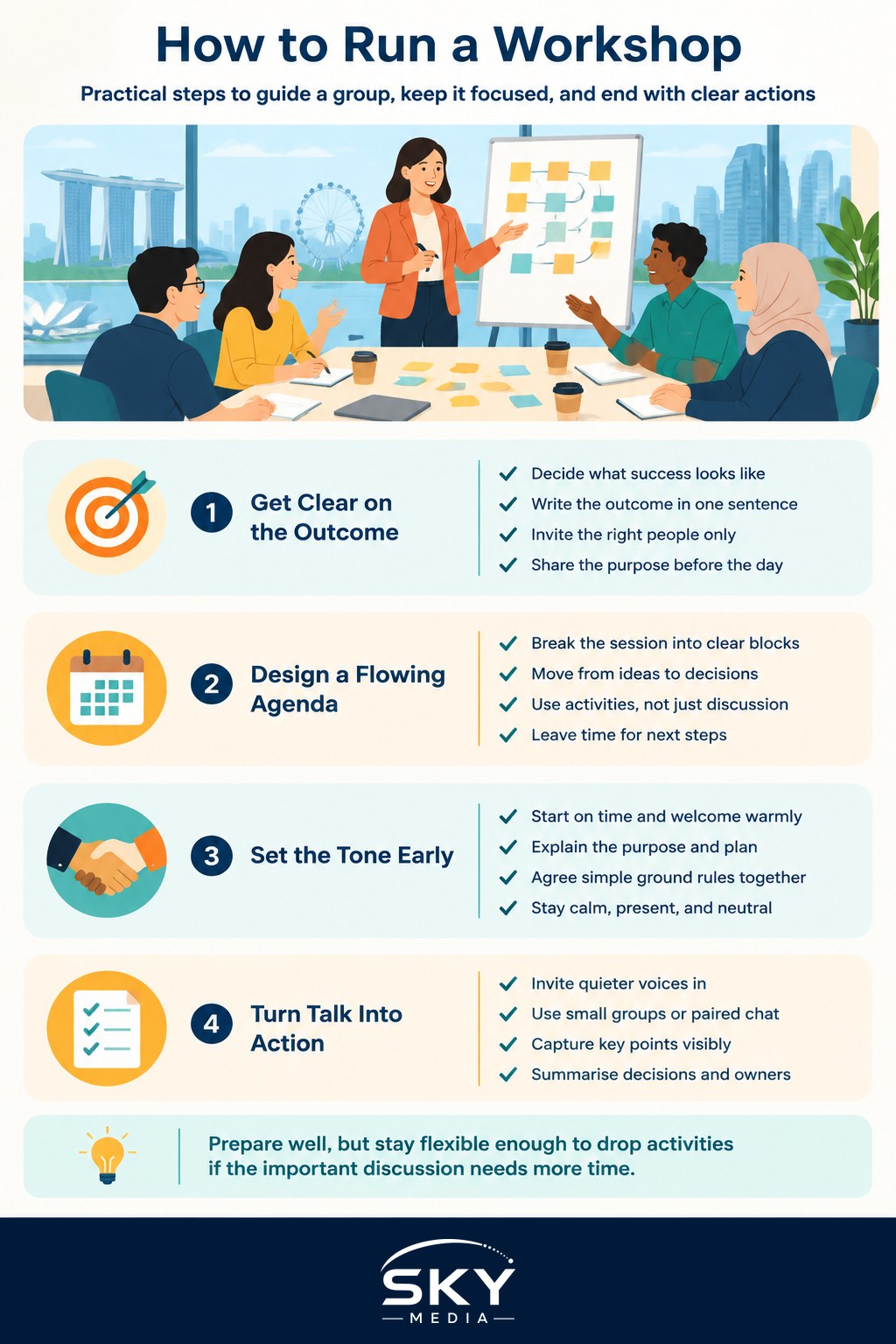
Get Clear on the Purpose and Outcome
Before you plan a single activity, answer one question: what does success look like by the end? A workshop without a clear outcome becomes an expensive chat. Are you trying to agree on a plan, generate ideas, solve a specific problem, or align a team on priorities? Write the outcome in one sentence and let it guide every choice you make.
Once you know the goal, work out who needs to be in the room. Invite the people who have the knowledge, the stake, or the authority to make the outcome real, and be honest about keeping the group small enough to be productive. A dozen engaged people beat thirty passive ones.
Share the purpose with participants beforehand so they arrive prepared rather than cold. A short note on what you will cover and what you need from them sets the tone and saves precious time on the day.
Design an Agenda That Flows
A good agenda is the backbone of a workshop. Break the session into clear blocks, each with its own purpose and a rough time. A common flow moves from opening and context, to exploring or generating ideas, to narrowing down and deciding, to agreeing next steps.
- Open with a quick framing so everyone knows why they are there and what you will achieve.
- Build in activities, not just discussion. Small group work, sticky notes, or quick individual reflection get more people contributing than an open floor.
- Plan for breaks. Attention fades, and a short pause resets the room.
- Leave real time at the end for decisions and actions, because this is where value is either captured or lost.
Always over-prepare and then be ready to drop things. Running out of time on the important part because you clung to an early activity is a classic beginner trap. If your session is mainly about generating ideas, our guide on how to run a brainstorming session has techniques you can slot straight in.
Set the Tone in the First Few Minutes
How you open shapes everything that follows. Start on time, welcome people warmly, and state the purpose and the plan clearly. Agree a few simple ground rules together, such as one conversation at a time, phones away, and every view welcome. When people help set the rules, they tend to honour them.
Your energy sets the room’s energy. You do not need to be loud or performative, but you do need to be present, calm, and clearly in charge of the process even while you stay neutral on the content. Your job is to guide how the group works, not to push your own opinion.
Keep Everyone Engaged and Heard
The heart of facilitation is managing participation. In many local teams, a few confident voices dominate while others stay quiet out of politeness or seniority. Part of your role is to gently balance this.
Invite quieter people in by name, use small group or paired discussion so speaking feels safer, and ask people to jot ideas down before sharing so nobody is put on the spot. When someone talks too long, thank them and move on courteously. Strong active listening at work helps here, because reflecting back what people say makes them feel heard and keeps the discussion honest.
Watch the room. If energy dips, switch activity or call a break. If a tangent takes over, park it visibly on a list to return to later, which respects the idea without derailing the agenda.
Turn Discussion Into Decisions
A workshop that generates lots of talk but no conclusions leaves people frustrated. As you move through the session, keep capturing key points where everyone can see them. Toward the end, guide the group to narrow options and make clear choices. Techniques like grouping ideas, quick voting, or simply asking so what are we deciding here keep things moving.
Be comfortable with productive silence while people think, and be firm about closing loops. It is your job to notice when the group is circling and to say, it sounds like we are agreed on this, shall we lock it in.
Close With Clear Next Steps
Never let a workshop drift to an end. In the final block, summarise what was decided, confirm who will do what by when, and thank everyone for their contribution. Vague endings are where good sessions quietly die, because nobody owns the follow-up.
After the session, send a short summary with the decisions and actions while it is fresh. This turns the energy of the day into real progress, and it builds your reputation as someone whose meetings are worth attending. If capturing outcomes cleanly is new to you, our guide on how to write meeting minutes and agendas can help you record them well.
Facilitating a workshop gets easier every time you do it. Start with a clear outcome, a flowing agenda, and a genuine interest in what the room has to offer, and you will find people leaving your sessions feeling that their time was well spent.
Frequently Asked Questions
How big should a workshop group be? Small enough to be productive. Invite people with the knowledge, stake or authority to make the outcome real, and keep the group manageable, since a dozen engaged people beat thirty passive ones. Share the purpose beforehand so they arrive prepared.
How do I get quiet participants to speak up in a workshop? Invite them in by name, use paired or small-group discussion so speaking feels safer, and ask people to jot ideas down before sharing. This helps in workplaces where people are polite or defer to seniority and a few confident voices otherwise dominate.
What do I do when one person dominates or goes off topic? Thank a long speaker courteously and move on. For tangents, park them visibly on a list to return to later, which respects the idea without derailing the agenda. Watching the room and switching activity when energy dips also helps.
How much time should I leave for decisions and actions? Leave real time at the end, because that is where value is either captured or lost. Running out of time on the important part because you clung to an early activity is a classic beginner trap, so be ready to drop things.
What should I send after the workshop? A short summary of the decisions and actions while it is fresh, confirming who will do what by when. It turns the day’s energy into real progress and builds your reputation as someone whose sessions are worth attending.