

Few tasks are as quietly underrated as writing a good agenda and taking clear meeting minutes. Done poorly, they produce meetings that wander in circles and notes that nobody ever reads. Done well, they turn scattered discussions into decisions and follow-through. If you have ever left a meeting unsure what was actually agreed, you already understand the problem. Learning to write meeting minutes in Singapore workplaces, along with agendas that give a meeting a spine, is a skill that quietly marks you out as organised and reliable, whatever your role.
This guide covers both halves of the job, because a strong agenda makes minutes far easier to write, and clear minutes make the next meeting far more productive.
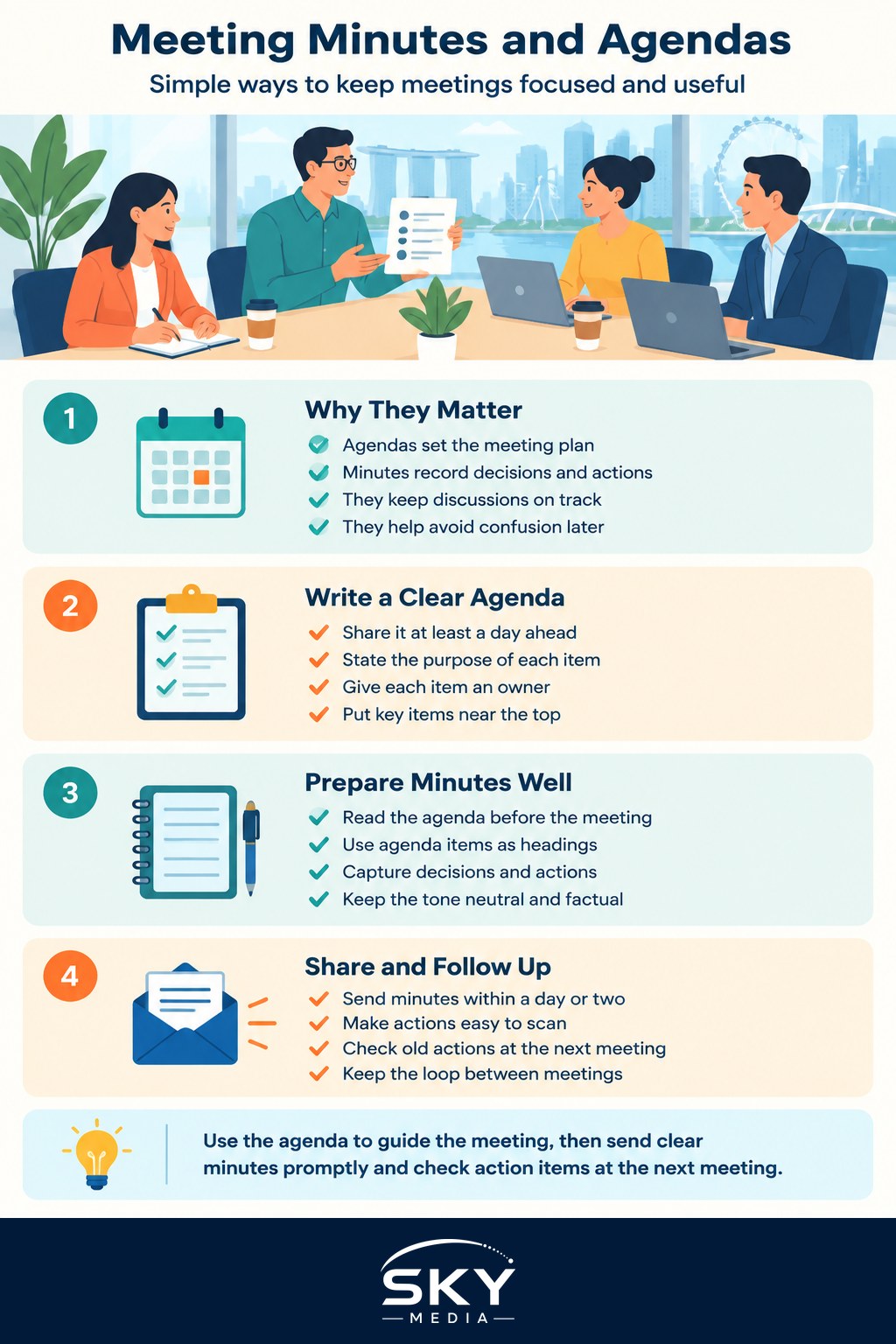
Why Agendas and Minutes Matter
An agenda is a plan for the meeting. It tells everyone what will be discussed, in what order, and roughly how long each item should take. Without one, meetings drift, dominant voices take over, and important topics get squeezed out at the end. With one, people arrive prepared and the conversation stays on track.
Minutes are the record of what happened. Their real purpose is not to capture every word but to preserve the decisions made, the actions agreed, and who is responsible for each. Weeks later, when someone asks “Did we decide to go ahead with that?”, the minutes settle the question. In busy Singapore workplaces where people juggle many projects, this shared record prevents confusion and quiet finger-pointing.
Together, the two tools form a loop. The agenda sets the intentions, and the minutes record the outcomes, which then feed the next agenda.
Writing a Clear Agenda
A good agenda is short, specific, and shared in advance. Sending it out at least a day before gives people time to prepare, which makes the meeting itself far more useful. A few principles help.
- Give each item a clear purpose. State whether the group is meeting to decide, discuss, or simply be informed. “Approve the Q4 budget” is clearer than “Budget”.
- Assign an owner to each item, so someone comes ready to lead that part.
- Estimate a time for each item to keep the meeting moving.
- Put the most important items near the top, while energy and attention are high.
- Keep the list realistic. A meeting crammed with ten topics will finish none of them properly.
It also helps to name a clear objective for the whole meeting at the top. If you cannot state why the meeting needs to happen, it may be a sign the discussion could be handled over email instead. For more on running the meeting itself, our guide on running meetings people value covers how to keep discussions focused and inclusive.
Preparing to Take Minutes
Good minutes begin before the meeting starts. Read the agenda in advance so you know what is coming and can set up your notes to match. Using the agenda items as your headings gives your minutes a ready-made structure and ensures nothing important slips through.
Decide beforehand what level of detail is expected. Some meetings need only a short list of decisions and actions, while formal committees may require a fuller record. When in doubt, ask the person chairing the meeting what they want. If you are the one taking notes, it is hard to also participate fully, so try not to take on both a heavy speaking role and the minutes at the same time.
What to Capture, and What to Leave Out
The most common mistake is trying to transcribe everything. You do not need a word-for-word account. Focus on what matters after the meeting ends.
- Decisions made, stated plainly.
- Action items, with the person responsible and a deadline for each.
- Key points of discussion, summarised briefly, especially where opinions differed.
- Items carried over or parked for a future meeting.
Capture the essentials in the room, then tidy them up soon afterwards while your memory is fresh. Waiting a week almost guarantees you will forget the nuance. The heart of useful meeting minutes in Singapore offices is the action list, because that is what turns talk into results. Make it impossible to miss who is doing what by when.
Write in a neutral, factual tone. Minutes are a record, not an opinion piece, so avoid editorialising or naming who said something in a way that could embarrass a colleague. Focus on the substance rather than the personalities.
Sharing and Following Up
Send the minutes out promptly, ideally within a day or two while the meeting is still fresh in everyone’s mind. Keep the format clean and easy to scan, with actions clearly separated so people can find their own tasks at a glance. If your writing tends to sprawl, our guide on improving your business writing offers practical ways to keep it tight and clear.
The final step closes the loop. When the next meeting comes around, revisit the action items from last time and check what was done. This simple habit is what makes minutes worth writing at all, because it holds the group accountable and shows that decisions actually lead somewhere. If your calendar feels overloaded with meetings in the first place, our guide on reducing meeting overload can help you decide which meetings truly earn their place.
A Skill Worth Building
Writing agendas and minutes may never feel glamorous, but it quietly builds your reputation as someone who keeps things organised and moving. Colleagues notice who runs a tight meeting and who sends the clear summary that saves everyone confusion. Master this, and you become the person teams rely on. Start with a clear agenda, capture the decisions and actions faithfully, share them promptly, and follow up. Do that consistently, and your meetings will start producing real results rather than just more meetings.
Frequently Asked Questions
Who is responsible for taking minutes at a meeting? It depends on the team. Often the chair assigns a note-taker, or the duty rotates among members, and formal committees usually have a secretary. Agree on it before the meeting starts so it is not left to chance. Avoid giving it to someone who needs to lead a heavy part of the discussion.
What is the difference between action minutes and full minutes? Action minutes record only decisions and tasks with owners and deadlines, which suits routine team meetings. Fuller minutes also summarise the discussion and differing views, which formal bodies such as boards or committees often require. Ask the chair which style is expected before you start writing.
Do I need to record who said what in the minutes? Usually not. Minutes should capture decisions, actions and the substance of the discussion rather than attributing every comment. Name individuals mainly for action items and formal motions. This keeps the record neutral and avoids awkwardness over how a colleague’s remarks were worded.
Can I use a template or AI tool to draft minutes? Templates are a good idea because they keep your minutes consistent and quick to complete. Recording or transcription tools can help with accuracy, but check whether everyone is comfortable being recorded and whether company policy allows it. Always review and edit the draft before circulating it.
How long should I keep meeting minutes? There is no single rule for ordinary team meetings, so follow your company’s record-keeping policy. Minutes for formal or regulated bodies may have legal requirements, so check with your company secretary or the relevant authority. Store them somewhere organised and easy for the team to find.