

That smoky, slightly charred aroma in a good plate of char kway teow or hor fun has a name: wok hei, or the breath of the wok. It is the flavour that makes hawker stir-fries taste like nothing you can manage at home, and it is the reason many cooks give up trying. The good news is that getting wok hei at home in Singapore is possible on an ordinary HDB stove. You will not fully match a roaring hawker burner, but with the right wok, proper heat and a bit of technique, you can get real smokiness and that just-seared taste on your own dinner.
This guide covers what wok hei actually is, how to set up your home stove for it, the technique that matters most, and how to do it all safely in a small kitchen.
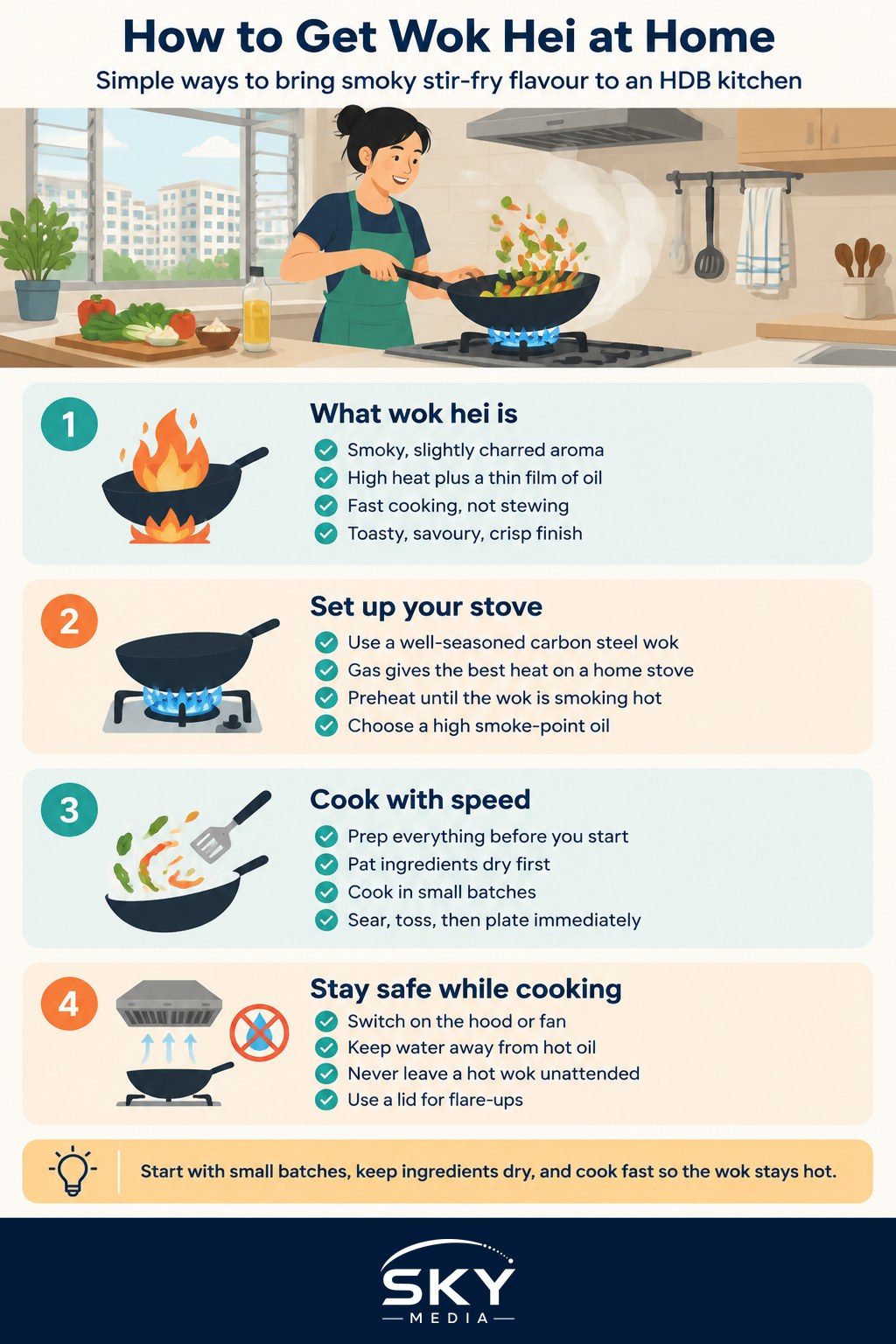
What Wok Hei Actually Is
Wok hei is the combination of intense heat and a thin film of oil hitting food fast, creating tiny bits of caramelisation and light char while the ingredients toss through the flames and smoke. It is partly the Maillard reaction, the browning that gives seared food its savoury depth, and partly the aroma of oil vapour catching heat. The dish tastes toasty and smoky without being burnt, and the ingredients stay crisp because they cook quickly rather than stewing.
The key point for home cooks is that wok hei comes from high heat and speed, not from any secret sauce. Everything you do at home is aimed at keeping the wok as hot as possible and stopping it from cooling down once the food goes in.
Setting Up Your Home Stove and Wok
Hawker stalls use burners far more powerful than a domestic hob, so your job is to help a normal stove punch above its weight. A few choices make the biggest difference.
- Use a carbon steel wok, well seasoned. It heats fast, takes very high heat, and its curved shape concentrates heat at the base. A flat-bottomed carbon steel wok sits properly on most gas and induction hobs sold here.
- Gas beats most alternatives because the flame licks up the sides. If you have induction, a flat wok made for induction works, though the heat sits only on the base. Standard electric coil hobs are the hardest for wok hei because they recover heat slowly.
- Preheat the empty wok until it is smoking hot before adding oil. This is the step home cooks most often rush.
- Use an oil with a high smoke point, such as peanut, rice bran or a refined vegetable oil. Add it after the wok is hot, swirl to coat, and get moving.
The table below sums up how different setups compare so you can work with what you have.
| Stove setup | Heat and recovery | Wok hei potential | Best approach |
|---|---|---|---|
| Gas hob, carbon steel wok | High, fast recovery | Good for a home kitchen | Preheat hard, cook in small batches |
| Induction, flat induction wok | Strong at base only | Moderate | Heat base fully, keep food near base |
| Electric coil, any wok | Slow recovery | Limited | Preheat long, very small batches |
| Portable gas burner outdoors | Very high | Best home option | Cook on a balcony or outdoor area, safely |
Technique: High Heat, Dry Ingredients, Keep It Moving
Once your wok is set up, the cooking itself is fast and needs everything prepared in advance. Restaurant cooks call this having your mise en place ready, and at home it is non-negotiable because there is no time to chop once you start.
- Prep and dry everything first. Cut ingredients to a similar size. Pat proteins and vegetables dry with kitchen paper, because surface water turns to steam and steaming is the enemy of searing.
- Cook in small batches. A crowded wok drops in temperature and stews the food. Half a plate at a time beats a full pile that never sears. This is the single biggest fix for home stir-fries.
- Get the wok smoking, then add oil, swirl, and add aromatics like garlic and ginger for a few seconds only.
- Add the protein, spread it out, and leave it for a few seconds to sear before tossing. Then keep it moving.
- Push, toss and flip so the food catches heat from the hot metal and, on gas, the odd lick of flame. Add sauces down the hot side of the wok so they sizzle and reduce rather than pool.
- Finish fast and plate immediately. Wok dishes wait for no one; residual heat keeps cooking them on the plate.
A common home trick is to sear proteins first, remove them, cook the vegetables, then return everything for a final quick toss. This keeps the wok hot at every stage instead of overloading it.
Staying Safe on an HDB Stove
High-heat wok cooking brings real heat, smoke and hot oil, so a few safety habits are worth building in from the start.
- Ventilate well. Switch on the hood or a fan and open a window, since wok hei by nature makes smoke. Good airflow keeps your kitchen and your smoke alarm happy.
- Keep water away from hot oil. Dry your ingredients and never add wet food in a rush, as splattering oil can burn. Keep the handle turned inward so you do not knock the wok.
- Never leave a hot wok unattended, and keep a lid nearby to smother any flare-up. Do not throw water on an oil fire.
- Mind the heat in our climate. Kitchens here get hot fast, so wear something that covers your arms if you are new to flipping, and take breaks.
- Handle raw meat safely. Use separate boards for raw and cooked, wash hands after handling, and cook proteins through. When in doubt, throw it out.
A Simple Dish to Practise On
Start with a plate of stir-fried greens like kai lan or a simple prawn and egg fried rice, both forgiving and quick. Use day-old rice, which is drier and sears better than fresh. Preheat hard, work in two batches, and you will hear the difference: a lively sizzle that never dies down to a simmer. Once you can keep that sound going, you have the feel of wok hei, and the rest is practice. Try it a few times before a dinner party rather than during one.
Explore more
Great wok dishes start with great rice, so first nail how to cook rice perfectly for fried rice that sears instead of clumps. If your kitchen is snug, our guide to small-kitchen cooking in an HDB flat helps you set up for high-heat work. And for smoky flavour without a wok, see air-fryer recipes with local ingredients.
Frequently Asked Questions
Why does day-old rice work better for fried rice? It is drier than fresh rice, so it sears instead of clumping. The article recommends it for practising wok hei. Cold, separated grains also take on the wok’s heat more evenly.
Can I get wok hei on an induction cooker? Partly. A flat wok made for induction works, but the heat sits only on the base, so wok hei potential is moderate. Heat the base fully and keep the food near it. Work in small batches.
Do I need a carbon steel wok, or will a non-stick pan do? A well-seasoned carbon steel wok is recommended because it heats fast and takes very high heat. Non-stick pans are not designed for that level of heat. Choose a flat-bottomed wok if your hob needs one.
Why does my stir-fry end up soggy instead of seared? Usually the wok is overcrowded or the ingredients are wet. Surface water turns to steam, and a crowded wok drops in temperature, so food stews. Pat everything dry and cook in small batches.
Is it safe to cook with such high heat in a small HDB kitchen? Yes, with precautions. Ventilate well with the hood and an open window, keep water away from hot oil, and never leave a hot wok unattended. Keep a lid nearby to smother any flare-up, and do not throw water on an oil fire.