
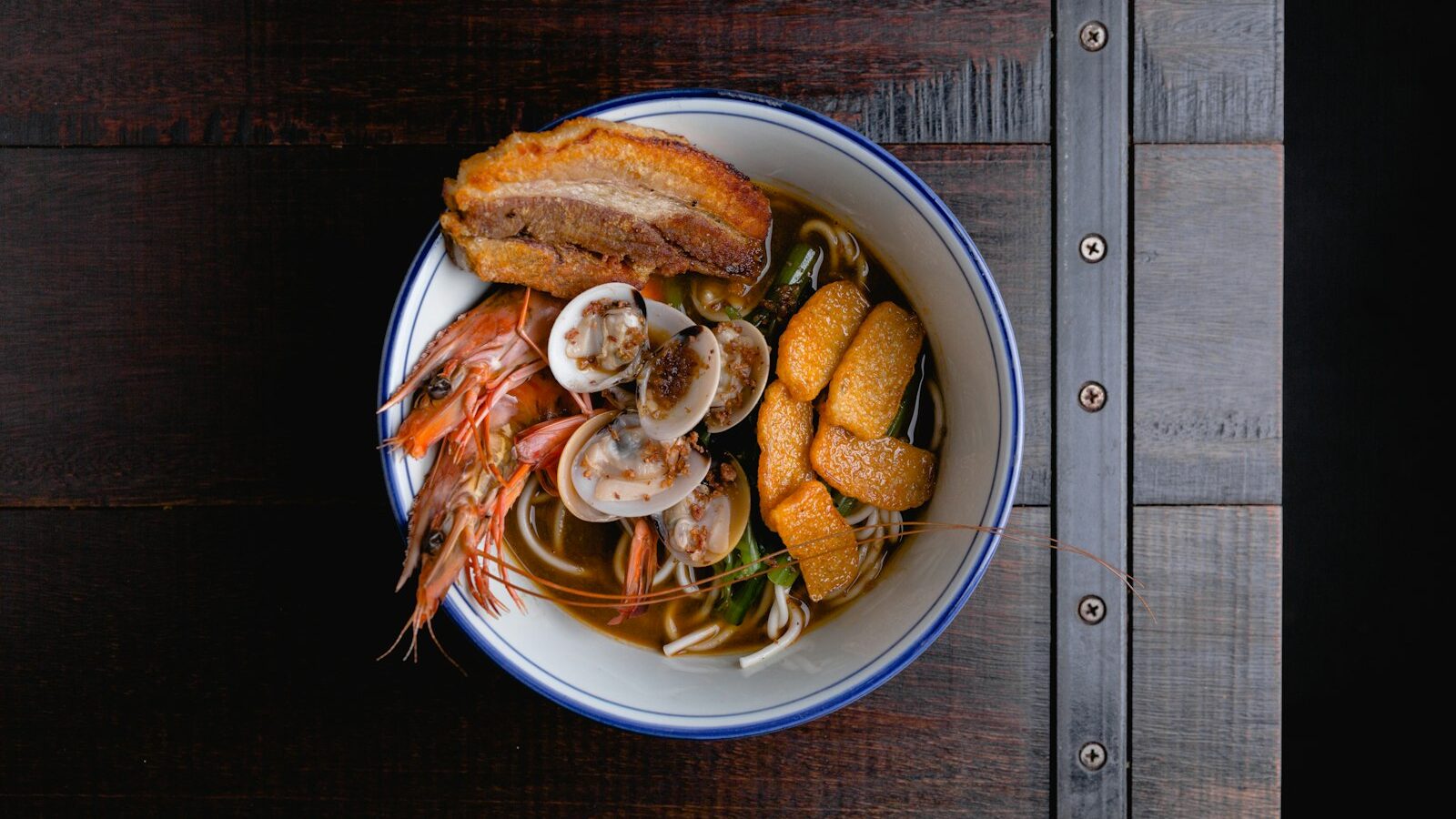
Char kway teow is one of those hawker dishes people assume they cannot recreate, but cooking char kway teow at home in Singapore is very doable once you understand what makes it work: high heat, a good sauce, and cooking in small batches. You will not get an identical copy of the uncle’s decades-seasoned wok, but you can get smoky, savoury, glossy noodles that genuinely satisfy. The trick is preparation and speed, not fancy equipment.
This is a fast dish. Everything happens in a minute or two once the wok is hot, so there is no time to chop or measure mid-cook. Set yourself up properly and the actual cooking is the easy part.
Gathering Your Ingredients
The heart of the dish is flat rice noodles, sold fresh as kway teow in the chiller at wet markets and most supermarkets. Fresh ones give the best texture. Many cooks add a little yellow egg noodle too for the classic mix. If you can only find dried flat rice noodles, soak them until pliable but not soft.
Round out your tray with:
- Aromatics: plenty of chopped garlic, and a small amount of preserved radish, sold as chai poh, for that salty-sweet crunch.
- Protein: Chinese sausage, or lup cheong, sliced thin, plus prawns and fish cake. Cockles are traditional; if you use them, buy them very fresh, rinse well, and cook them through, since raw shellfish is risky in our climate.
- Greens: beansprouts and kucai, the flat garlic chives, added right at the end so they stay crisp.
- Egg: one or two, cracked into the wok near the finish.
For the sauce, the backbone is dark soy sauce for colour and a molasses note, light soy for salt, and a touch of sugar. Some cooks add a little chilli paste and oyster sauce. Mix your sauce in a small bowl before you start so you can pour it in one motion.
Building Wok Hei in a Home Kitchen
Wok hei, the smoky char that defines the dish, comes from very high heat hitting oil and noodles. A hawker’s roaring burner is hard to match on an HDB stove, especially induction, but you can get close.
- Use the highest heat your hob allows and give the wok or a wide pan time to get properly hot before any oil goes in. You want it near smoking.
- Cook in small batches. A single portion at a time is the single biggest thing home cooks get wrong. Pile in four portions and the pan cools, everything steams, and the noodles turn to mush.
- Choose an oil that takes heat well and use enough of it so the noodles fry rather than stick.
- Move fast but let the noodles sit still for a few seconds between tosses. That contact with the hot metal is what builds char, so constant stirring actually works against you.
- On induction, a flat-bottomed wok or a heavy flat frying pan holds heat better than a round-bottomed wok that barely touches the coil.
Gas gives you an edge here because the flame licks up the sides, but plenty of good char kway teow has come out of induction kitchens with patience and small batches.
The Cooking Sequence
Once the pan is screaming hot, the order matters. Follow this and you will not fumble.
- Add oil, then the garlic, chai poh and lup cheong. Fry until fragrant and the sausage releases its fat.
- Add prawns, fish cake and cockles if using. Cook until the prawns turn pink and everything is cooked through.
- Push the ingredients aside, add a little more oil, and slide in the noodles. Let them sit to catch some char before you toss.
- Pour the premixed sauce around the edge so it sizzles, then toss to coat every strand evenly.
- Push everything to one side, crack in the egg, let it just begin to set, then fold it through.
- Throw in the beansprouts and kucai, toss twice, and get it onto the plate immediately. They should stay crunchy.
Serve it hot with sambal on the side. Do not let it sit in the pan, as residual heat keeps softening the noodles.
Fixing Common Problems
Your first plate might come out pale or clumpy, and that is completely normal. Read the cues and adjust.
| Problem | Cause | Fix |
|---|---|---|
| Mushy noodles | Pan too crowded or too cool | Cook single portions on max heat |
| Clumping together | Not enough oil, tossed too soon | Add oil; let noodles sear before tossing |
| Pale, no char | Heat too low, batch too big | Preheat longer, reduce portion size |
| Too salty | Heavy hand with soy | Balance with a pinch of sugar; measure sauce next time |
| Broken noodles | Over-tossing fresh kway teow | Toss gently, fewer times |
If your fresh noodles are cold and stuck together straight from the fridge, loosen them gently with your fingers first so they separate in the pan instead of tearing.
Make-Ahead and Storage Notes
Char kway teow is a cook-and-eat-now dish, and it is genuinely at its best in the first few minutes. That said, busy weeknights are real, so prep smart. Slice the sausage, fish cake and aromatics ahead and keep them chilled in the fridge in separate covered containers. Mix your sauce in advance and keep it in a small jar. Then the cooking itself takes only minutes.
Leftovers do not reheat brilliantly because the noodles soften further, but if you have some, cool it quickly and refrigerate promptly rather than leaving it out in the heat. Eat it within a day, reheat it thoroughly in a hot pan rather than a slow microwave, and skip storing any dish that included cockles, since cooked shellfish is best eaten fresh. When in doubt, throw it out.
The first time your kitchen fills with that smoky smell and you plate up glossy, charred noodles, you will realise this hawker classic was within reach all along.
Explore more
Once you have wok confidence, the rest of the hawker repertoire opens up. Keep practising your heat control with our guide to restaurant-style fried rice, and stock your fridge with the chilli that makes everything better in making sambal chilli from scratch. For the bigger picture, see our overview of cooking hawker favourites at home.