

Some goals are easy to promise yourself and hard to keep. You tell yourself you will start jogging, finish that course, or stop scrolling at midnight, and for a week or two it works. Then life gets busy, the excuses pile up, and the goal quietly slips away. An accountability partner is one of the simplest ways to change that pattern. It is another person who checks in on your progress, cheers you on, and gently asks how things are going, so that your good intentions have someone to answer to besides yourself.
The idea is not about pressure or guilt. A good accountability partner works because of mutual respect and honest support. In this guide we will look at how to choose the right person, how to set things up so it actually helps, and how to keep the arrangement healthy over time.
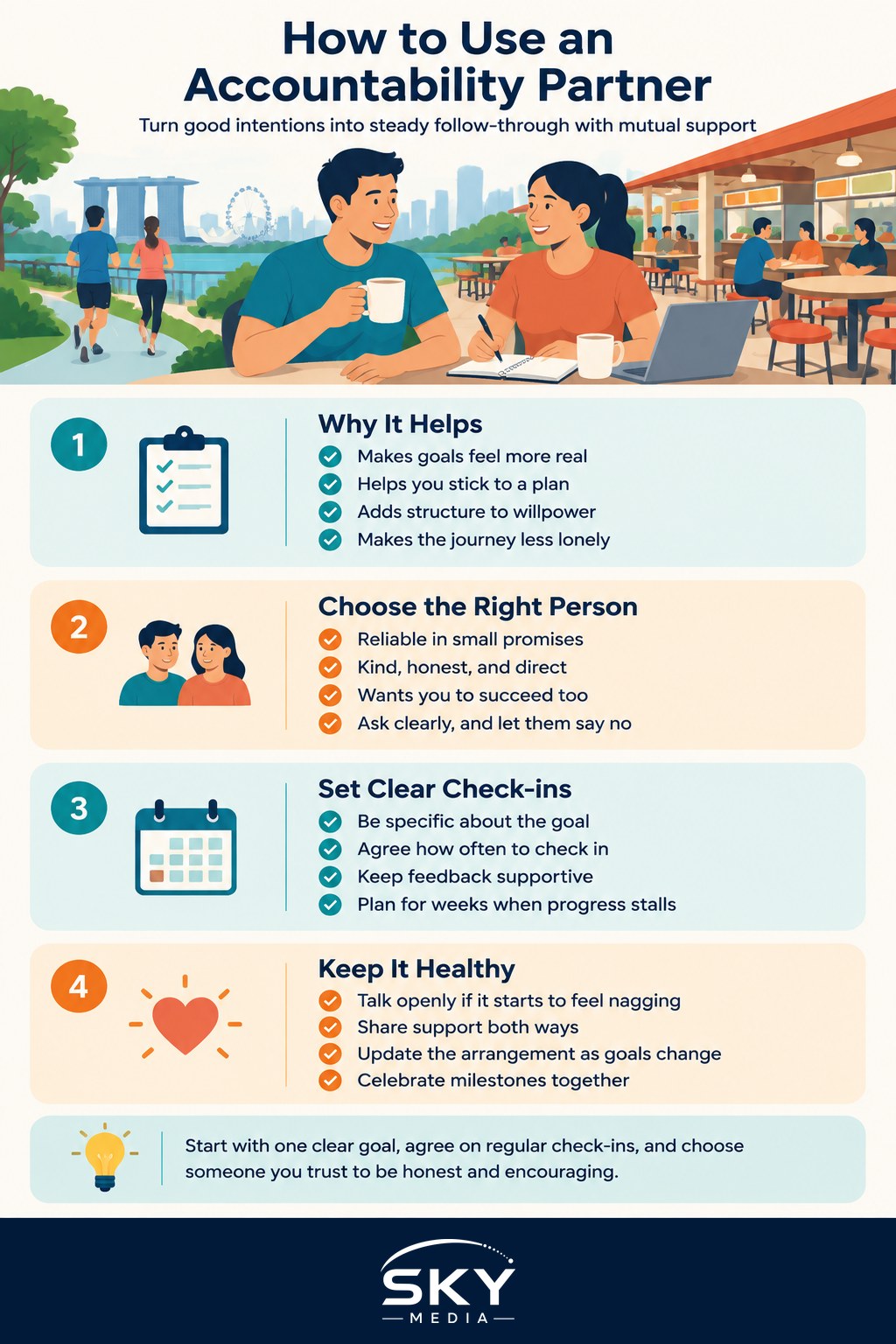
Why an Accountability Partner Works
When a goal lives only in your head, it is easy to renegotiate with yourself. You can push the gym session to tomorrow, then the day after, and no one notices. The moment you tell someone else what you are trying to do, something shifts. You have made a small, visible promise, and most of us find it easier to follow through when we know a friendly person will ask about it.
There is nothing weak about needing this. Willpower is a limited resource, and even disciplined people lean on structure to stay on track. An accountability partner adds that structure in a warm, human way. It also makes the journey less lonely. Working towards a goal on your own can feel like shouting into an empty room. Having someone who understands what you are attempting, and who is quietly rooting for you, changes the whole experience.
If you want to go deeper on the willpower side of things, our piece on how to build self-discipline pairs well with this approach.
How to Choose the Right Partner
The best partner is not always your closest friend. You want someone who is reliable, honest, and comfortable being direct without being harsh. Look for these qualities:
- They keep their word in small things, so you can trust them with bigger check-ins.
- They can be kind and honest at the same time, telling you the truth without making you feel small.
- They genuinely want you to succeed, and you feel the same about them.
Many people find it works best when the arrangement goes both ways. You hold each other accountable, each with your own goal. A colleague building a side project, a friend training for a run, or a family member trying to save more money can all make good partners. The goals do not need to match. What matters is that you both take the commitment seriously.
Consent is important here. Ask the person clearly if they are willing to take this on, and let them say no without any awkwardness. Being an accountability partner is a real commitment of time and attention, and it only works when both people choose it freely.
Setting It Up So It Actually Helps
Once you have a partner, agree on the details together so there is no confusion later.
Be specific about the goal. Vague goals like get fitter are hard to check. Something like walk 8,000 steps five days a week is clear and easy to report on. If your goals are large, our guide on how to break big goals into steps can help you shape them.
Decide how and when you will check in. A quick weekly message works for many people. Some prefer a short call, others a voice note on the MRT home, or a monthly kopi session at the hawker centre. Pick something that fits both of your schedules so it does not become a chore.
Agree on what a check-in sounds like. A good check-in is honest but not a courtroom. Your partner asks how the week went, listens, and helps you problem-solve if you fell short. The tone stays supportive, never shaming.
Plan for the hard weeks. There will be weeks when one of you does nothing. Decide in advance that this is normal and not a reason to give up. The point is to get back on track, which our piece on how to get back on track after falling off explores in more detail.
Keeping It Healthy Over Time
An accountability partnership can drift if you are not careful. Watch out for a few things. If check-ins start to feel like nagging, talk about it openly and adjust the tone. If one person is always giving support and never receiving it, rebalance so it feels fair. And if a goal changes or is completed, update the arrangement rather than letting it fizzle out.
Celebrate progress together, too. When your partner hits a milestone, notice it and say so. A little genuine encouragement goes a long way, and it makes the next check-in something you both look forward to.
Above all, keep the respect at the centre. Your partner is not your boss or your judge. They are a fellow human being trying to grow alongside you. Handled with care, an accountability partner can turn lonely, easily abandoned goals into a shared journey that you are far more likely to finish. Start small, ask someone you trust, and give it a few honest weeks. You may be surprised how much easier following through becomes when someone kind is walking beside you.
Further reading: Joining a Mastermind or Accountability Group in Singapore