
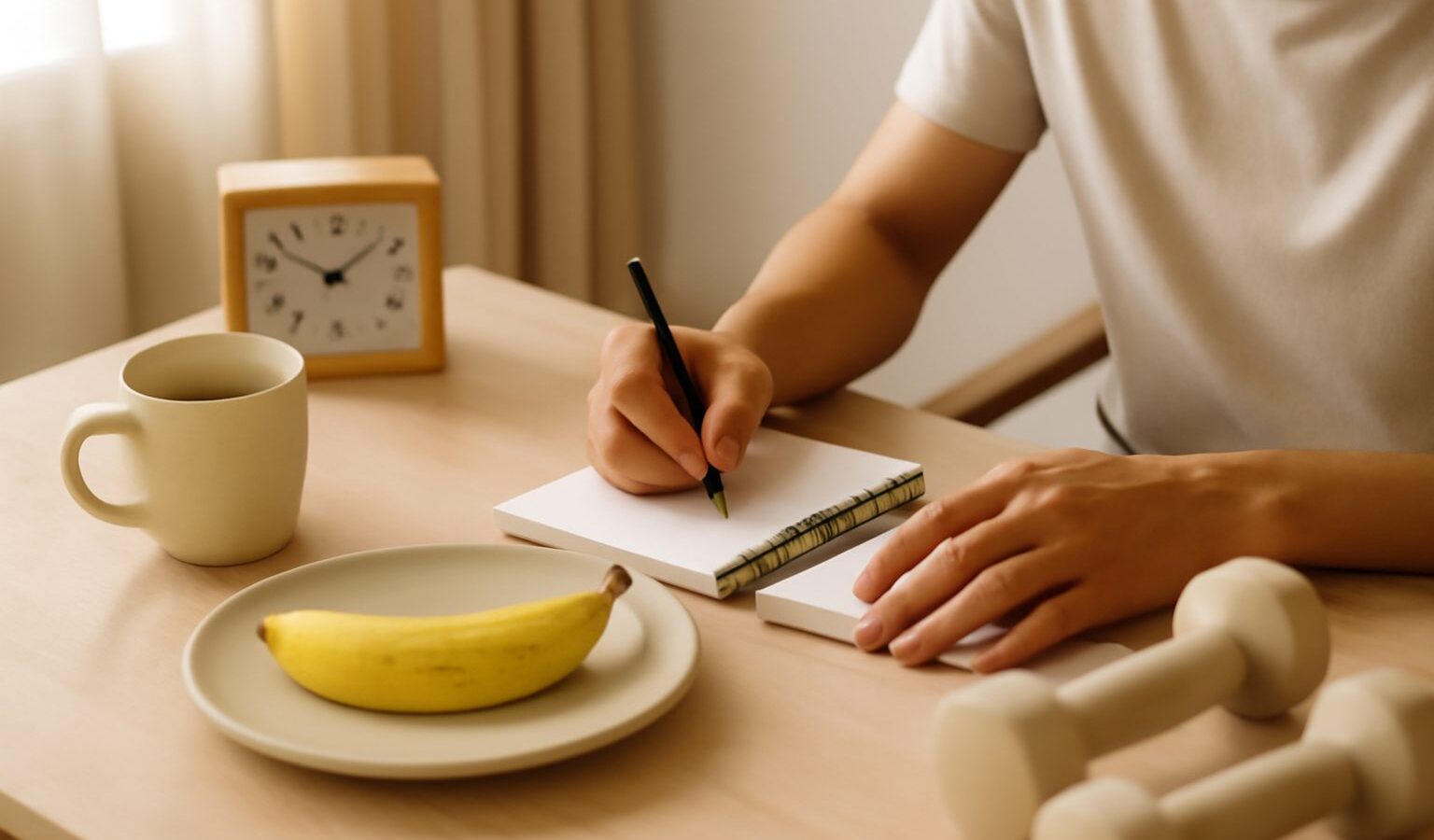
Most of us imagine self-discipline as gritted teeth and iron willpower, the ability to force yourself through anything by sheer effort. That picture is not only unappealing, it is also wrong. Willpower is a limited resource that fades as the day wears on, which is why your resolve to skip supper is strong at 9am and gone by the time you pass the prata shop at 10pm. Real self-discipline is quieter than that. It is the ability to keep doing what matters even when you do not feel like it, and it comes far more from good systems than from raw effort.
The encouraging part is that self-discipline is a skill, not a fixed trait you either have or lack. You can build it the same way you build fitness: through small, repeated actions that get easier with practice. This guide covers how it actually works, why relying on motivation fails, and the practical steps you can start today, whether you are studying while working, juggling a demanding job, or simply trying to keep a promise to yourself.
Why Willpower Alone Keeps Letting You Down
If you have ever started a new habit with total conviction only to abandon it a fortnight later, the problem was probably not a weak character. It was a plan that leaned entirely on motivation and self-control, both of which are unreliable by design.
Motivation is a feeling, and feelings come and go. On a good day, after a decent night’s sleep, going for a run feels doable. After a nine-hour shift and a crowded commute home on the East West Line, it feels impossible. If your habit only happens when you feel motivated, it will happen rarely.
Willpower has a similar flaw. Every decision you resist during the day draws from the same well: skipping the bubble tea, staying off social media, holding your temper in a tense meeting. By evening the well is low, which is exactly when most people plan their hardest tasks. Building self-discipline means designing your life so that you depend on willpower as little as possible, saving it for the moments that genuinely need it.
Make the Right Thing Easy and the Wrong Thing Hard
The single most effective way to strengthen self-discipline is to shape your environment so good choices take less effort than bad ones. This is often called reducing friction, and it works because we are all a little lazy in the moment, no matter how committed we are in principle.
If you want to read more, leave a book on your pillow and charge your phone in another room. If you want to stop late-night snacking, do not keep the snacks in the house, because the effort of going downstairs to buy them is often enough to stop you. If you want to go to the gym before work, sleep in your workout clothes and pack your bag the night before.
The reverse is just as useful. Add friction to the things you want less of. Log out of shopping apps so each purchase means typing your password again. Move distracting apps off your home screen into a folder. Delete the game that swallows your evenings. You are not relying on willpower to resist; you are making the unwanted choice slightly annoying, and slightly annoying is often enough.
Start Absurdly Small and Build Consistency First
When people decide to become disciplined, they tend to overcommit: an hour of study every night, the gym five times a week, no sugar at all. These grand plans feel satisfying to make and are almost impossible to keep, and each collapse chips away at your belief that you can change.
A better approach is to shrink the habit until it feels almost too easy, then do it every day. Two minutes of stretching. One page of reading. Opening your notes for five minutes. The point at this stage is not the result; it is proving to yourself that you are someone who shows up. Consistency is the foundation, and intensity can come later once the habit is stable.
- Pick one habit, not five. Spreading yourself thin guarantees failure on all fronts.
- Attach it to something you already do, such as reviewing tomorrow’s tasks right after you finish dinner.
- Track it simply. Tick a calendar or use a notes app so you can see the streak building.
- Aim never to miss twice in a row. Missing once is human; missing twice is the start of a new, worse habit.
Give any new habit a few weeks of gentle repetition before you judge it. Discipline compounds slowly, and the early days always feel like more effort than reward.
Plan for the Moments You Will Want to Quit
Self-discipline is tested not on ordinary days but on the hard ones: when you are tired, stressed, or tempted. If you decide in advance how you will respond, you take the decision out of the heat of the moment, when your judgement is weakest.
A simple tool is the if-then plan. You pair a likely obstacle with a fixed response, so you do not have to think when it arrives. The table below shows how much steadier a prepared response is than a vague intention.
| Situation | Willpower approach (fragile) | System approach (reliable) |
|---|---|---|
| Tempted to scroll instead of study | Try harder to resist the phone | Phone in another room, timer set for 25 minutes |
| Too tired to exercise after work | Hope you feel motivated later | Lay out clothes; commit to just 10 minutes |
| Craving supper late at night | Tell yourself to have willpower | Keep no snacks at home; drink water first |
| Skipped a day and feel like giving up | Feel guilty and stop entirely | Restart the next day; never miss twice |
Notice that the reliable column removes the decision from the tired, tempted version of you and hands it to the calm, planning version. That is the heart of self-discipline: letting your best self set the rules that your weakest self can still follow.
Be Kind to Yourself When You Slip
It sounds odd, but self-compassion makes you more disciplined, not less. People who treat a slip as proof they have failed tend to give up altogether, the classic “I have already ruined today, so I might as well restart on Monday” trap. People who treat a slip as normal simply get back on track at the next opportunity, and over months that is what actually matters.
Discipline is not about being perfect. It is about your overall direction. A missed workout, a lazy weekend, or a bad week does not erase your progress unless you let it convince you to stop. Expect setbacks, plan your comeback, and measure yourself over seasons rather than single days. If you find that you are persistently exhausted, low, or unable to keep even small commitments despite trying, that can be a sign of something beyond habit, and it is worth speaking to a doctor or a counsellor rather than pushing harder.
Build the systems, start small, protect yourself from your own worst moments, and forgive yourself quickly. Do that consistently and self-discipline stops feeling like a battle and starts feeling like who you are.
Explore more
Self-discipline works best alongside a clear sense of direction, so read how to set goals you will actually achieve and using SMART goals in real life to point your effort somewhere worthwhile. When motivation dips or things go wrong, building resilience when things go wrong will help you keep going.