
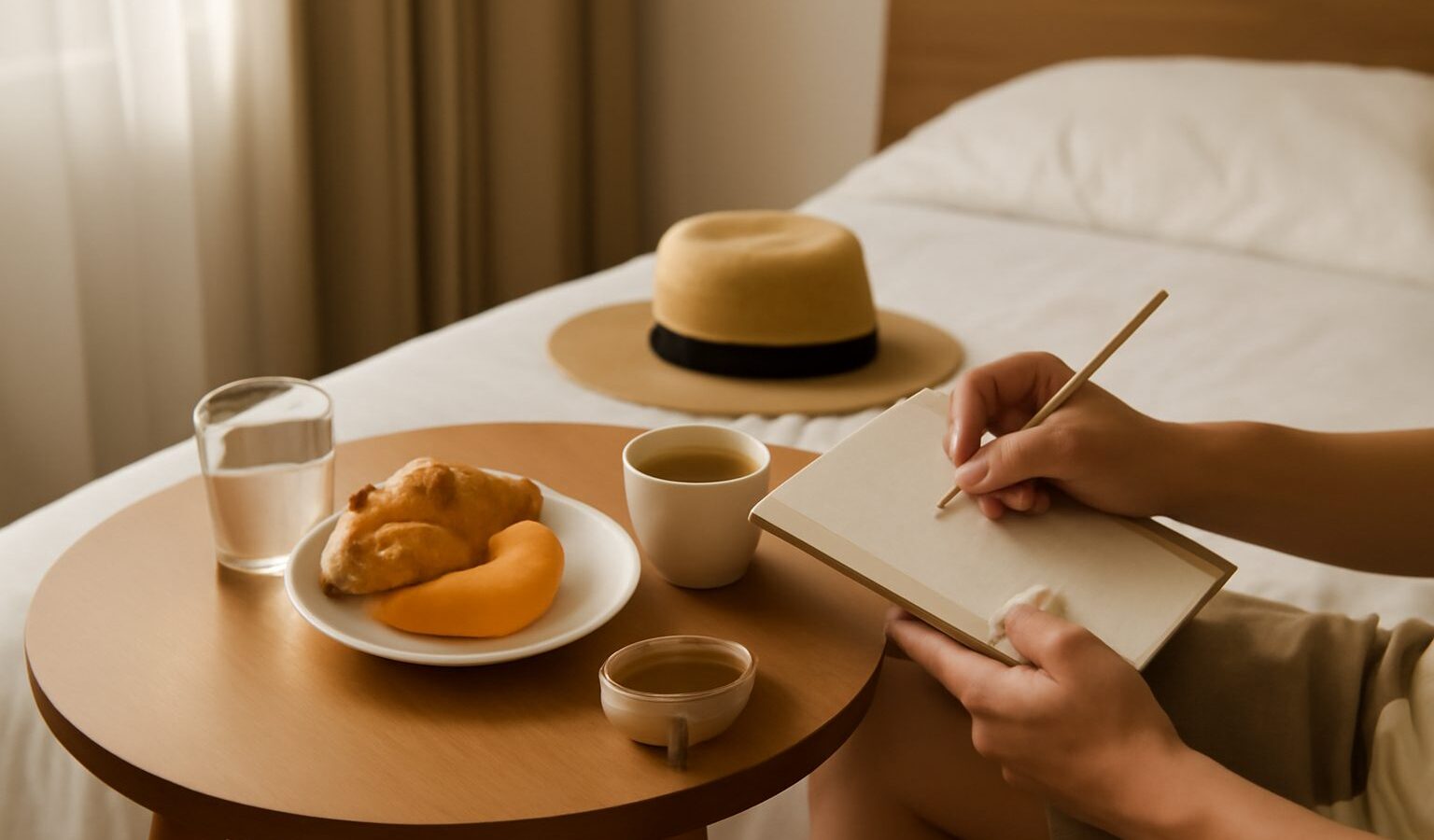
You spend months building a routine. You exercise a few times a week, you journal most nights, you keep your spending in check. Then a well-earned trip to Bali or Japan arrives, the routine vanishes, and by the time you land back at Changi it feels like you are starting from zero. Keeping habits on holiday is one of those quiet challenges nobody warns you about, because the very thing that makes travel wonderful, the break from normal life, is also what knocks your habits over.
The good news is you do not have to choose between enjoying your holiday and protecting your progress. With a few small adjustments, you can keep the important habits ticking over gently, come home without that sinking “back to square one” feeling, and still fully relax. This is about maintenance, not intensity.
Why Holidays Break Your Habits
Most habits lean heavily on cues. The time of day, the place, the objects around you. Your evening walk happens because you pass the park on the way home. Your stretching happens because the mat is by the bed. Take away those cues by changing your whole environment, and the habit loses its trigger, so it quietly disappears.
Holidays remove almost every cue at once. Different bed, different schedule, no fixed mealtimes, no familiar corners. On top of that, the whole point of a holiday is to escape structure, so any routine can feel like an unwelcome guest. This is completely normal, and it is not a sign that your habits were fake or weak. They were simply propped up by surroundings that are no longer there.
Understanding this helps you respond kindly. The problem is not your discipline. It is the missing cues, and cues can be rebuilt or replaced with a little thought.
Decide Which Habits Actually Travel
You cannot and should not carry every habit on holiday. Trying to keep your full routine while travelling is a recipe for stress and resentment, which defeats the purpose of a break. Instead, pick one to three habits that matter most to you, and let the rest rest.
Ask which habits, if you dropped them entirely, would be hardest to restart or would most affect how you feel. For many people that is some movement, some sleep discipline, and perhaps a money check-in so the trip does not blow the budget. Everything else can pause without guilt.
Here is a simple way to sort them.
| Habit type | On holiday | Why |
|---|---|---|
| Core wellbeing (movement, sleep) | Keep a tiny version | Protects mood and energy for the trip |
| Money awareness | Keep a quick check | Stops holiday overspending regret |
| Identity habits (reading, journaling) | Keep if easy, drop if not | Nice to have, not urgent |
| Intense goals (strict training, study) | Pause fully | Rest is part of the plan |
Being deliberate about this means you protect what counts and genuinely switch off from the rest, instead of half-carrying everything and enjoying nothing.
Shrink Habits to a Holiday Minimum
The single most useful trick is to define a “minimum version” of each habit you want to keep. This is the smallest amount that still counts as showing up, small enough that you can do it even after a long day of walking around a foreign city.
Some examples of holiday minimums:
- Exercise becomes a ten-minute walk or a few stretches in the hotel room.
- Journaling becomes one line in your phone notes before sleep.
- Reading becomes two pages, not a chapter.
- Money check becomes a thirty-second glance at what you spent today.
The magic here is not the size of the action but the fact that the thread stays unbroken. A ten-minute walk keeps “I am someone who moves” alive, which makes the full habit far easier to resume at home. This links closely to the idea of identity-based habits, where each small action is a vote for who you are, even a holiday-sized one.
Attach Habits to Holiday Cues
Since your normal cues are gone, borrow new ones from the trip itself. This is called anchoring, where you tie a habit to something that already happens reliably, so you do not have to remember it separately.
On holiday, reliable anchors might be your morning coffee, the walk to breakfast, or getting back to the room in the evening. Attach your minimum habit to one of these. “After I order my morning coffee, I write one line in my journal.” “Before I shower off the day, I do two minutes of stretching.” Because the anchor happens anyway, the habit gets a free ride.
You can also make habits pleasant so you actually want them, which is easier on holiday when you have more freedom. A stroll along a new coastline barely feels like exercise. Reading by the pool hardly feels like a chore. Leaning into enjoyment here works the same way it does at home, an approach we cover in our guide on enjoyable habits.
Come Home Without the Guilt Spiral
However well you plan, some habits will slip on holiday, and that is fine. The real danger is not the break itself but the story you tell afterwards. “I ruined everything, I have no discipline, what is the point.” That guilt spiral is what actually derails people, far more than a few missed workouts ever could.
So expect the slip and plan your re-entry in advance. Before the trip, decide on your first day back: the first workout, the first proper meal at home, the first early night. Knowing the exact restart point turns a vague “I should get back on track” into a simple plan you just follow. Aim to resume within a day or two of landing, before the holiday looseness hardens into a new normal.
Go gently on that first day back too. Jet lag, laundry and a full inbox are real, so restart with the minimum version rather than trying to prove yourself with a heroic session. One small win on day one rebuilds momentum better than an ambitious plan that leaves you sore and discouraged. If the slip has knocked your confidence, our guide on dealing with self-doubt can help you be kinder to yourself while you find your feet.
Let Holidays Reset You On Purpose
There is a hidden upside here. A holiday can be a chance to notice which habits you actually miss and which you do not. If you never once missed a routine, maybe it was not serving you. If you genuinely felt its absence, that tells you it matters and deserves protecting.
Use the return home as a small reset. You are already out of your old grooves, which is oddly a good moment to tweak a routine, drop one that had gone stale, or restart a habit you had let slide. Rather than seeing the trip as a setback, treat it as a natural pause that lets you rebuild your days a little more intentionally.
Keeping habits on holiday is really about balance. Protect the few that matter with tiny minimum versions, anchor them to the rhythms of the trip, let the rest genuinely rest, and plan a gentle re-entry. Do that, and you get the best of both: a proper break that leaves you refreshed, and a routine that is still waiting for you when you get home.