
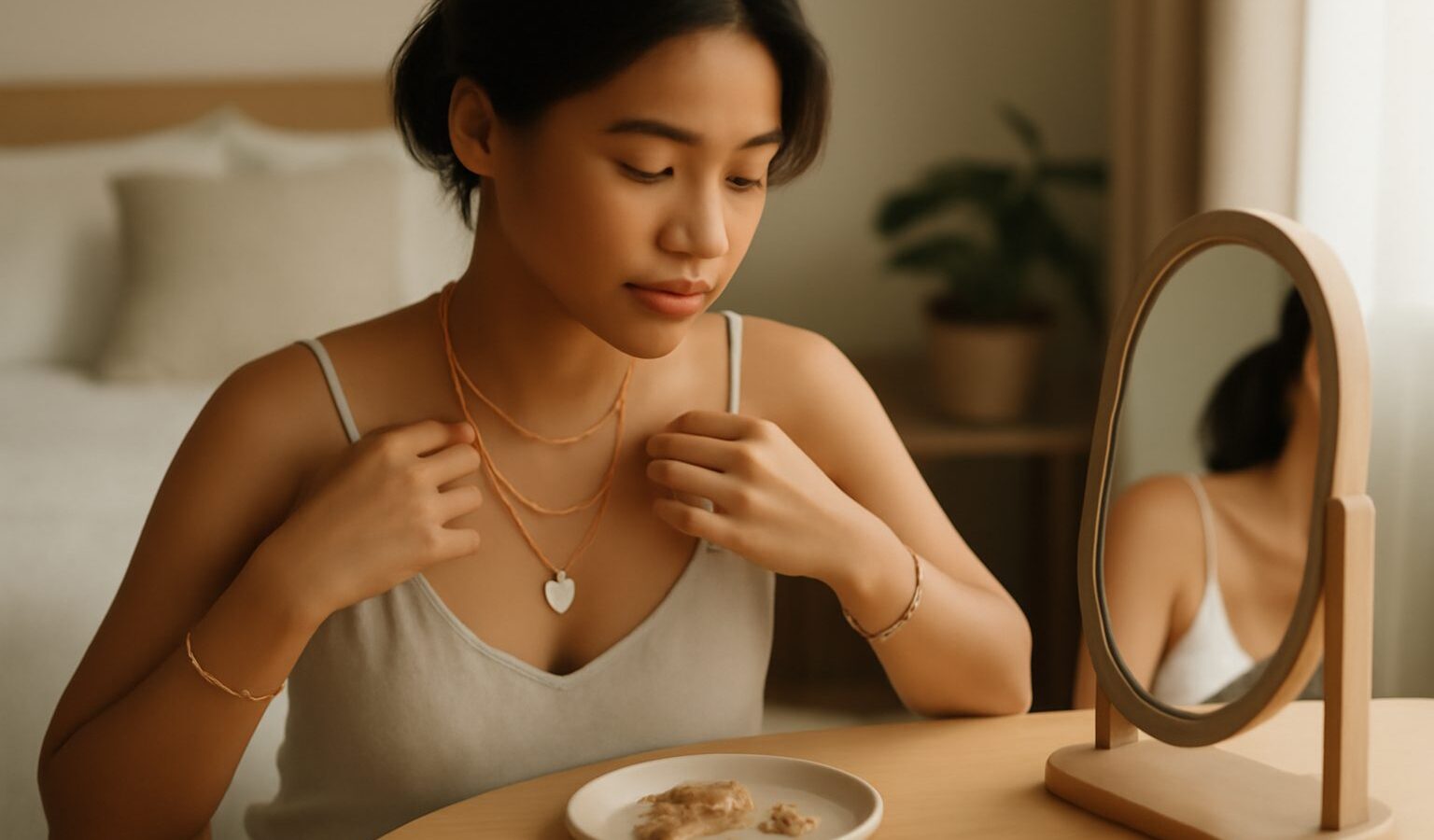
Layered jewellery looks effortless, but there is a quiet logic behind the pieces that stack so well. Get the lengths, the balance and the mix right, and a few simple chains turn a plain outfit into something considered. Get it wrong and it can feel cluttered or tangled. Learning how to layer jewellery is really about a handful of easy principles, and once they click, you can build looks from pieces you already own.
There is a tropical angle too. In Singapore’s humidity, delicate everyday jewellery is comfortable, light, cool and easy to wear from desk to dinner, but heat and sweat also affect how metals wear, so care is part of the craft. This guide covers necklaces, rings and bracelets, plus how to keep it all looking bright.
Start With Necklace Lengths
Necklaces are where most people begin, and layering them is mostly about spacing. If chains sit at different lengths, each one has room to be seen; if they are too close, they clump and tangle.
A reliable formula uses two or three chains:
- A choker or short chain (around 35 to 40cm) that sits high at the base of the neck.
- A mid-length chain (around 45cm) with a small pendant.
- A longer chain (50cm and up) to draw the eye down.
Aim for a gap of at least 5cm between each so they layer cleanly. Odd numbers, one, three, five, tend to look more natural than even ones. Vary the details as well: mix a plain chain with a pendant chain, or a fine chain with a slightly chunkier one, so each has its own character.
Your neckline is a partner in this. A V-neck loves a pendant that echoes its shape; a scoop or round neck gives short layers room; a high or collared neck works better with long chains worn over the top.
Stacking Rings and Bracelets
The same logic extends to hands and wrists: vary the pieces so each one reads, and let a little negative space keep it from looking heavy.
For rings:
- Mix widths, a thin band next to a wider one, to add interest.
- Spread pieces across fingers rather than crowding one.
- Try a midi ring or a stacked pair on a single finger as a focal point.
- Keep at least one hand lighter so the look stays balanced.
For bracelets and wrists:
- Combine textures: a fine chain, a bangle, and a beaded strand.
- Let a watch anchor one wrist and stack two or three thin pieces beside it.
- Leave a touch of space so bracelets move rather than jam together.
The goal across rings and bracelets is a curated mix, not a full hand of everything at once. Two or three well-chosen pieces almost always beat six competing ones.
Mixing Metals and Balancing the Look
The old rule that you must not mix gold and silver is long gone. Mixed metals look modern and intentional, and mixing means you never have to match everything perfectly.
To make it feel deliberate rather than accidental:
- Include one piece that combines both metals (a two-tone chain or clasp) to tie the mix together.
- Repeat each metal at least twice across your look so neither seems stranded.
- Let one metal lead and the other support, rather than a perfect 50-50 split.
Balance also means thinking about weight and focus. If your necklaces are the statement, keep earrings small and rings simple. If you are wearing bold earrings, let the neck stay bare or minimal. One area leads; the others follow. This keeps even a lot of jewellery looking intentional.
None of this depends on precious materials. Well-made costume and plated pieces layer just as beautifully as fine jewellery, and mixing high and low is completely normal. Buy what you love and will wear often; cost-per-wear is the honest measure, not the price tag.
A Quick Layering Blueprint
Here is a simple starting map for common looks. Treat it as a base you can adjust.
| Look | Necklaces | Rings | Wrist | Best for |
|---|---|---|---|---|
| Minimal daily | One pendant | One thin band | Watch only | Work, low-key days |
| Soft layered | Two chains | Two stacked | One fine bracelet | Everyday polish |
| Statement | Three chains | Two to three | Bangle plus chain | Dinners, events |
| Boho mix | Two to three long | Midi plus bands | Beaded stack | Weekends, resort |
| Two-tone modern | Two mixed metals | Mixed metal pair | Two-tone cuff | Versatile, all-day |
If you are just starting, build the soft layered row first: two well-spaced chains and a couple of rings cover most days without fuss.
Jewellery Care in Singapore Humidity
Heat, sweat and humidity are hard on jewellery, so a little care keeps your layers looking fresh and protects your investment, however modest.
- Put jewellery on last, after skincare and any fragrance, so residue and moisture do not dull the metal.
- Take pieces off before pools and the sea; chlorine and salt water tarnish and corrode over time.
- Wipe pieces down with a soft cloth after a sweaty day to remove residue.
- Store dry and separate, ideally in a pouch or a compartment box, so chains do not tangle or scratch.
- Silver tarnishes faster in humidity; an anti-tarnish strip in your box helps, and gentle polishing restores shine.
Plated and costume pieces last longer with the same habits, which stretches their life and keeps them out of the bin. You will find everything from budget to premium across department stores, boutiques and online marketplaces like Carousell, so check current prices with the retailer and buy the pieces you will reach for again and again.
Wear It Your Way
Layering is personal, and it flatters at every age and body. Whether you love a single fine pendant or a full, jangly stack, the right amount is the amount that feels like you. Start with two necklaces of different lengths, add a ring or two, and build slowly as you learn what you enjoy. The best layered look is the one you forget you are wearing because it simply feels like yours.
Explore more
Jewellery is the finishing touch on a good outfit: pair it with ideas from how to style a scarf for a rich collarbone, and think of a standout necklace as the third element in the third-piece rule. To make your metals and stones part of a bolder palette, see our guide to colour blocking.