
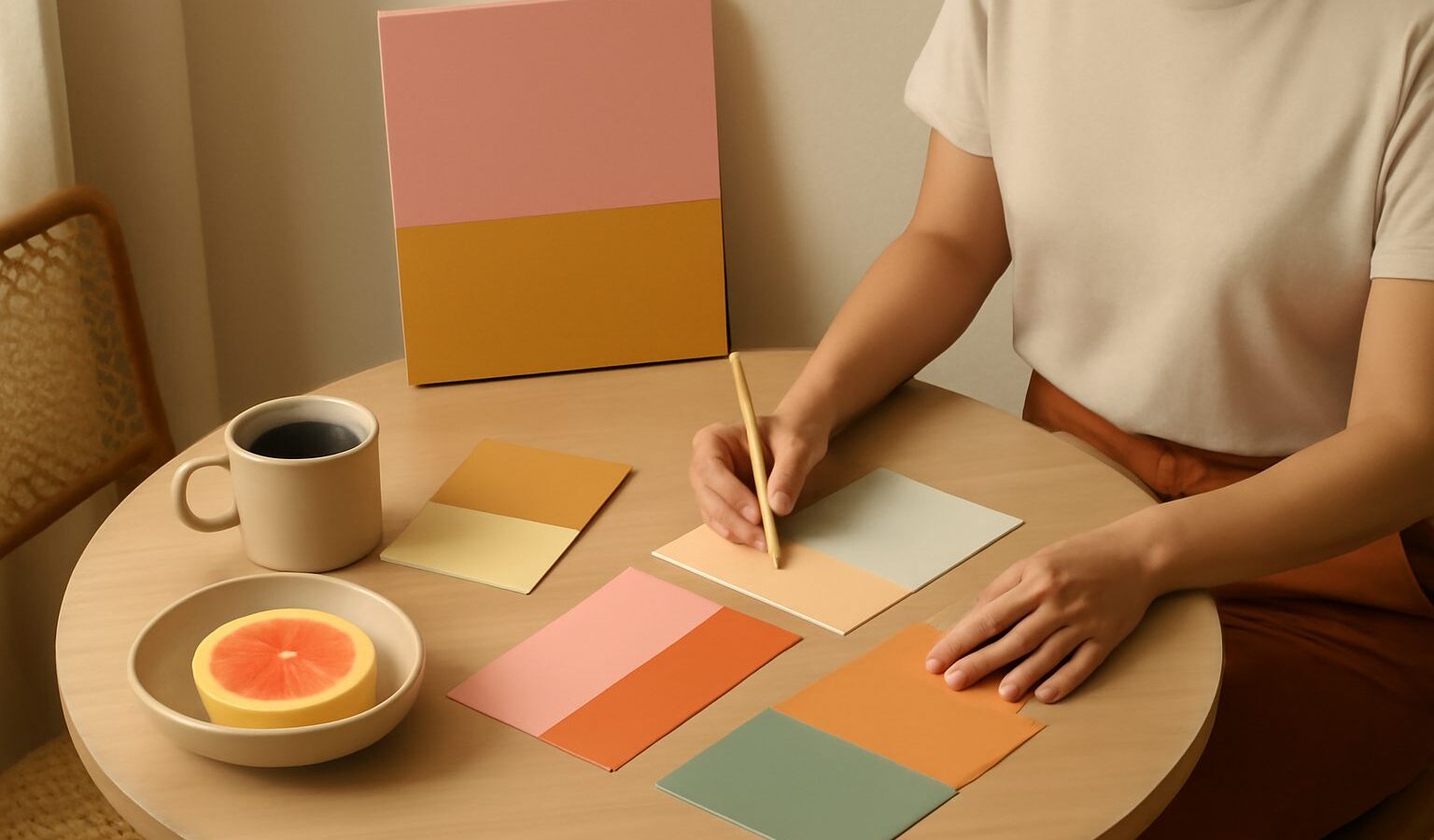
Colour blocking is one of the quickest ways to make a plain outfit feel intentional. Instead of hiding behind neutrals, you put two or more solid, saturated colours side by side and let the contrast do the work. Done with a little care, colour blocking outfits look modern and put-together without needing a single print or logo. Better still, this is a technique that costs nothing to learn. If you already own a few solid tops and bottoms, you can start today with what is in your wardrobe.
For anyone in Singapore, there is a happy bonus: bold, clean colour reads beautifully in bright tropical light, and light solid fabrics keep you cooler than heavy patterned layers. This guide walks through how to choose colours, balance them, and wear the look with confidence, whatever your shape, size or age.
What Colour Blocking Actually Means
At its simplest, colour blocking means wearing distinct blocks of solid colour together so the boundaries between them stand out. A cobalt top with mustard trousers is colour blocking. So is a green skirt with a pink tee. The colours do not blend; they meet at a clear line, usually your waist, shoulders or hem.
There are two easy routes into the look:
- High contrast: colours that sit far apart, like blue and orange or purple and yellow. These feel energetic and playful.
- Tonal blocking: shades from the same family, like sky blue, teal and navy. This is softer and more subtle, and a gentle place to start if bright pairings feel like a lot.
You do not need every piece to be a statement. Even one bold block against a calm base counts, and it is often the most wearable version for daily life.
Choosing Colours That Work Together
You can lean on the colour wheel without overthinking it. A few reliable relationships:
- Complementary: opposite colours (blue and orange, red and green). Maximum punch, best in small doses if you are easing in.
- Analogous: neighbours on the wheel (yellow, orange, coral). These always look harmonious because they share undertones.
- Triadic: three colours evenly spaced (say, red, yellow, blue). Fun and bold; keep two muted and let one lead.
A simple rule of thumb: let one colour be the star, one be the support, and, if you add a third, keep it small, like a bag or shoes. If you are unsure whether two colours agree, hold the garments up together in natural daylight near a window. Your eye will tell you quickly.
Skin tone is worth a mention only in the sense of what makes you feel good. Warm, cool and neutral undertones all have gorgeous options; the point is to wear colours you enjoy seeing on yourself, not to follow a rigid chart.
Balancing Bold and Neutral
The fastest way to keep colour blocking from feeling costume-like is to give the eye a place to rest. Neutrals, white, cream, grey, navy, black, tan, act as a buffer between two strong colours or as a calm anchor for one.
Try these balancing moves:
- Pair two brights with white or tan accessories to break up the intensity.
- Let a neutral base (say, off-white trousers) carry a single bold top.
- Use denim as a neutral; a mid-blue jean sits happily next to almost any bright.
The 60-30-10 idea from interior design translates neatly to outfits: roughly 60 percent one colour, 30 percent a second, and 10 percent an accent. You do not need to measure anything, just aim for a clear main colour rather than a 50-50 split, which can look like the outfit cannot decide.
Colour Blocking for the Singapore Climate
Heat and humidity shape what is comfortable here, and colour blocking plays nicely with light dressing. Solid blocks of colour look sharp in cotton, linen and linen blends, the same breathable fabrics that keep you cool. A short-sleeve linen shirt in a strong colour, paired with neutral wide-leg trousers, is both airy and striking.
A few practical notes for tropical wear:
- Lighter and mid-tones show less heat stress than heavy dark layers, and they read as fresh in strong sun.
- Sweat and sheerness: very pale bottoms can turn translucent, so check in daylight or choose a slightly heavier weave.
- AC layering: keep a light solid-colour cardigan or overshirt in your bag. It doubles as a third colour block when the office or mall gets cold.
- Rain-ready colour: a bright umbrella or tote can be your accent block on grey monsoon days.
Local shopping makes this easy. Fast-fashion chains, department stores and online marketplaces like Carousell all carry plain solid basics in wide colour ranges, and a boutique in an area like Haji Lane can be a good hunting ground for a single standout piece. Buy solids you will re-wear rather than one-outfit novelties.
A Quick Pairing Cheat Sheet
Here is a starting grid. Treat it as inspiration, not law, and swap in whatever suits your mood and wardrobe.
| Base colour | Bold partner | Neutral to balance | Mood |
|---|---|---|---|
| Cobalt blue | Mustard yellow | White | Cheerful, daytime |
| Emerald green | Blush pink | Tan | Soft, romantic |
| Rust orange | Deep teal | Cream | Warm, grounded |
| Lilac | Olive green | Grey | Calm, modern |
| Coral | Navy | White | Fresh, versatile |
If you want a safe first attempt, start with the coral and navy row: navy behaves like a neutral, coral gives you the pop, and white sandals or a white bag tie it together.
Wearing It With Confidence
Colour blocking rewards fit as much as colour. Pieces that skim comfortably and let you move will always look better than something that pinches, whatever your size. Choose the cut that feels good on your body and lets you get through a humid day without fuss; comfort reads as confidence.
A few finishing touches:
- Keep accessories simple when the clothes are loud; one bag and one pair of shoes is plenty.
- Metallics (gold, silver) work as quiet accents and do not compete with your colours.
- Groom the silhouette, not the body: a light tuck or a defined shoulder line helps blocks read cleanly.
Start with one bold pairing you already own, wear it out for a low-stakes errand, and notice how it feels. Colour is meant to be enjoyed, and this is a skill that gets easier and more fun every time you try it.
Explore more
Once your colours are working, layer in the details: learn how to layer jewellery to add a metallic accent, and try the third-piece rule to turn a two-colour outfit into a complete look. A well-placed belt can also separate your blocks cleanly, so see how to use belts to elevate outfits.