
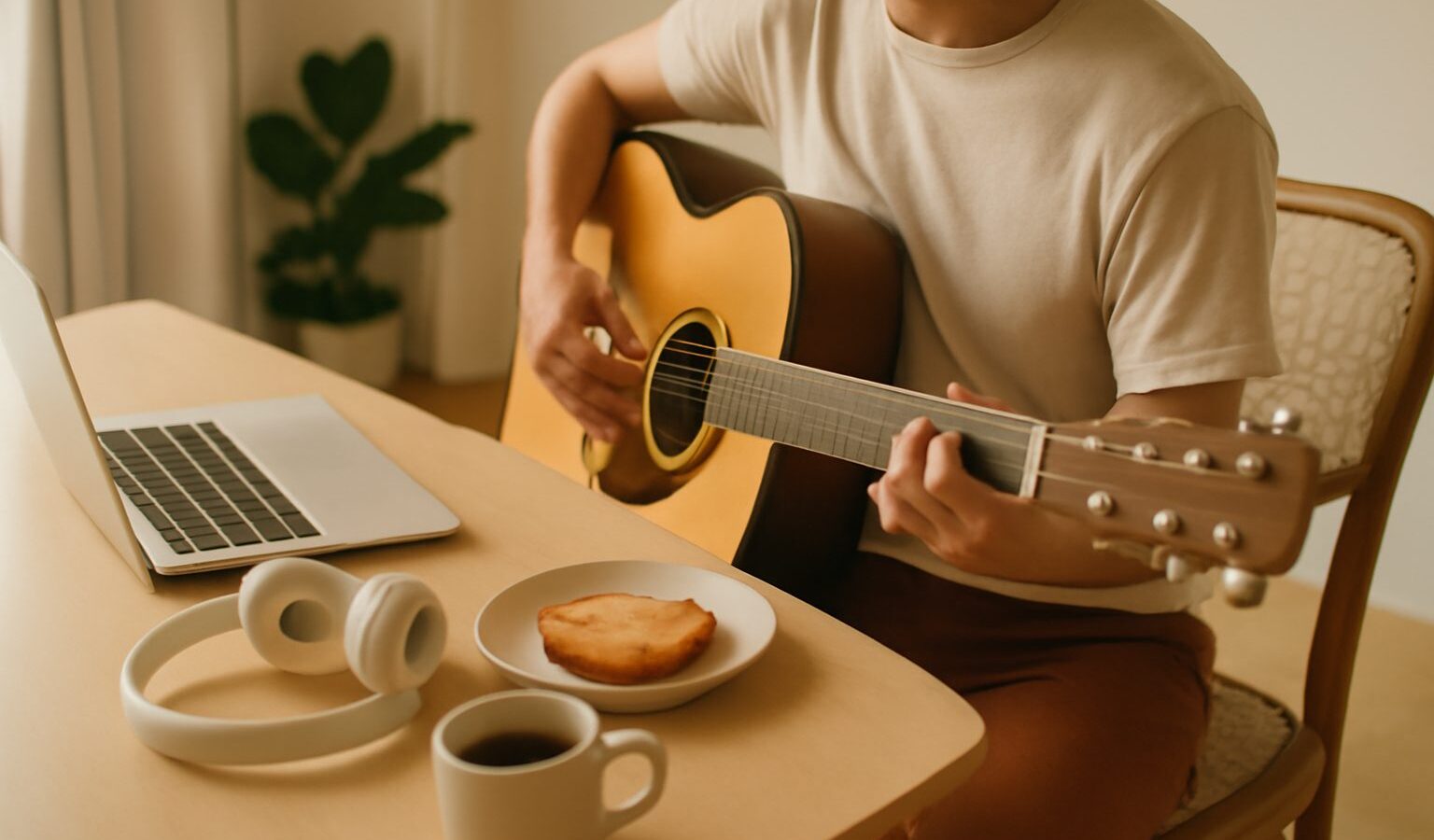
There is a special kind of freedom in learning songs by ear, in hearing a tune you love and slowly working it out on your instrument without a scrap of sheet music. It feels like magic when someone else does it, yet it is a learnable skill built on simple, repeatable steps rather than any special talent. This guide breaks the process down, from finding a song’s key to picking out its melody and chords, with practical advice for guitar, piano, voice or any instrument you play in a Singapore home.
Why Playing By Ear Is Worth It
Learning to play by ear does more than save you hunting for tabs and scores. It deepens your connection to music, sharpens your memory, and makes you a more confident, flexible player. Once your ear leads, you can join a jam, follow a singer, or reproduce a Mandopop chorus you just heard on the radio, all without printed music.
It also builds understanding. When you work a song out yourself, you notice how its parts fit, which chords recur, and why a melody rises where it does. That is real musical knowledge, earned rather than memorised. The skill rewards patience: your first song may take a while, but each one after it comes faster as your ear grows sharper.
Playing by ear does not replace reading music; the two support each other. But for the countless players who learn from records rather than pages, it is the single most liberating ability to develop.
Training Your Ear First
Before tackling a whole song, it helps to warm up the underlying skill, which is simply hearing relationships between notes. You do not need perfect pitch, the rare ability to name a note out of thin air. What you need is relative pitch, the far more common and completely learnable knack of hearing how one note relates to another.
- Hum before you play. Sing a phrase from the song out loud. If you can sing it, you already know it; you are just finding it on your instrument.
- Match single notes. Play a note, sing it back, then find nearby notes by ear. This builds the basic connection between hearing and playing.
- Listen for high and low. Notice when a melody steps up, leaps up, or drops. Direction is the first thing to catch.
Dedicated practice at this pays off quickly, and our guide on ear training for musicians goes deeper into structured exercises. A little every day beats a long session once a week.
Finding The Key And The Chords
Most songs sit in a single key, so finding that home base is the first real step. Play along and search for the note that feels like a resting point, the one the song keeps returning to and settling on. That note is your key’s home, and a grasp of scales and keys makes this hunt much faster because you will know which notes are likely to belong.
Once you have the key, the chords usually come from a small, predictable family. A handful of chords power most popular songs, so you are choosing from a short list rather than guessing wildly.
- Find the home chord. Start with the chord built on the key’s home note; songs very often begin or end there.
- Try the common neighbours. Test the few chords that naturally belong to that key. Most changes will be one of them.
- Listen for the bass. The lowest note often spells out the chord, so following the bass line is a shortcut to the harmony.
- Feel the changes. Notice exactly when the chord shifts, usually on a strong beat, and match it.
The reason this works so reliably is that keys and chords are deeply related. The map called the circle of fifths even predicts which chord a song is likely to move to next, turning guesswork into educated listening.
A Step By Step Approach
Bringing it together, here is a reliable order of attack for a new song.
- Listen many times. Absorb the song fully before touching your instrument. Familiarity is half the battle.
- Work out the key. Find the home note as described above.
- Get the melody. Pick out the tune one phrase at a time, slowly, humming then finding each note.
- Add the chords. Layer in the harmony underneath, testing the key’s common chords.
- Refine and repeat. Loop tricky sections, slow the audio if your player allows, and correct by ear until it matches.
Slowing a recording down, a feature many music players offer, is a fair and useful practice aid for figuring parts out. Keep in mind that songs are protected by copyright, so working a piece out for your own learning or for a properly licensed performance is fine, while publishing a recorded cover needs the right permissions. This is general guidance, not legal advice, so check licences for anything you release.
Ear Versus Sheet Music At A Glance
Both routes into a song have their place. This comparison helps you pick the right tool for the moment.
| Aspect | Learning by ear | Reading sheet music |
|---|---|---|
| Best for | Pop, Mandopop, jamming | Classical, exams, precision |
| Speed at first | Slower to start | Faster if you read well |
| What it builds | Listening and memory | Sight-reading and accuracy |
| Flexibility | High, adapt on the fly | Tied to the printed part |
| Long-term payoff | A sharp, reliable ear | Access to any written music |
The strongest players do both, reading when precision matters and playing by ear when freedom does. One skill feeds the other.
Practising Considerately At Home
Working songs out means a lot of repetition, often playing the same phrase over and over, which can test the patience of close neighbours. In an HDB flat or condo with thin walls, keep to reasonable hours, follow town council and HDB guidance, and use headphones where you can. Keep listening levels moderate to protect your hearing over these long sessions, and take regular breaks.
Learning songs by ear is one of the most satisfying skills a musician can build. It frees you from the page, deepens your understanding, and turns every song you hear into something you might play. Start small with a simple tune you know inside out, be patient through the first few, and trust that your ear is getting sharper with every attempt. Before long, working out music by ear will feel less like magic and more like second nature.