
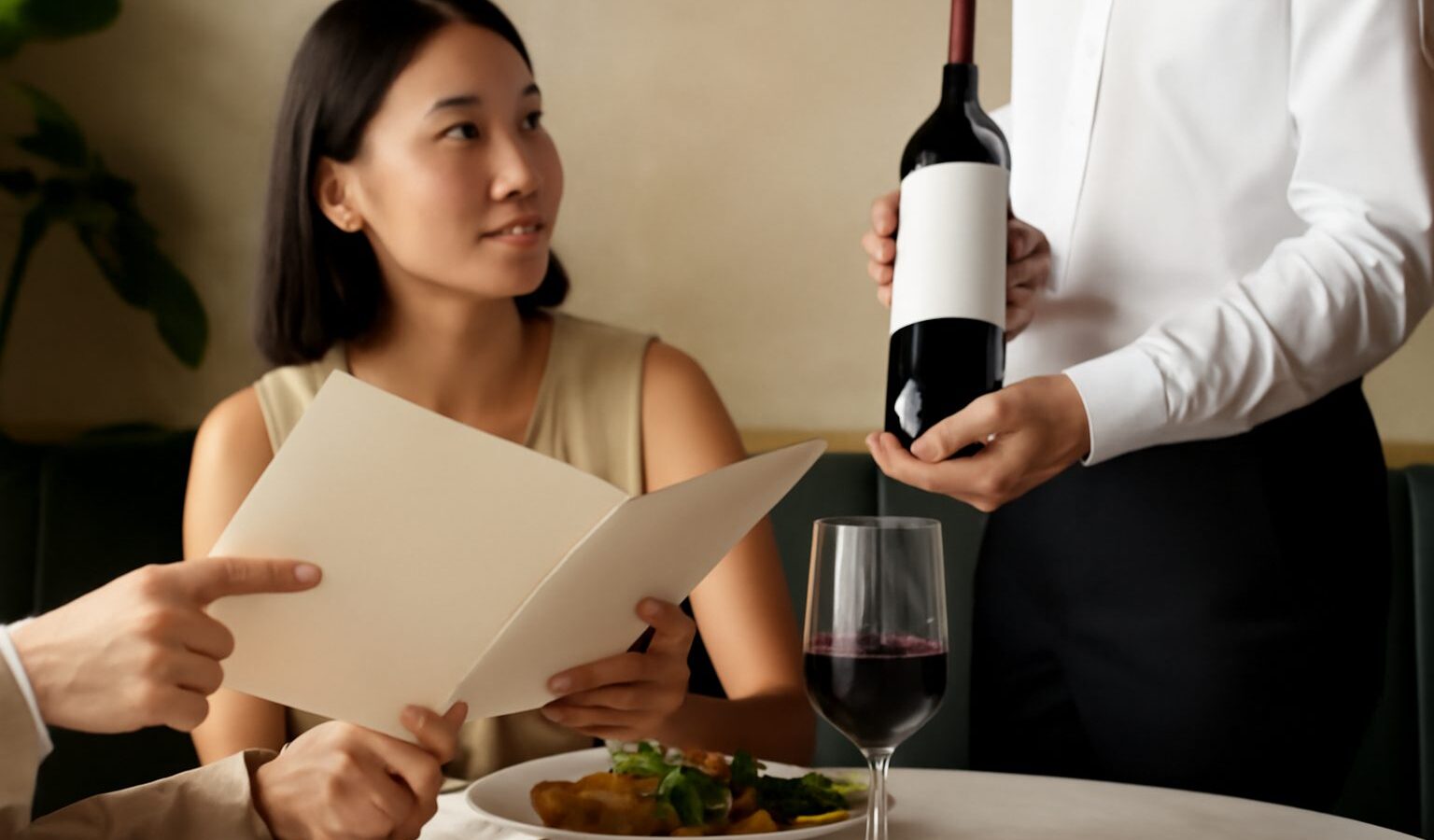
For a lot of people, the wine list is the most stressful page of the menu. The prices climb quickly, the labels are unfamiliar, and there is a quiet fear of choosing wrong in front of the table. It need not be that way. Ordering wine restaurant meals well is a skill anyone can learn, and it rests on a few simple habits rather than encyclopaedic knowledge. This guide walks through reading a list, talking to the staff, understanding house wine, corkage and the tasting ritual, so you can order with confidence in Singapore. As with any drink, wine is for those of legal drinking age, best enjoyed in moderation, and never before driving; plan a safe way home first.
Read the Wine List Without Panic
A wine list looks intimidating until you know how it is organised. Most follow a predictable structure, so a quick scan tells you more than you think.
- Wines are usually grouped by colour, then by style, and often by region or grape.
- Bottles run roughly from lighter and cheaper at the top of a section to fuller and pricier below.
- Wines by the glass sit in their own short list, ideal when the table wants different things.
- A half bottle, where offered, suits two people who want just a little.
You do not need to recognise every name. Decide first on colour and rough style, say a crisp white or a medium red, then look at the price band you are comfortable with and choose within it. In Singapore, wine carries duty and restaurant mark ups are real, so there is no shame in ordering from the more affordable end. A well chosen inexpensive bottle beats an overreaching expensive one every time.
House Wine, By the Glass or by the Bottle
One of the friendliest options on any list is the house wine. It is the restaurant’s everyday pour, chosen to be easygoing and to suit the kitchen’s food, and it is usually the best value on the page. Ordering it is not a sign of inexperience; it is often a sign that you know where the sensible choices live.
Deciding between glasses and a bottle comes down to simple maths and how the table is drinking.
| Option | Best when | Value | Notes |
|---|---|---|---|
| House wine by glass | One or two drinkers, casual meal | Good | Easy, low commitment, quick to serve |
| Wine by the glass | Everyone wants something different | Fair | More choice, costs more per glass |
| House wine by bottle | A few drinkers, same preference | Very good | Cheapest way to share a decent wine |
| Named bottle | A special occasion or a pairing | Varies | More range, read the price carefully |
As a rough guide, a bottle holds about six glasses, so once three or more people each want a second pour, a bottle usually beats buying by the glass. If the table is mixed, ordering one bottle to share plus a glass or two for the others often keeps everyone happy.
Talk to the Staff and Use the Sommelier
The person taking your order is your best resource, and asking for help is a mark of a confident diner, not a clueless one. Larger or more formal restaurants may have a sommelier whose whole job is to guide you; more casual places will have a server who knows the list.
Give them something to work with. Rather than asking for a good wine, say what you want in plain terms: a price you are happy with, a style you like, and what you are eating. A line as simple as, “We are having the seafood, we like crisp whites, and around this price,” gives them everything they need. Naming your budget is completely normal and, done quietly by pointing at a price on the list, entirely discreet. A good recommendation within your range is far more useful than being talked upwards, and any decent restaurant will respect a clear budget.
Corkage, Tasting and Table Etiquette
A few practical customs round out the experience, and knowing them removes the last of the nerves.
Corkage is the fee a restaurant charges to open and serve a bottle you have brought yourself. Policies vary widely and some places do not allow it at all, so always call ahead to check whether corkage is offered and what it costs. It can make sense for a special bottle you already own, though for everyday drinking the restaurant’s own list is usually simpler.
The tasting ritual, when a bottle is opened, trips up many diners. Here is what is actually happening.
- The server shows you the label to confirm it is the wine you ordered.
- They pour a small taste for the person who ordered.
- You are checking that the wine is not faulty, not whether you like the style.
- A faulty wine smells musty like wet cardboard or flat and vinegary; that is grounds to send it back.
- If it is sound, a nod is all that is needed, and the server pours for the table.
You are never expected to reject a wine simply because it is not to your taste, only if it is genuinely faulty. A few other small courtesies help the night along: let the server top up glasses rather than reaching across the table, hold a white by the stem so you do not warm it, and pace the wine with food and water. Ordering wine well is really about comfort, yours and the table’s, and a relaxed, moderate approach is what makes a meal memorable for the right reasons.
Explore more
Once you are at ease with a wine list, our guide to the Singapore Sling and classic cocktails is a fun next step for nights out. To keep good bottles at home, see our home bar guide, and for where to drink well, try our bar hopping neighbourhoods guide.