
The tank is the player who charges in first, soaks the punishment, and makes room for everyone else to do their job. It looks reckless from the outside, but good tanking is one of the most thoughtful roles in team games. Learning to play the tank role in Singapore ranked or casual matches is about controlling space and dictating fights rather than simply having a big health bar. This guide covers what the role really involves, the skills that matter, and the habits that turn a walking punching bag into a match-winner.
What the tank role really does
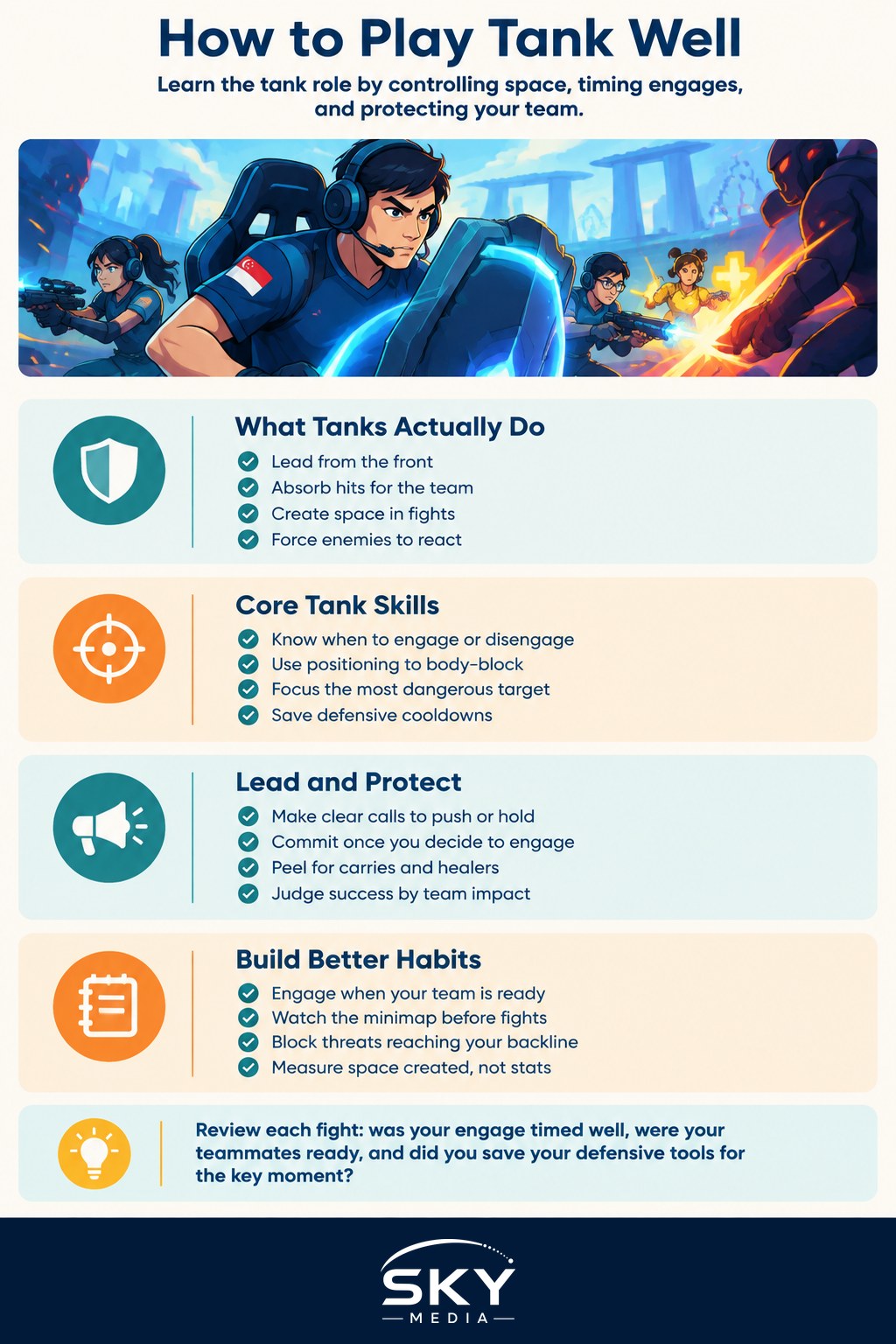
Across team games, the tank goes by many names, but the job is similar. You are the front line. Your health and defensive tools let you take hits that would kill a squishier teammate, and your presence forces the enemy to react to you. A tank’s value is measured less in kills and more in the space they create, the damage they absorb, and the enemies they lock down so allies can clean up safely.
That means tanking is a role of initiative and timing. You often decide when a fight starts by choosing when to engage, and a good engage at the right moment can win a battle before it truly begins. A bad one, charging in alone with the team not ready, throws the fight instead. So the mental side is huge. You are constantly asking whether now is the moment, whether your team is with you, and where you want the fight to happen.
If you are weighing up which role suits you, understanding esports roles and positions lays out how tanks fit alongside damage and support, and how to find your role or main helps you decide.
Core skills every tank needs
Tanking rewards awareness and discipline more than raw aim. A few skills carry most of the weight.
- Engaging and disengaging. Knowing when to start a fight and, just as importantly, when to back off keeps your team in winning positions. A tank who dives at the wrong time hands the enemy an easy pick.
- Positioning and body-blocking. You want to stand between the enemy and your vulnerable teammates, using your body and abilities to block paths and soak the first hits.
- Target priority. Locking down the enemy’s most dangerous player, or peeling them off your carry, is often worth more than chasing an easy kill.
- Cooldown management. Your defensive abilities are strongest when saved for the moment you actually take the hit, not spent early out of nerves.
Because you are usually the first to see the enemy, you also gather a lot of information. Map awareness helps you spot when the enemy is grouping or missing, which shapes when you should engage. If that is a weak spot, make a habit of glancing at the minimap before every engage.
Leading fights and protecting your team
The tank often ends up as a shot-caller, because you are the one deciding the moment of engagement. That does not mean barking orders. It means making clear, confident calls such as when to push, when to hold, and when to retreat, then committing so your team can follow. Hesitation is often worse than a slightly imperfect call, since a half-hearted engage leaves you exposed with no backup. Our guide on how to shot-call and lead a team goes deeper on leading fights and keeping the team coordinated.
Protecting teammates is the other half of the job. Once a fight starts, a good tank keeps peeling for the vulnerable damage dealers and healers, blocking enemies who try to reach them. Think of yourself as a mobile wall. Your carries deal the damage, and your job is to make sure they live long enough to do it. This shift in thinking, from personal kills to enabling the team, is what separates a great tank from a frustrated one.
Mindset matters here too. Tanks often die first by design, and it is easy to feel like you are always the one getting blamed. Focus on whether your engages were well timed and your team followed, rather than on your death count alone. A tank who dies buying three seconds for the team to win a fight has done the job perfectly.
Building good habits and improving
Improving as a tank comes from reviewing your decisions more than your reflexes. After a rough fight, ask whether you engaged at the right time, whether your team was ready to follow, whether you saved your defensive tools for the key moment, and whether you protected the right teammate.
A few habits worth building:
- Engage on your terms, when your team is ready, not out of impatience.
- Save your strongest defensive abilities for when you actually take damage.
- Peel for your carries and block threats trying to reach them.
- Make clear calls and commit, rather than hovering half-in.
- Judge your games by space created and fights won, not by your own scoreline.
Tanking is a role of courage tempered with judgment. Get the timing and the team-first mindset right and you become the backbone that makes everyone around you stronger. To handle the ups and downs of climbing without a fixed team, pair this with surviving solo queue, and you will have a solid foundation to build on.
Frequently Asked Questions
Should I engage if my team is not close behind me? Usually not. A lone engage leaves you exposed with no backup and often hands the enemy a free pick. Wait for a clear signal that your team is ready, or call out your intention first so they can follow.
What do I do when the enemy focuses my tank over and over? Treat it as a win if your team is dealing damage elsewhere, but save defensive abilities for the burst. If you are dying too fast, fall back toward healing or cover, and ask teammates to help peel. Rushing in will only repeat the problem.
Do tanks need to be good at aiming? Usually less than damage roles, but it depends on the character. Some tanks use skillshots or crowd control that need accuracy. Spend time in a training mode with your chosen tank to learn its range and timing.
How do I counter a tank when I am not playing one? Focus on the squishier targets behind them, use crowd control to slow engages, and avoid chasing the tank alone. Communicate with teammates to split their focus and keep your own abilities ready for the moment they dive.
Is being a tank stressful in ranked play? It can be, since tanks often start fights and attract blame. Focus on whether your engages were well timed and your team followed. Taking breaks between games, muting toxic chat and reviewing decisions calmly all help.
Further reading: How to Play the Support Role