
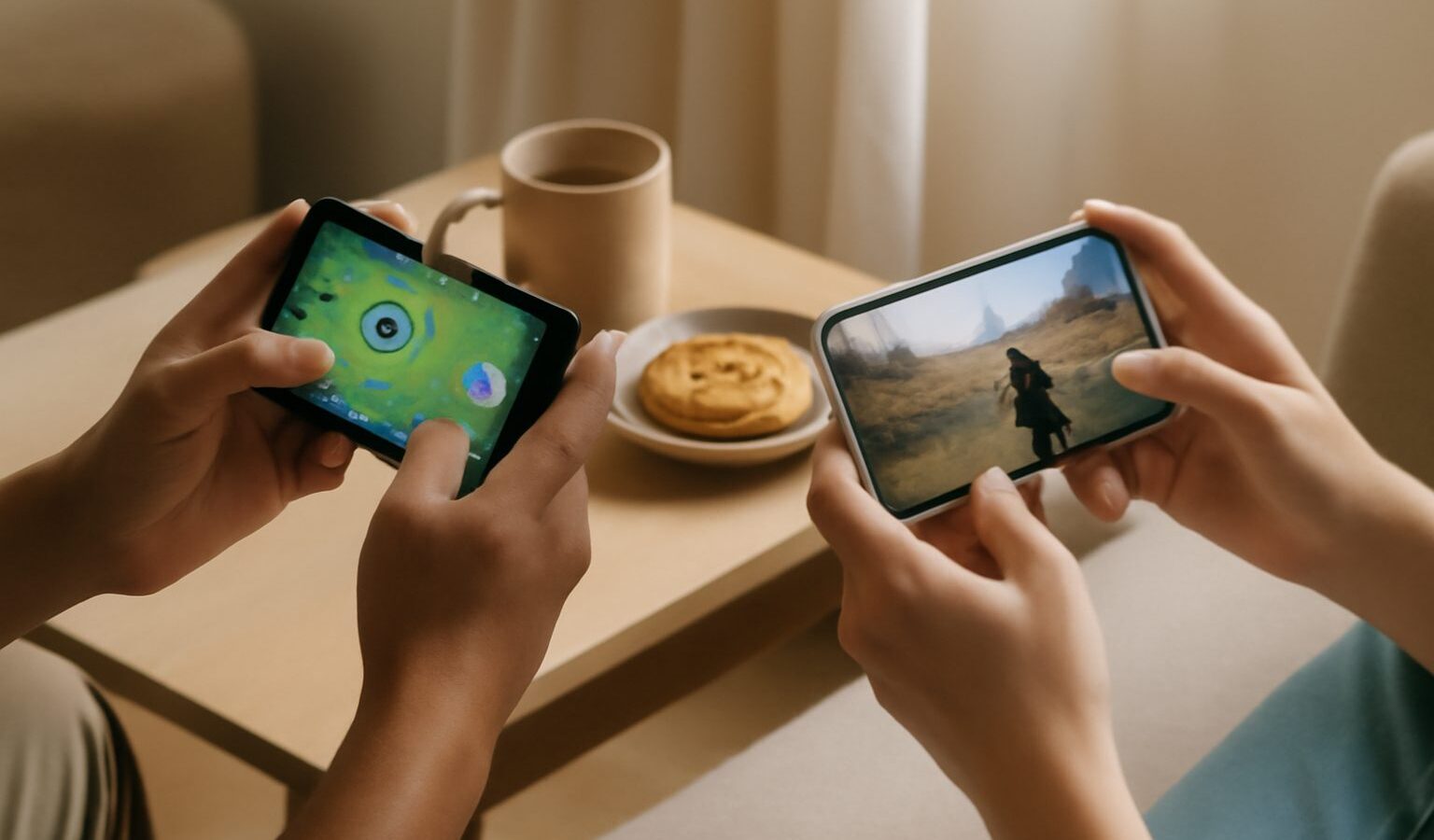
If you are new to gaming, one of the first choices you will face is whether to download a free title or buy one outright. Free-to-play games cost nothing to install and let you jump in straight away, while paid games ask for money upfront but usually arrive complete. Neither is automatically better. The right pick depends on your budget, how much time you have, and how you like to play.
This is a general overview to help you decide, not financial advice. Spending inside games adds up quietly, so it pays to understand how each model actually works before you commit.
What “Free-to-Play” and “Paid” Really Mean
A free-to-play game, often shortened to F2P, is free to download and start playing. The studio makes its money afterwards, usually through optional purchases. A paid game charges a one-time price to buy it, whether that is a boxed disc from a shop at a local IT mall or a download from an online store.
The line can blur. Some paid games still sell extra content later, and some free games are generous enough that you never feel pushed to pay. What matters is where the money comes from and whether spending is optional or expected.
You will hear a few terms often:
- Microtransactions: small optional purchases inside a game, such as a costume or a currency pack.
- Loot boxes: randomised bundles where you pay for a chance at an item rather than choosing it directly.
- Battle pass: a seasonal set of rewards you unlock by playing, sometimes free and sometimes paid.
- DLC: downloadable content, meaning extra levels or features sold on top of a game you already own.
How Free-to-Play Games Make Money
Because the download is free, F2P games earn revenue in other ways. Understanding these helps you spot when a game is nudging you to spend.
- Cosmetic items change how your character or gear looks without affecting how you play. Buying these is purely optional.
- Convenience purchases speed up progress, such as skipping a wait timer or earning rewards faster.
- Loot boxes and gacha offer random items for real or in-game money. Because the outcome is chance based, it is easy to spend more than planned chasing a specific reward.
- Advertising, common in mobile games, shows ads between rounds, sometimes with the option to pay to remove them.
Treat loot boxes and gacha with care. They are designed to be exciting, and the randomness means there is no guaranteed result. Set a firm limit before you start, and remember that spending on a chance is not the same as buying the item you want. In Singapore, age ratings and game classification follow IMDA guidance, so parents should check ratings and switch on parental controls where children play.
Weighing Up the Real Costs
The sticker price rarely tells the whole story. A free game can end up costing more than a paid one if you buy items regularly, while a paid game can be superb value if it keeps you busy for months. Think in terms of cost over time, not just the first day.
| Factor | Free-to-Play Games | Paid Games |
|---|---|---|
| Upfront cost | None, download and play | One-time purchase price |
| Long-term cost | Can grow through optional spending | Usually fixed, sometimes plus DLC |
| Full experience | May be gated behind purchases or grinding | Typically complete on day one |
| Advertising | Common, especially on mobile | Rare in the base game |
| Risk of overspending | Higher, due to microtransactions and loot boxes | Lower and easier to predict |
| Trying before committing | Easy, since it is free to start | Depends on refunds or demos |
A quick habit helps: before buying anything inside a free game, ask whether it improves your enjoyment or simply removes a barrier the game created to encourage spending. If it is the latter, it can often wait.
Which One Suits You
Your best choice comes down to circumstances rather than any rule.
- Choose free-to-play if you want to try a genre without commitment, you enjoy playing casually, or you are happy to progress slowly without paying. Many excellent shooters, battle royales and mobile puzzle games are free and enjoyable without ever spending.
- Choose paid if you prefer a full, self-contained experience with no nagging to spend, you value a clear one-time cost, or you want a story-driven game that ends properly rather than one built to keep you playing forever.
Budget matters too. If money is tight, free-to-play lets you enjoy gaming for nothing, provided you resist the spending prompts. If you would rather pay once and forget about it, a paid game removes that temptation entirely. Watching for a sale at a local retailer or a digital store event can make paid titles very affordable.
Playing Smart in Singapore
A few practical habits keep gaming fun and affordable, whichever model you pick.
- Set a monthly gaming budget and treat in-game spending like any other expense. If you set nothing, it is easy to lose track across several games.
- Turn on spending controls. Console and app stores let you require a password or PIN for every purchase, which is especially useful on a shared family device or a child’s account.
- Never store card details loosely on accounts children can reach, and be wary of “free top-up” offers online. Report scams to ScamShield or the Police, since fake game currency deals are a common trick.
- Read the fine print on subscriptions and battle passes so a monthly charge does not renew unnoticed.
- Give a game time before spending. Many purchases feel less tempting after a week, once the novelty settles.
Both models can deliver hours of genuine enjoyment. Free-to-play games open the door for anyone to start without spending a cent, while paid games offer a clean, complete experience for a fixed price. Decide what you value most, set your limits early, and you will get the most from your money either way.
Explore more
New to all this? Start with our guide to gaming for beginners, learn to read a game’s label with understanding video game genres, and see the best local shops in where to buy games in Singapore.