
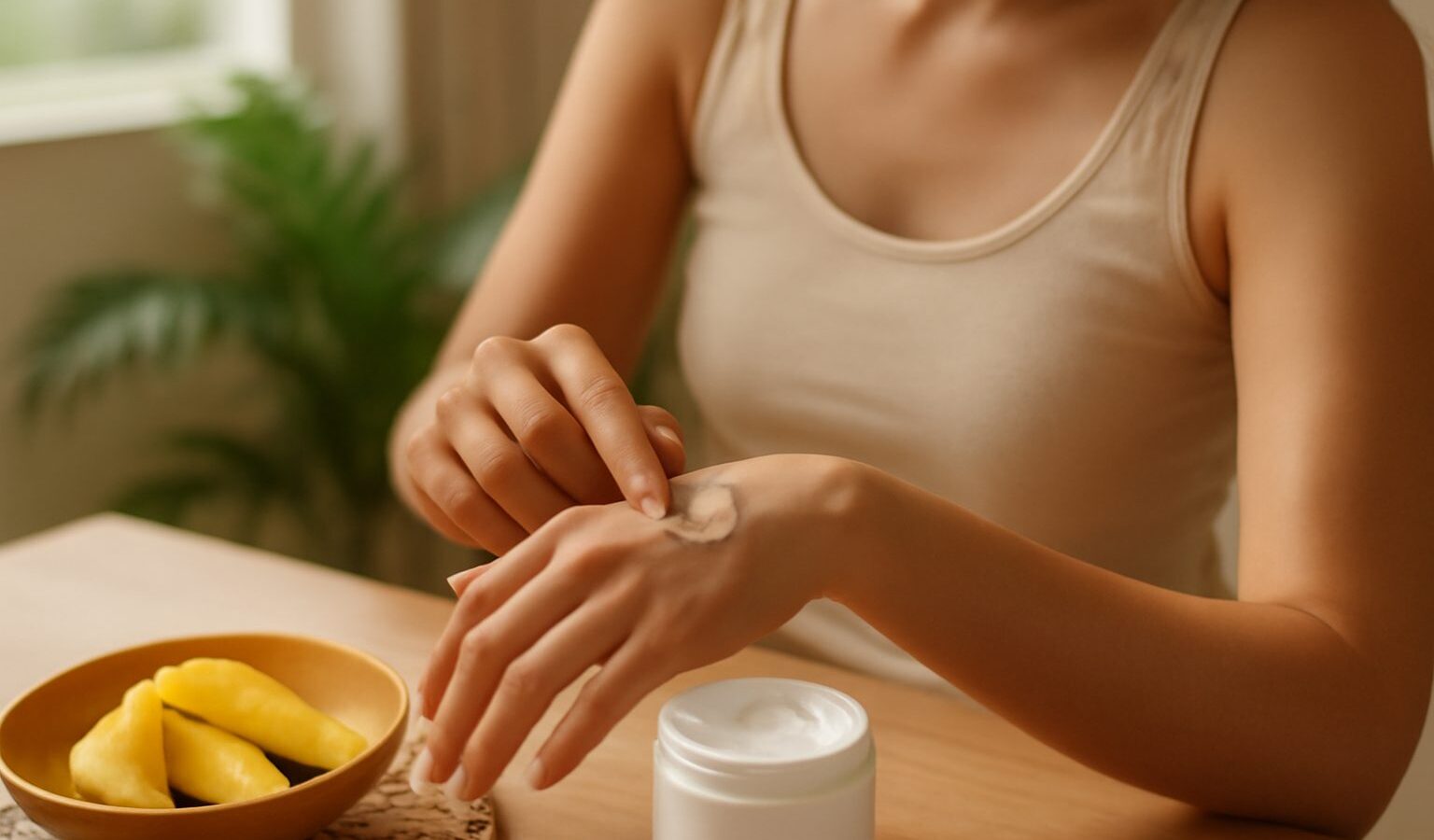
Picking a moisturiser for humid weather feels counterintuitive at first. If the air already sits heavy with moisture and your face turns shiny by mid-morning, why add more cream on top? The honest answer is that hydration and oiliness are two different things, and skipping moisturiser altogether often makes both worse. What changes in a tropical climate is not whether you moisturise, but the texture and the amount. Get that right and your skin feels comfortable from the morning commute to the air-conditioned office and back out into the evening heat.
This guide walks through how humidity actually affects your skin, how to read a texture before you buy, and how to build a routine that survives a Singapore day without leaving your face slick or tight.
Why Humidity Changes What Your Skin Needs
Humidity means there is plenty of water in the air, which is genuinely helpful for the top layer of your skin. But heat also pushes your oil glands to work harder, so many people in Singapore end up oily on the surface yet still dehydrated underneath. That combination is easy to misread. You feel greasy, assume you are over-moisturised, and cut back, only for your skin to overcompensate with even more oil.
Aircon complicates things further. Offices, malls, buses and the MRT are all cooled and drier than the street outside, and that constant switching between muggy and chilled air pulls water out of your skin. So the goal of a moisturiser for humid weather is not to seal your face under a thick layer. It is to top up water lightly, hold it there, and stay comfortable across very different environments in a single day.
A good rule of thumb: in the tropics you usually want less occlusion, or the heavy sealing effect of rich balms, and more water-binding hydration.
Understanding Moisturiser Textures
Moisturisers broadly do two jobs. Humectants draw water into the skin, and occlusives and emollients slow that water from escaping. In a dry, cold climate you lean hard on the sealing part. In Singapore, you usually want to lean on the water-drawing part and go light on the heavy seal.
Here is how the common textures compare for a humid climate.
| Texture | Feels like | Best for | Humid-weather verdict |
|---|---|---|---|
| Gel / water-gel | Light, cooling, absorbs fast | Oily and combination skin | Excellent everyday pick |
| Gel-cream | Light but slightly more cushioned | Normal to combination skin | Very good, versatile |
| Lotion / emulsion | Fluid, thin cream | Normal to slightly dry skin | Good, easy layering |
| Rich cream / balm | Thick, sealing, slow to sink in | Dry or mature skin, or night use | Often too heavy by day |
Ingredients worth recognising as light hydrators include glycerin, hyaluronic acid and panthenol, which pull in and hold water without weight. Niacinamide is a popular addition for oil-prone skin. If your skin leans dry, small amounts of squalane or ceramides add comfort without the greasiness of a heavy balm.
Matching a Moisturiser to Your Skin
There is no single best moisturiser for humid weather, only the best one for your skin on a given day. Use how your skin actually behaves as your guide rather than a label on the jar.
- Oily or acne-prone: Choose a light gel or water-gel and look for the words non-comedogenic. A little goes a long way; you do not need a thick layer to be hydrated.
- Combination: A gel-cream usually works, or you can use a gel on the oilier centre of your face and something slightly richer on drier cheeks.
- Normal: A lotion or gel-cream keeps things simple and comfortable.
- Dry, even in the heat: Reach for a gel-cream with ceramides or squalane by day, and you can go a touch richer at night when you are not sweating or facing the sun.
- Sensitive: Keep it simple and fragrance-free, and introduce one new product at a time so you can tell what your skin likes.
Whenever you try a new product, patch test it first. Dab a small amount on your inner forearm or behind the ear for a couple of days before putting it all over your face, especially if your skin reacts easily.
Building a Routine That Survives a Singapore Day
Texture matters, but so does how and when you apply it. A few habits make a light moisturiser go much further in the humidity.
- Apply to slightly damp skin. After cleansing, pat your face nearly dry and smooth moisturiser on while there is still a little moisture. Humectants have something to grab onto and hydration sinks in better.
- Use less than you think. A pea to almond-sized amount for the whole face is plenty for most people in this climate. Layering thin beats slapping on thick.
- Let it settle before sunscreen. In the morning, give your moisturiser a minute to absorb, then apply a broad-spectrum sunscreen as your last daytime step. Sun protection still matters here every single day, cloudy or not, and even more so if you use exfoliating acids or brightening actives.
- Consider day and night versions. Many people are happiest with a featherlight gel by day and a slightly more nourishing formula at night, when there is no sweat, sunscreen or humidity to fight.
- Do not skip it when oily. If your skin feels greasy, switch to a lighter texture rather than stopping moisturiser, which often triggers more oil.
If you spend long hours in strong aircon, a quick midday spritz of a hydrating mist or a thin re-layer of gel on parched areas can help, though it is optional rather than essential.
Common Mistakes in Humid Weather
A few easy missteps keep people uncomfortable no matter what they buy. Watch for these.
- Going too rich. Thick balms designed for cold, dry winters can feel suffocating and may contribute to congestion in the heat.
- Confusing shine with hydration. Oil on the surface does not mean your skin has enough water. Dehydrated skin can look oily and feel tight at the same time.
- Over-layering actives. Piling on serums, essences and heavy cream all at once can overwhelm skin. In this climate, simpler usually wins.
- Chasing a matte finish with harsh products. Stripping your skin with strong astringents often backfires, prompting more oil and irritation.
If your skin is persistently irritated, breaking out badly, or showing signs of a condition that will not settle, that is worth a chat with a pharmacist or a doctor rather than more product swapping. General guidance like this is a starting point, not a diagnosis.
The takeaway is reassuring: a moisturiser for humid weather does not need to be complicated or expensive. A well-chosen light texture, applied thinly to damp skin and followed by daily sunscreen, keeps most people comfortable through heat, aircon and everything in between.
Explore more
If you are refining a full routine, it helps to get the sequence right, so read our guide on layering your skincare in the right order and how a morning versus night skincare routine can differ in the tropics. Before trying any new formula, our walkthrough on how to patch test new skincare is a quick, sensible habit worth keeping.