

Setting freelance rates is one of the hardest parts of working for yourself, and getting it wrong in either direction hurts. Charge too little and you burn out doing lots of work for little return. Charge too much without the track record to back it up and clients walk away. The good news is that pricing is a skill you can learn, not a mystery. This guide walks through how to think about your rate in the Singapore context, so you can quote with confidence instead of guessing.
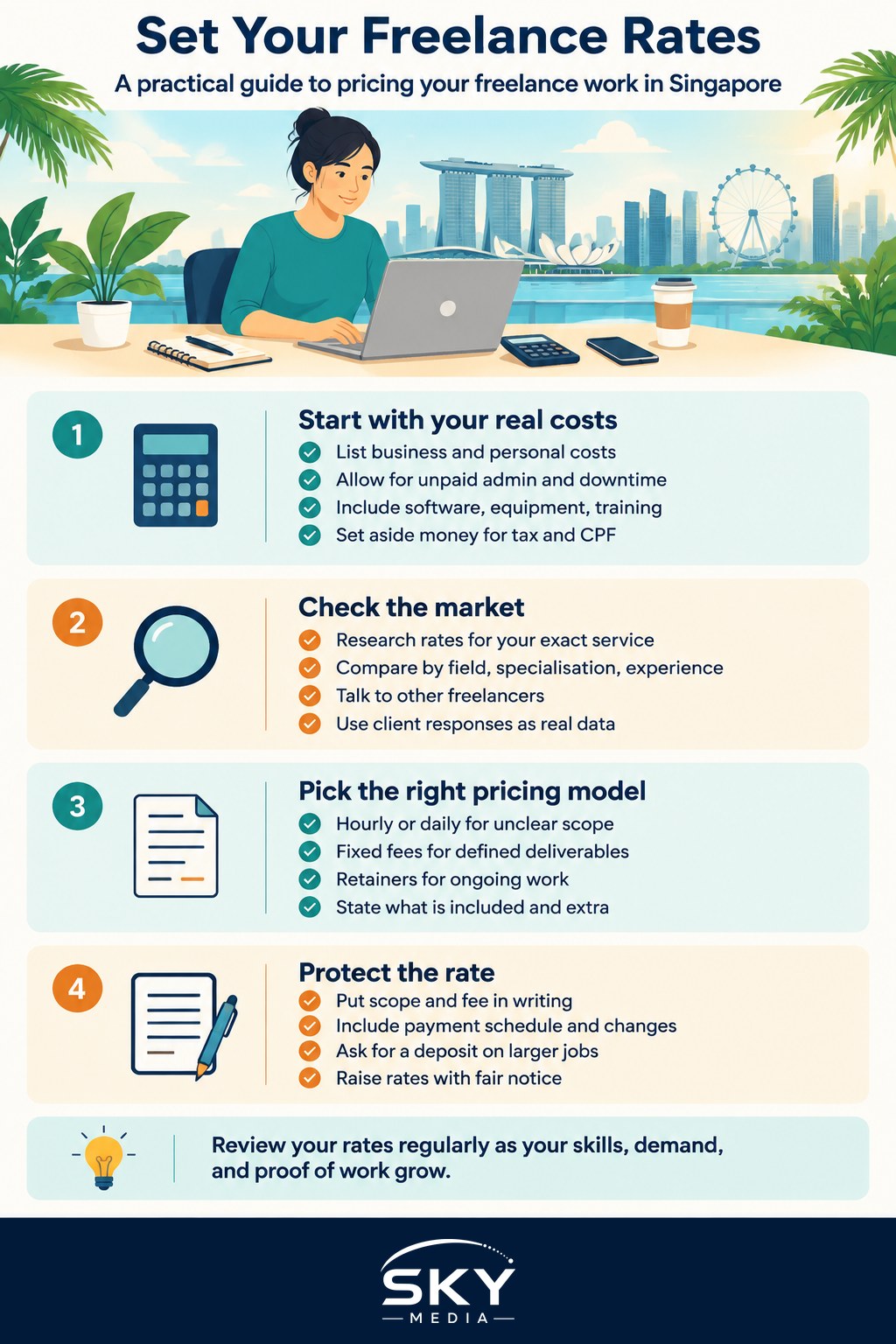
Start with your real costs, not a random number
A freelance rate is not the same as a salary divided by working hours. As a freelancer you cover things an employer used to pay for. You have unpaid time between projects, admin, marketing, software, equipment, and any training you need. You also need to set money aside for tax and to plan for your own CPF situation, which differs from an employee’s, so check the CPF Board for what applies to you.
Because of all this, your rate has to cover more than the hours you spend on the actual work. A useful exercise is to list your monthly business and personal costs, estimate how many hours you can realistically bill each month once admin and downtime are removed, and work out what you need to earn to make freelancing worthwhile. This gives you a floor you should not go below.
Research current market rates
Once you know your floor, look outward. Rates in Singapore vary a lot by field, specialisation, and experience, so do not anchor on a single figure someone quotes online. Research current market rates for your specific service by talking to other freelancers, checking recent salary and rate guides from reputable sources, and paying attention to what clients actually agree to pay you over time. Your own quotes and their responses are real data.
Where you sit in that range depends on your experience and the results you can show. Someone starting out will usually charge less than an established specialist, and that is normal. As your portfolio grows, you earn the right to raise your rate. If you are still building proof of your work, our guide on building a work portfolio can help.
Choose a pricing model that fits the work
There is no single correct way to charge. Common models each suit different situations.
- Hourly or daily rates work well for open-ended work where the scope is unclear, since you are paid for the time you put in.
- Project or fixed fees suit well-defined deliverables, and clients often prefer knowing the total upfront. The risk is on you to scope accurately.
- Retainers, where a client pays a set amount each month for ongoing work, give you more predictable income.
Many freelancers use a mix depending on the client and project. Whatever model you choose, be clear about what is included and what counts as extra, so a small favour does not quietly become hours of unpaid work.
Put the rate in a proper contract
However you price, protect yourself with a written agreement. Spell out the scope, the deliverables, the fee, the payment schedule, and what happens if the client adds work or cancels. This prevents the slow scope creep that eats into your effective rate. For larger jobs, it is normal to ask for a deposit upfront before you begin, with the balance due at milestones or on completion. Getting this in writing is part of pricing well, because a great rate you never actually collect is worthless.
If you are just getting going, our guides on how to start freelancing and how to find freelance clients cover the wider setup around your pricing.
Remember tax when you quote
The rate you charge is not the amount you keep. Freelance income in Singapore is taxable, and you are responsible for declaring it to the Inland Revenue Authority of Singapore and keeping proper records. When you set a price, remember that a portion needs to go towards tax, so build that into your thinking rather than treating the full fee as take-home pay. Check the current requirements on the IRAS website, since rules and any reliefs change over time.
Handle raising your rates gracefully
As you gain experience and your calendar fills up, you will want to charge more, and you should. Raise rates for new clients first, since they have no prior expectation. For existing clients, give fair notice and frame it around the value and results you deliver rather than apologising for it. Some clients will stay, some will not, and that filtering is a healthy sign that you are growing. If money conversations make you nervous, our guide on handling difficult conversations at work has transferable tips.
Bringing it together
Setting your freelance rates well comes down to knowing your real costs, researching current market rates honestly, choosing a model that fits the work, and protecting the number with a clear contract and a deposit. Remember that tax comes out of what you charge, and revisit your rates as your skill and reputation grow. Price with quiet confidence, review it regularly, and you will build a freelance practice that is sustainable rather than exhausting.
Frequently Asked Questions
How do I work out my minimum freelance rate? List your monthly business and personal costs, estimate the hours you can realistically bill after removing admin and downtime, and work out what you need to earn for freelancing to be worthwhile. That gives you a floor to stay above, before looking at market rates.
Should I charge hourly or by project when I am new? It depends on the work. Hourly or daily rates suit open-ended jobs with unclear scope, while fixed project fees suit clearly defined deliverables but put the risk of scoping on you. Many beginners start hourly, then move to project fees as they estimate better.
What is a retainer and is it a good idea for freelancers? A retainer is a set monthly amount a client pays for ongoing work. It gives you more predictable income, which helps with planning. Be clear about what is included each month so extra requests do not quietly turn into unpaid hours.
How do I stop clients from adding extra work for free? Define the scope, deliverables and what counts as extra in a written contract, and set out what happens if the client adds work or cancels. This prevents slow scope creep from eating your effective rate. Politely quote additional work before starting it.
When and how should I raise my rates with existing clients? Raise rates for new clients first, since they have no prior expectation. With existing clients, give fair notice and frame the change around the value and results you deliver rather than apologising. Some may leave, which is a normal part of growing.