

Singapore’s specialty coffee scene has grown fast, and roasting your own beans looks like a natural next step for anyone serious about coffee. But a coffee roastery singapore founders imagine as an artisan passion project is, in reality, a manufacturing and wholesale business with equipment, food safety, and demanding customers. This guide walks through the general steps honestly, so you understand both the craft and the commercial grind before you invest.
Everything here is general information, not legal, financial, or tax advice. Check the specifics with the right professionals and authorities before you spend money.
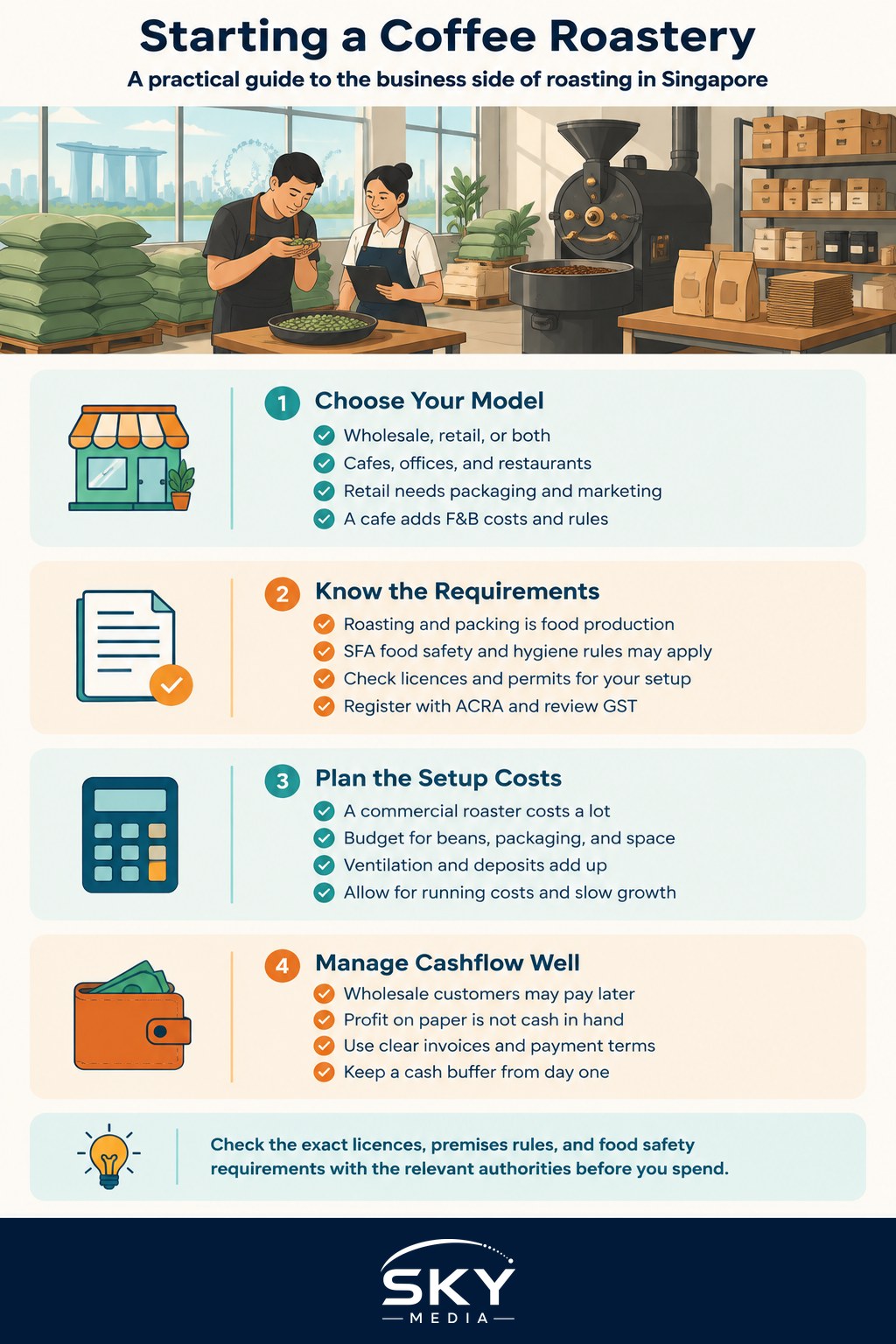
Decide what kind of roastery you are building
Roasting is where the romance lives, but the business model is where you survive. Decide early whether you are mainly a wholesale roaster supplying cafes, restaurants, and offices, a retail brand selling beans directly to consumers, or a roastery-cafe that does both. Each has very different demands. Wholesale means winning and keeping business customers, hitting consistent quality, and managing longer payment terms. Retail means marketing, packaging, and standing out in a crowded market. A cafe on top adds all the costs and rules of F&B.
Quality and consistency are your product. That means sourcing green beans well, understanding your supply chain, and roasting to a standard customers can rely on batch after batch. Before you commit, do serious market research for small business to understand who you will actually sell to, and think about pricing your products, because green coffee prices move and your margins depend on getting this right.
Licensing, food safety and registration
Roasting and packing coffee for sale is food production, so food safety matters. Food licensing and hygiene requirements from the Singapore Food Agency (SFA) can apply to how you process, pack, and label your beans, and the exact requirements depend on your premises and how you operate. Because these rules change and vary by setup, do not assume any licence is or is not required. Verify the specific licences, permits, and food safety requirements with the relevant authority directly, and use a general guide such as business licences and permits only as a starting point.
A roastery also needs suitable premises. Roasting equipment produces heat, smoke, and smells, which raises questions about ventilation and where you can legally operate, so industrial or approved commercial space is usually more appropriate than a random shopfront. You will register the business with ACRA, choose a structure, and check whether GST registration applies to you. If you hire, staffing must follow the Employment Act and MOM rules, so check current requirements first.
Equipment, costs and the wholesale reality
A commercial roaster is a significant investment, and that is before you count green bean stock, packaging, a suitable space with proper ventilation, deposits, and several months of running costs. Do not build your plan on optimistic numbers or anyone’s promise of quick profits. It can take a long time to build a steady customer base and reach break-even, if you get there at all.
The wholesale side has its own trap: business customers often pay on terms, not upfront, so you can be profitable on paper yet short of cash. That makes managing business cashflow essential from day one, along with clear invoices, agreed payment terms, and the discipline to chase late payers politely but firmly. Roasting also ties up money in green bean stock that only earns once it is roasted, sold, and paid for, so watch how much cash sits on your shelves. Build your own conservative budget, keep a healthy cash buffer, and treat early wins as encouragement rather than proof the numbers will work forever.
A realistic wrap-up
A coffee roastery can be a genuinely rewarding craft business, and Singapore’s appetite for good coffee is real. But it is capital-heavy, competitive, and far more about consistent production and steady wholesale relationships than the romance of the roast. The roasteries that last pair real craft with disciplined costs, reliable quality, and careful cashflow. Start with a realistic scale, win a handful of reliable customers before you expand, and let steady demand rather than optimism drive your next investment. Go in with conservative numbers, a cash buffer, and proper advice from an accountant, a lawyer or corporate service provider, and the relevant authorities before you buy a roaster or sign a lease.
Frequently Asked Questions
Can I roast coffee at home and sell it? Selling roasted coffee counts as food production, so food safety rules still apply. Home roasting also raises practical issues such as smoke, smell and housing restrictions. Check what is allowed with the Singapore Food Agency and your housing authority before you sell anything to the public.
How do I find my first wholesale customers for a roastery? Start with local cafes, offices and restaurants that care about quality, and offer small trial orders with samples. Consistency matters more than variety, so let them taste the same quality each time. Referrals from early customers often become your most reliable source of new business.
Where do roasteries get their green coffee beans? Roasters usually buy from importers or specialty green bean suppliers, sometimes directly from producers if volumes justify it. Ask for samples and information about origin and harvest before buying in bulk. Prices move over time, so avoid committing more cash to stock than you can sell.
Do I need a cafe for a coffee roastery to make money? Not necessarily. Some roasteries focus on wholesale or online sales, while others add a cafe to showcase their coffee. A cafe brings extra income but also F&B costs and rules. Decide based on your skills, budget and whether you want to run a retail space.
How long does it take to learn to roast coffee well enough to sell? It varies widely, but consistent roasting takes practice with many batches and careful tasting notes. Courses and mentors can speed things up. Do not sell until your results are reliable, because inconsistent quality is hard to recover from with business customers.
Official sources: Singapore Food Agency (SFA)