
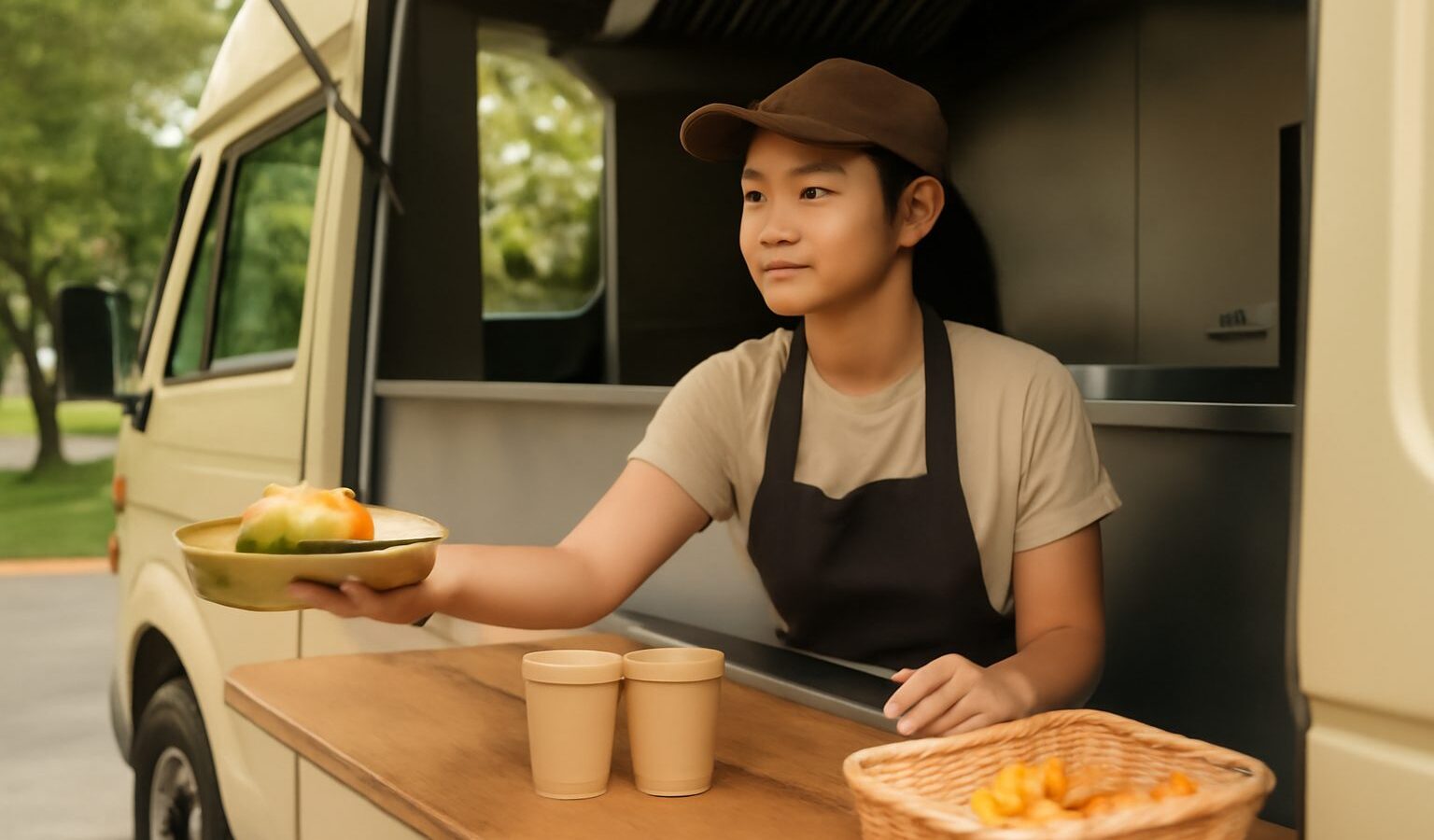
A food truck feels like the dream version of running a kitchen: low fixed rent, a menu you own, and the freedom to follow the crowds. The reality of a food truck business Singapore-side is more nuanced. Our land is tight, roadside vending is tightly controlled, and the model here leans heavily on events, private bookings, and designated locations rather than parking anywhere you like. This guide lays out the honest opportunity, the licences, the money, and the daily reality of both trucks and fixed stalls.

The Opportunity and Who It Suits
There are two related paths worth distinguishing. A mobile food truck travels to events, festivals, corporate functions, and private bookings, offering novelty and reach. A fixed food stall, whether in a coffee shop, food court, or industrial canteen, gives you a steady location and passing trade without the logistics of a vehicle. Some operators run both, using a stall for steady income and a truck for weekend events.
This business suits hands on people who enjoy variety, can cook fast under pressure, and are comfortable with irregular hours and physical logistics. Truck life especially means loading, driving, setting up, serving a rush, packing down, and cleaning, often in one long day. If you love the buzz of events and a tight, well drilled menu, it fits. If you want predictable nine to five hours, it does not.
Licences, ACRA, and the SFA
Register your business with ACRA first. A sole proprietorship is a simple start, while a private limited company gives limited liability and a cleaner structure if you plan to grow or take on partners. Confirm current requirements with a corporate secretary or accountant rather than assuming.
Food is regulated by the Singapore Food Agency (SFA), and this is where trucks and stalls differ from a normal shop. A fixed stall generally needs an SFA food shop or stall licence tied to approved premises. A mobile operation involves additional considerations around where and how you may sell, so you must check the SFA’s current guidance on mobile and temporary food vending, plus event specific approvals, rather than assume you can park and trade freely. Everyone handling food will typically need the required food safety course and food handler registration. NEA hygiene rules apply to cleaning, waste, and pest control. If you want to sell as halal, that is a separate MUIS certification. Because these rules and fees change and the mobile category has its own conditions, confirm everything directly with SFA before you invest in a vehicle.
For events, the organiser often handles the site permissions, but your own food safety compliance always remains your responsibility.
Costs and Getting Started
There is no single accurate startup figure, since a fitted truck, a simple stall, and a full commissary kitchen sit at very different price points. Understand the drivers instead.
| Cost driver | Fixed stall | Mobile food truck |
|---|---|---|
| Rent or site cost | Monthly stall rent | No fixed rent, but event and pitch fees |
| Vehicle | None | Truck purchase and fit out, a major cost |
| Equipment | Griddles, fryers, chillers | Compact, mobile, power and gas ready |
| Prep space | May be on site | Often needs a licensed prep kitchen |
| Income pattern | Steady daily trade | Lumpy, event driven, weather exposed |
The vehicle and its food grade fit out are the defining cost for a truck, while for a stall it is the monthly rent and equipment. A truck may also need a separate licensed preparation kitchen, since prepping everything on board is often impractical. Fuel, maintenance, event fees, and staffing all add up. Keep a healthy cash buffer, because event income is lumpy and weather can wipe out a weekend.
Look into Enterprise Singapore capability schemes for local businesses, but treat any amounts and eligibility as things to verify, since they change. Register for GST with IRAS when required or beneficial, and keep clean records from the very first booking.
Running and Growing the Business
Whether you roll or stay put, a few disciplines decide whether you profit.
- Keep the menu tight. A short, fast, well costed menu serves rushes better and wastes less than a sprawling one.
- Master your logistics. For trucks, loading lists, power, gas, water, and setup timing are the difference between a smooth service and a disaster.
- Book ahead. Corporate functions, weddings, festivals, and private events give trucks their bread and butter, so build relationships with organisers and planners.
- Track cost per dish. Know your ingredient, packaging, and labour cost, and price for a real margin.
- Show up consistently. Regulars at a stall and repeat event clients both reward reliability and steady quality.
Growth can mean adding a second truck or stall, deepening your event and corporate client list, or building a small brand people seek out and follow online. Each route stretches your kitchen and crew, so systemise recipes, prep, and training before you expand.
Common Pitfalls to Avoid
The biggest trap is assuming a truck can trade anywhere. Singapore’s rules on where mobile food may be sold are specific, and roadside vending is not the free for all it looks like elsewhere. Others buy or fit out a truck before confirming they have a licensed prep kitchen and a pipeline of bookings to fill the calendar. Some underestimate manpower and the physical toll, or price event catering too low once fuel, staff, and downtime are counted. And event income is genuinely lumpy, so a business with no cash buffer can be sunk by a rainy month.
Start smaller than the dream. Test your food and pricing at a stall or through catering before committing to a fully fitted truck, confirm every rule with SFA, and build a booking pipeline you can actually see. Done with that discipline, a food truck business Singapore-wide can be a rewarding, flexible way into the trade.
This article is general information, not legal, financial, or tax advice. Mobile vending rules and figures change, so confirm current requirements with the SFA, ACRA, NEA, and IRAS, or consult a qualified professional before committing.
Explore more
Comparing food formats? See our guide to starting a bakery for a production led model, look at drinks with starting a bubble tea business, or consider event and bulk work through a catering business.
Official sources: Singapore Food Agency (SFA)
Further reading: Starting a Home-Based Food Business · How to Run a Pop-Up Food Stall at a Festival or Weekend Market