

For a dancer or instructor, opening your own studio is a natural dream: your own space, your own students, your own style. But to start a dance studio singapore parents and hobbyists will keep coming back to, you need to run a real business alongside the art. That means rent, scheduling, safety, marketing, and cash flow, not just choreography. This guide sets out the general steps honestly, including the parts that catch first-time studio owners out.
Everything here is general information, not legal, financial, or tax advice. Check the specifics with the right professionals and authorities before you commit money.
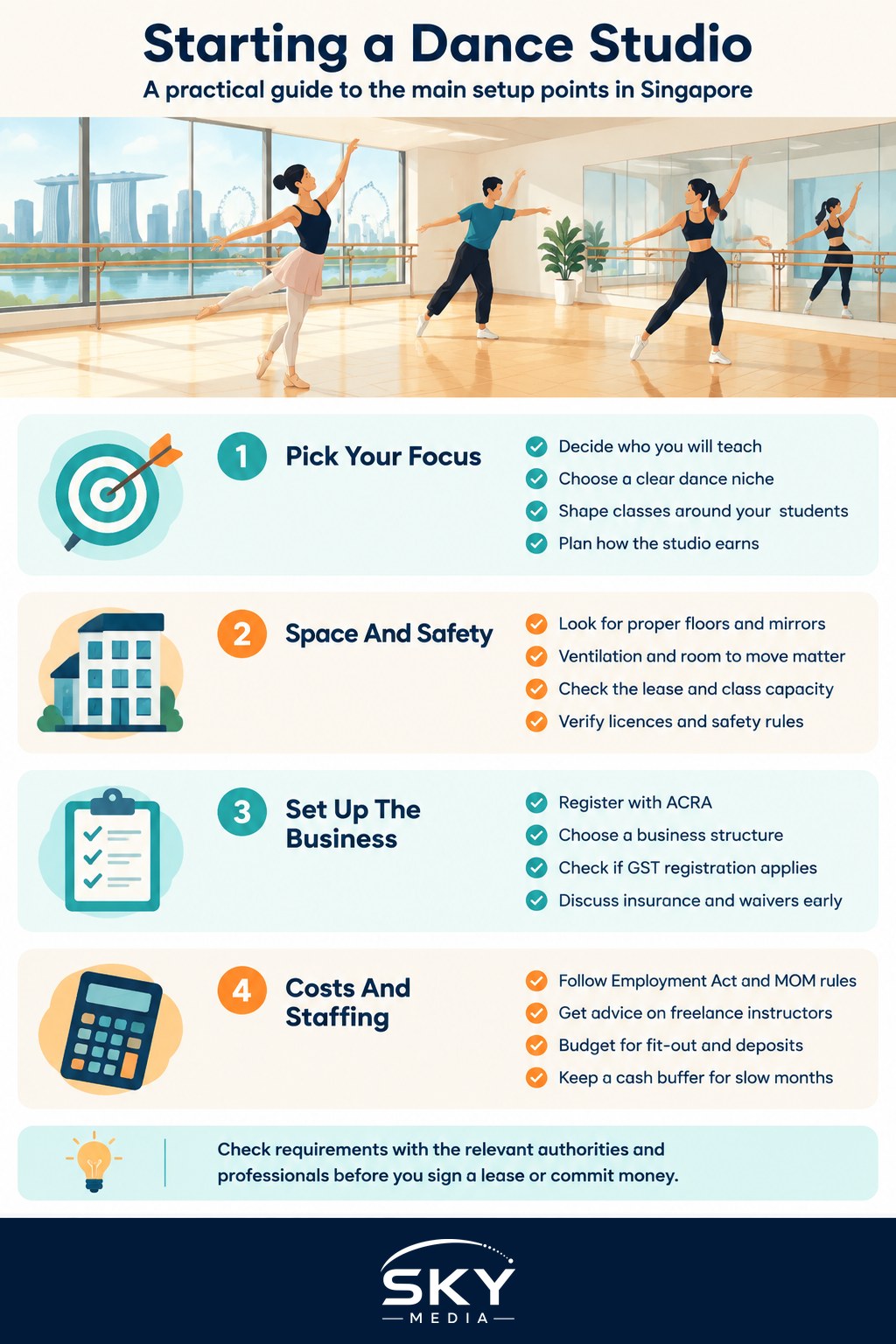
Choose your niche and your students
Dance is broad, so a clear focus helps enormously. Are you teaching children ballet, adults doing hip-hop or Latin, exam-track students, or fitness-style dance classes? Your niche shapes your space, your instructors, your timetable, and your marketing. A studio built around young children looks very different from one built around competitive adult crews.
Think about how the business earns. Most studios mix regular class packages, drop-ins, private lessons, workshops, and sometimes performances or venue hire during quiet hours. Recurring memberships give you more predictable income than one-off classes, which matters when rent is due every month regardless of how full your classes are. Before you commit, do honest market research for small business, and think carefully about pricing your products so your packages cover your real costs, not just feel affordable.
Space, safety and licensing
Your space is your biggest fixed commitment. Dance studios need proper floors, mirrors, ventilation, and enough room to move safely, and suitable premises with those features tend to command higher rent. Study the lease carefully and be realistic about how many paying classes the space can actually hold across a week.
Safety and licensing depend heavily on who you teach and what you offer. Where young children are involved, or where care or education is part of what you do, additional safety rules and requirements from bodies such as ECDA or MOE may be relevant. General public space, fire safety, and any entertainment or performance elements can bring their own rules too. Because requirements change and depend on your exact activity, do not assume any licence or approval is or is not required. Verify the specific licences, permits, and safety requirements with the relevant authorities directly, and treat a general overview like business licences and permits as orientation only.
Like every business, you will register with ACRA and choose a structure, and you should check whether GST registration applies to you. Given the physical nature of dance, appropriate business insurance and clear waivers are worth discussing with a professional early.
Staffing, costs and honest numbers
If you hire instructors or front-desk staff, employment must follow the Employment Act and MOM rules, so check current requirements before taking anyone on. Many studios also work with freelance instructors, which has its own arrangements and considerations, so get proper advice on how you engage them.
On money, be conservative. Fit-out with proper flooring and mirrors, deposits, sound and booking systems, insurance, marketing, and several months of running costs add up quickly, and it can take a long time to fill a timetable and reach break-even, if you get there at all. Because your income arrives class by class while rent lands in one lump, managing business cashflow is central. Do not rely on anyone’s promise of easy profits or on figures you cannot verify. Build your own budget, keep a cash buffer, and grow your schedule based on real enrolment rather than hope.
A realistic wrap-up
A dance studio can be a fulfilling business that builds a real community around something you love. But it is a business first: high rent, safety responsibilities, a timetable to fill, and income that has to keep pace with fixed costs. The studios that last combine great teaching with disciplined pricing, careful cashflow, and a clear niche. Start smaller than your ambition if you can, prove the classes fill, and expand your space and team only when the numbers genuinely support it. Go in with conservative numbers, a cash buffer, and proper advice from an accountant, a lawyer or corporate service provider, and the relevant authorities before you sign a lease or open your doors.
Frequently Asked Questions
Is it cheaper to rent a studio by the hour than to lease my own? Usually yes for the first stage, because hourly rental has no long lease or fit-out. It lets you test whether your classes fill before taking on fixed rent. The downside is less control over timing and branding, so many teachers rent first and lease later.
Should my dance instructors be employees or freelancers? It depends on how you work with them, such as who sets their hours, pay and methods. Both arrangements exist in studios, and each has different obligations. Check the current rules on MOM’s website and get advice before deciding, as the wrong classification can cause problems.
What should a dance studio waiver and insurance cover? A waiver usually records that students understand the physical risks and agree to follow safety rules, while insurance covers incidents on the premises. Neither replaces good practice such as warm-ups and supervision. Have a lawyer draft the waiver and ask an insurer about suitable cover.
How do I fill classes when my studio first opens? Offer trial classes, bring in students from your existing following, and partner with nearby schools or community groups. Clear class levels and a visible timetable help newcomers pick the right session. Track attendance, then drop or move slots that stay empty.
Can I teach dance classes for children without a formal qualification? There is no single answer, as it depends on what you teach and whether the setting counts as care or education. Parents also tend to look for experience and safety awareness. Ask the relevant bodies, such as ECDA or MOE, whether any requirements apply to your classes.
Further reading: How to Start a Yoga Studio in Singapore