

The annual dinner and dance, usually shortened to D&D, is a fixture of working life in Singapore. For employees, it is a night of good food, a lucky draw and maybe a performance or two. For the organiser, it is weeks or months of planning, a budget to manage and a lot of moving parts.
If you have been handed the job of organising your company dinner and dance in Singapore, this guide walks you through it from the organiser’s side: setting goals, building a committee, choosing a venue, planning the programme and avoiding the common mistakes. For what attendees should wear, see our separate guide on what to wear to a dinner and dance.
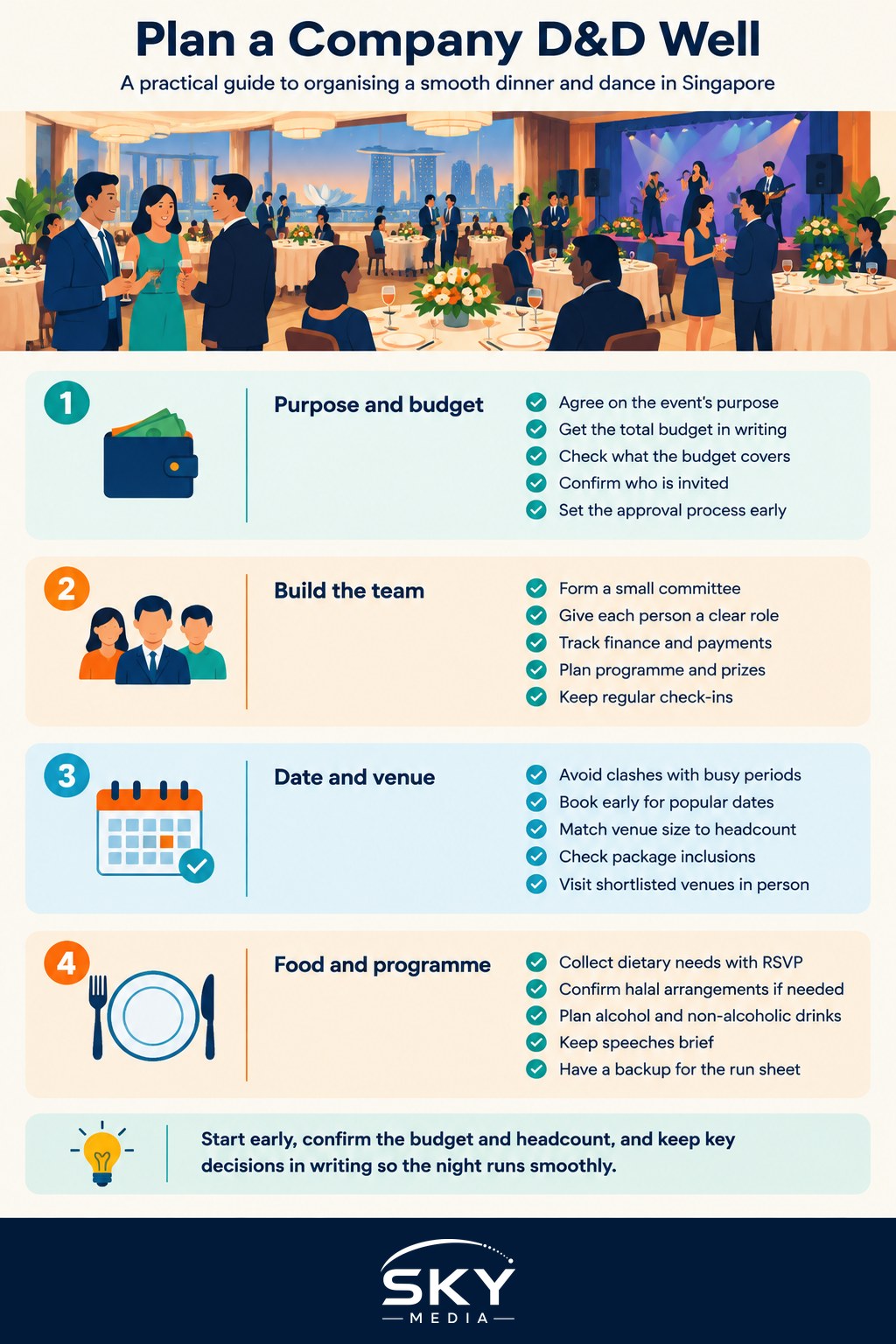
Start With the Purpose and the Budget
Before booking anything, agree with management on two things.
What the D&D is for. Is it mainly to thank staff for the year? Celebrate a milestone? Bring together teams who rarely meet? Welcome new hires after a merger? The purpose shapes everything from the venue to the speeches.
How much you can spend. Get a total budget in writing, and ask whether it covers extras such as transport, gifts, lucky draw prizes, entertainment and photography. A common approach is to set a per-head budget and multiply by expected attendance, then hold back a contingency for surprises.
Also confirm early:
- Who is invited: staff only, or partners too? Contract staff and interns?
- Rough headcount, and whether attendance is expected or optional.
- The approval process for spending, so you do not get stuck waiting on sign-offs.
Build a Small, Clear Organising Committee
A D&D is too much for one person. Form a committee with volunteers from different departments, and give each person a clear area.
- Lead or chair: keeps the timeline, liaises with management and the venue.
- Finance: tracks spending against budget and handles payments and claims.
- Programme: plans the run sheet, emcee, performances and games.
- Lucky draw and prizes: sources prizes and runs the draw fairly.
- Logistics: registration, seating, transport and dietary needs.
- Communications: invitations, reminders and post-event photos.
Hold short, regular check-ins and keep a shared tracker so nothing falls through the cracks.
Choosing the Date and Venue
Timing. Many companies hold their D&D near year-end or around Chinese New Year, while others prefer a mid-year event as a halfway celebration. Avoid clashing with major public holidays, school exam periods if many staff are parents, and your company’s busiest weeks. Popular dates fill up fast, so book early.
Venue type. Common choices include hotel ballrooms, restaurants with private rooms, event spaces, rooftop venues and attractions that host corporate functions. Ask each venue about:
- Capacity and layout for your headcount, including a stage.
- What the package includes: food, drinks, audio-visual equipment, decorations, a coordinator.
- Minimum spend, corkage, overtime charges and cancellation terms.
- Accessibility for colleagues with mobility needs.
- Transport links and parking.
Visit shortlisted venues in person, and get every agreed point in writing.
Here is a quick comparison of common formats:
| Format | Strengths | Watch out for |
|---|---|---|
| Hotel ballroom | All-in packages, polished service, large capacity | Higher cost, can feel formal |
| Restaurant private room | Good food, cosy, simpler to organise | Limited space for stage or games |
| Event space or rooftop | Flexible layout, unique feel | You may need to bring in caterers, AV and decor |
| Attraction or themed venue | Memorable experience | Fixed schedules and venue rules |
Food, Drinks and Inclusivity
Singapore workplaces are diverse, so plan the menu with everyone in mind.
- Dietary needs. Collect dietary requirements with the RSVP: halal, vegetarian, vegan, no beef, allergies and others. Make sure the venue can cater properly, not as an afterthought.
- Halal arrangements. If you have Muslim colleagues, confirm with the venue how halal food will be prepared and served. Ask about certification by the Islamic Religious Council of Singapore (MUIS) where relevant.
- Alcohol. Decide whether to serve it and how much. Offer good non-alcoholic options. Plan safe transport home so nobody drives after drinking.
- Seating. Mix departments if bonding is a goal, but avoid forcing new staff into tables where they know no one.
Planning the Programme and Run Sheet
A good run sheet keeps the evening flowing. A typical outline looks like this:
- Registration and welcome drinks.
- Opening by the emcee.
- Welcome speech from a senior leader, kept short.
- Dinner service in courses, with light entertainment between.
- Performances, games or a theme contest.
- Awards or recognition for teams and long-service staff.
- Lucky draw, often spread across the evening to keep people in their seats.
- Closing remarks and group photos.
Tips that make a difference:
- Choose a confident emcee. This can be a staff member with a flair for it, or a professional host.
- Keep speeches brief. People came to enjoy themselves.
- Rehearse. Run through the programme and test microphones, slides and music with the venue beforehand.
- Have a backup. If a performer cancels or the projector fails, know what you will do.
- Choose a theme if it helps. Themes add fun, but avoid anything that relies on stereotypes or could make colleagues uncomfortable.
Running a Fair Lucky Draw
The lucky draw is often the highlight, so handle it carefully.
- Decide who is eligible, and announce it in advance.
- Use a transparent method, such as drawing from registered names on screen.
- Have a rule for winners who are absent.
- Spread prizes so the evening does not feel like one big jackpot.
- Keep a record of winners for finance.
If your draw involves anything beyond a simple free draw for staff, such as paid tickets or public participation, check the current requirements with the Gambling Regulatory Authority before you go ahead.
Photos, Privacy and Wellbeing
- Photos and videos. Let attendees know photos will be taken and how they will be used. Respect colleagues who prefer not to be photographed, and follow your company’s policy on personal data under the Personal Data Protection Act (PDPA).
- Behaviour. Remind everyone that workplace conduct standards still apply. Make sure there is someone senior who can step in if something goes wrong.
- Getting home. Share transport options and finishing times early, especially for late nights.
After the Event
Your work is not quite done when the lights come on.
- Settle all payments and reconcile against the budget.
- Send thank-you messages to the committee, performers and venue team.
- Share photos with staff.
- Run a short feedback survey and note lessons for next year’s organisers.
A well-organised company dinner and dance in Singapore shows staff they are valued. With clear goals, a good team and careful planning, you can make it a night people talk about for the right reasons.
Explore more: What to Wear to a Casual Team Dinner in Singapore and Murder Mystery Games and Dinners in Singapore
Frequently Asked Questions
How do I decide on a per-head budget for the company D&D? Get a total budget in writing from management, then set a per-head figure and multiply by the expected headcount. Ask whether it covers transport, gifts, lucky draw prizes, entertainment and photography, and hold back a contingency for surprises.
Should partners and contract staff be invited to the dinner and dance? Settle this with management at the start, since it affects budget, venue size and menu planning. Decide whether the event is staff only or includes partners, contract staff and interns, and whether attendance is expected or optional.
How should I handle halal and other dietary needs? Collect dietary requirements with the RSVP, including halal, vegetarian, vegan, no beef and allergies. Confirm with the venue how halal food will be prepared and served, and ask about MUIS certification where relevant. Do not treat this as an afterthought.
Is there a rule for running a lucky draw at a company event? A simple free draw for staff is the usual format, but anything beyond that, such as paid tickets or public participation, should be checked with the Gambling Regulatory Authority first. Use a transparent method and set a rule for absent winners.
What should I do after the dinner and dance is over? Settle payments and reconcile against the budget, thank the committee, performers and venue team, and share photos with staff. A short feedback survey helps you note lessons for next year’s organisers.
Further reading: How to Organise a Year-End Team Lunch Without Stress