

In a city that prides itself on being a garden, a landscaping business singapore property owners can count on has real, steady demand. Condominiums, offices, town councils, and homeowners all need greenery installed and maintained, and plants keep growing whether the economy is up or down. That said, this is physical, weather-exposed, margin-sensitive work with real staffing and safety demands. This guide covers the general steps to start one and is honest about the effort and capital involved. It is general information, not professional advice, so check requirements with the relevant authority.
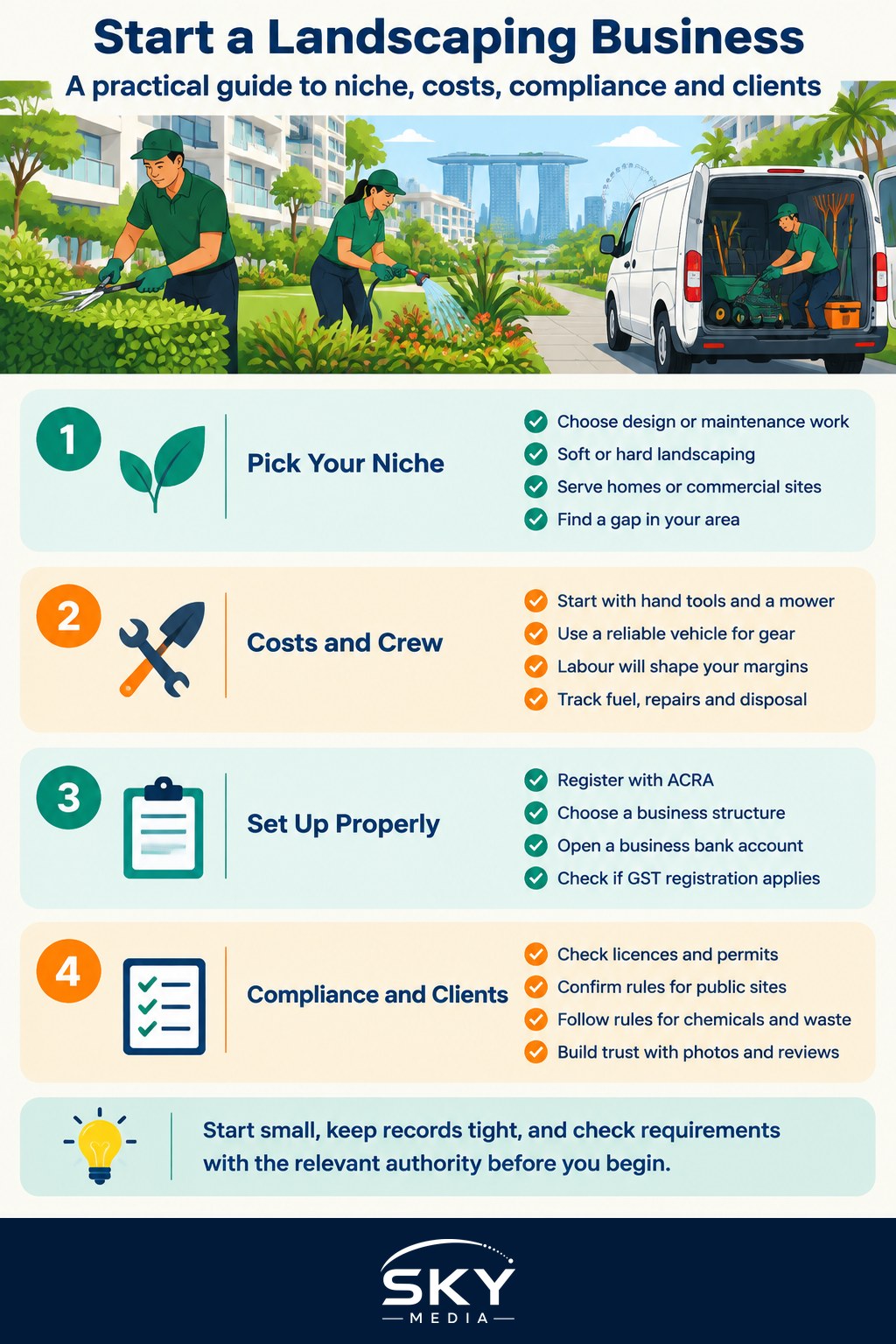
Choose Your Niche and Your Customers
“Landscaping” spans a lot of work. You might focus on design and installation, turning a bare space into a planted one, or on maintenance, the recurring mowing, pruning, fertilising, and pest checks that keep a landscape alive. You could specialise in soft landscaping (plants, turf, soil) or hard landscaping (paving, decking, water features), or serve a specific market such as balcony and rooftop gardens for homes, or grounds maintenance for commercial properties.
The maintenance side is where the stable money sits, because recurring contracts give you predictable monthly revenue instead of one-off project lumps. Design and build projects pay more per job but arrive unevenly. Many operators use projects to win clients, then convert them onto maintenance contracts. Decide who you serve, because a landed-home client and a condo managing agent want very different things. A little honest market research into who already operates near you, and where service is poor, will point you to a gap worth filling.
Equipment, Staffing and the Real Costs
You can start lean with hand tools, a mower and trimmers, and a reliable vehicle to carry gear, plants, and waste. As you take on bigger jobs you will need more equipment and, crucially, more hands. Labour is your defining challenge in this trade. The work is physical and outdoors in Singapore’s heat and rain, and reliable crew are hard to find and keep. Model your labour honestly, because manpower and its cost will shape your margins more than anything else.
If you hire, comply with the Employment Act and MOM rules on employment, work passes, and CPF, and check the current requirements before taking anyone on. Getting this right from the start avoids painful problems later. Track your costs carefully too. Fuel, vehicle upkeep, equipment replacement, plants, and disposal all add up. A clear break-even analysis shows how many contracts you need each month to cover your fixed costs, and honest pricing ensures each job actually pays after materials, labour, and transport.
Set up the business properly. Register with ACRA, choose a structure such as a sole proprietorship or a private limited company, open a business bank account, and check whether GST registration applies to you.
Licensing, Permits and Compliance
Landscaping is generally less heavily licensed than a chemical or food trade, but do not assume nothing applies to you, because it depends on exactly what you do and where. Treat the points below as general pointers and confirm each with the relevant authority.
- Business setup: every business registers with ACRA and may need other licences or permits depending on its activities. Our overview of business licences and permits is a starting point, not the last word. Verify with the authority.
- Where you work: jobs in public or managed spaces, on certain land, or near roads or drains may involve approvals or conditions from the relevant agency or the property owner. Check before you start any works that touch shared or public areas.
- Chemicals and waste: if your services involve pesticides, fertilisers, or disposing of green waste, there may be rules on handling, application, and disposal. Confirm what applies with the relevant authority before you use or dispose of anything controlled.
- Safety: working with sharp tools, machinery, heights, and heat carries genuine risk. Proper protective equipment, safe practices, and the right insurance protect your crew and your business. Speak to an insurer about public liability and work injury cover.
None of this is a definitive ruling. Requirements change and depend on your exact activities, so verifying with the authority is part of the job, not an optional extra.
Winning Steady Clients
Landscaping clients are won through visible proof and reliability. A portfolio of before-and-after photos, a tidy Google Business Profile, genuine reviews, and referrals from happy property managers do most of the selling. For commercial and condo work, punctuality, consistency, and clear reporting matter as much as the greenery itself, because managing agents want a supplier who never makes them chase. Aim to convert good project clients into recurring maintenance contracts, which are the backbone of a stable landscaping business.
Be realistic. This is hard physical work with weather, thin margins, and a constant hunt for reliable crew. Nobody should promise you easy profits. But the demand is genuine and durable, the maintenance-contract model is resilient, and operators who are dependable and do tidy work build a business that compounds over years. Start small, price with discipline, keep your compliance in order by checking with the authorities, and grow only as your contract book allows. For the wider fundamentals, our guide to starting a business in Singapore is a solid place to begin.
Frequently Asked Questions
What is the difference between a landscaping business and a gardening service? Gardening services usually handle regular upkeep such as mowing, weeding and pruning, while landscaping can include design and installation of planted areas and hard features. Many businesses offer both. Choose based on whether you prefer one-off projects or steady recurring work.
Can I run a landscaping business without owning a truck? You can start with rented or borrowed transport for small jobs, but you will need a reliable way to carry tools, plants and green waste. Compare rental costs against buying as your volume grows. Do not underestimate how much transport shapes your costs.
How do I price a landscaping maintenance contract? Work out the time, labour, travel, equipment and disposal costs for each visit, then add a margin. Visit frequency and site size matter as much as the garden itself. Quote clearly in writing, so the client knows what is included, and review your prices as costs change.
Do I need horticulture knowledge or a diploma to start? There is no single requirement for general landscaping, but plant knowledge matters because wrong plants die and clients leave. Courses and experience help a great deal. Check whether any rules apply to specific work you plan to offer, such as tree pruning or pesticide use.
How can a landscaping business cope with Singapore’s rainy weather? Build rain delays into your schedules and tell clients upfront that some visits may move. Keep a few indoor or flexible tasks planned, such as preparing plants or servicing equipment. Clear contracts about rescheduling prevent disputes when the weather interrupts work.