

Most students do not struggle because they cannot understand the work. They struggle because study happens in bursts, a frantic week before a test and then nothing for a fortnight. Consistent studying in Singapore is what quietly separates people who feel on top of things from people who always feel behind, and the good news is that consistency is a skill you build, not a personality trait you are born with. This guide walks through how to make studying a steady habit that survives busy CCA weeks, tired evenings, and the days when you simply do not feel like it.
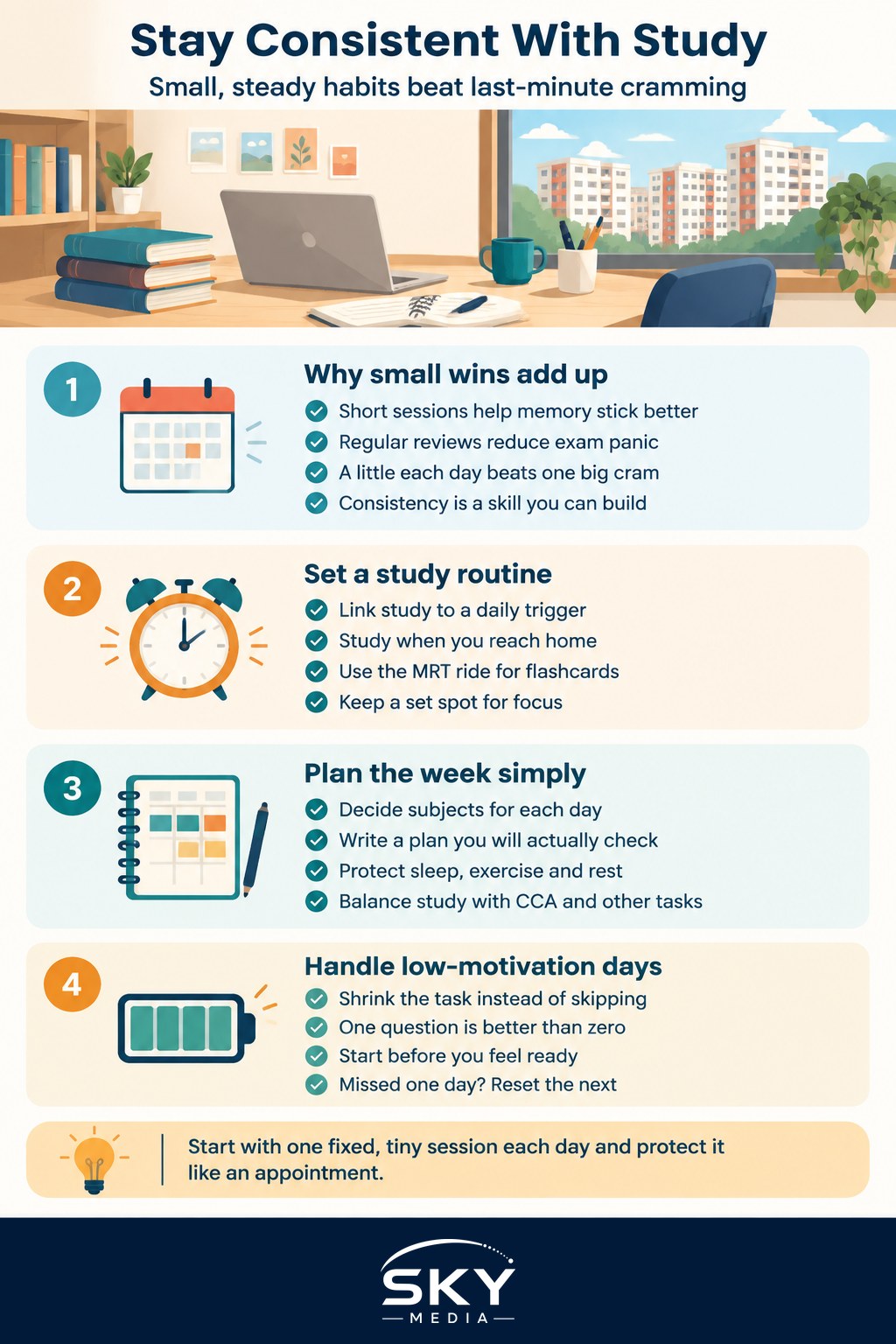
Why Small And Regular Beats Big And Rare
A three-hour cram session feels productive because it is dramatic, but your brain learns far better from shorter sessions spread across many days. This is the whole reason spaced repetition for better memory works so well. Reviewing a topic on Monday, again on Thursday, and once more the following week locks it in more firmly than staring at it for hours the night before an exam.
Consistency also lowers stress in a way that cramming never can. When you touch your subjects a little every day, nothing ever piles up into a terrifying mountain. There is no single make-or-break night, just a steady rhythm you can trust. That calm is worth protecting, because panic is one of the biggest thieves of clear thinking.
So the target is not “study more hours”. It is “study more often, in smaller amounts”. Twenty focused minutes a day, five days a week, will beat one exhausting Sunday marathon almost every time.
Build A Routine You Do Not Have To Decide On
The enemy of consistency is decision-making. Every time you have to choose whether to study, you give yourself a chance to say no. The fix is to attach study to something that already happens, so it runs almost on autopilot.
Try anchoring your sessions to fixed points in your day:
- Right after you get home and put your bag down, before you sit on your bed.
- On the MRT ride home, running through flashcards on your phone.
- Straight after dinner, at the same table, at the same time.
The clearer and more physical the cue, the better. Having a set spot helps too, which is why creating a study space at home matters even in a small HDB flat. A corner of the dining table that your brain associates with focus is a genuine asset. Over a few weeks, the routine stops feeling like willpower and starts feeling like just what you do at that time.
Keep the daily target small enough that you can never reasonably talk yourself out of it. “Read one page” or “do two questions” is almost impossible to refuse, and once you have started, you usually carry on. The point is to protect the streak, not to be a hero every single day.
Plan The Week, Not Just The Day
A light weekly plan removes a lot of guesswork. You do not need anything elaborate. Decide which subjects get attention on which days, and roughly what you will do, then let the daily habit carry the load. A simple revision timetable that you actually glance at beats a beautiful colour-coded one you made once and never opened again.
Balance is part of consistency too. If you are pouring every free hour into studying and none into rest, the habit will collapse, because burnout always wins in the end. Sensible planning includes protecting sleep, exercise, and downtime, and if you juggle activities, learning to balance them across a packed term is a skill in itself.
Survive The Low-Motivation Days
You will not feel motivated every day, and that is completely normal. Consistency is what carries you when motivation is absent, not the reward for always feeling keen. On flat days, shrink the task rather than skipping it. Doing five minutes keeps the chain unbroken and keeps your identity as “someone who studies daily” intact, which matters more than any single session.
A few gentle tactics help here:
- Lower the bar. One question done beats zero questions planned.
- Start before you feel ready. Motivation usually arrives after you begin, not before.
- Forgive a missed day quickly. One gap is a blip; two in a row is a pattern, so protect the day after most of all.
If you find your focus is constantly scattered, it may be worth working on improving focus and concentration as its own project, since concentration and consistency feed each other.
Keep It Kind And Keep It Going
Consistency is a long game, and being harsh with yourself makes it harder, not easier. Guilt drains the energy you need to actually sit down and work. Treat a missed session as information, not a verdict on your character. Ask what got in the way, adjust the plan gently, and carry on the next day.
Remember too that your results do not measure your worth as a person. Steady, honest effort over time is something to be proud of regardless of any single grade. If study stress ever feels persistent or heavy, talk to a trusted adult, a teacher, or your school counsellor, and check current official support if you need more help.
Start tomorrow with one small, fixed, non-negotiable session. Keep it small enough to guarantee, anchor it to something you already do, and let the days add up. That quiet daily rhythm, more than any burst of last-minute effort, is what real progress is built on.
Frequently Asked Questions
How long should a daily study session be if I am just starting a habit? Keep it small enough that you cannot reasonably refuse, such as reading one page or doing two questions, or around twenty focused minutes. Starting is the hard part, and you usually carry on once you begin. Build up gradually once the routine feels automatic.
How do I keep my streak going on days I feel unmotivated? Shrink the task rather than skipping it. Five minutes or one question keeps the chain unbroken and protects your identity as someone who studies daily. Start before you feel ready, since motivation often arrives after you begin.
What should I do after missing a study day? Forgive it quickly and restart the next day. One gap is a blip, but two in a row starts becoming a pattern, so protect the day after most of all. Ask what got in the way, adjust the plan gently and avoid piling on guilt.
How do I study consistently during busy CCA weeks? Anchor short sessions to fixed points in your day, such as right after getting home or on the MRT ride with flashcards. Plan the week lightly so you know which subject gets attention when. Keep sleep and rest protected, since burnout ends any routine.
Do I need a perfect study space to stay consistent? No. A set spot helps your brain link a place with focus, but even a corner of the dining table in a small HDB flat works. What matters more is a regular time and cue, so the routine starts to run on autopilot.
Further reading: Microlearning: Studying in Small Chunks