

Good study habits for kids are built slowly, through small daily routines that feel doable rather than daunting. In Singapore, it is easy to worry about marks and to reach for extra worksheets, but the children who learn well over the long run are usually the ones who have simple, steady habits: a regular time to sit down, a tidy spot to work, and a sense that effort is worth it. This guide shares practical, low-pressure ways to help your child build those habits at home, at their own pace, without turning the dining table into a battleground.
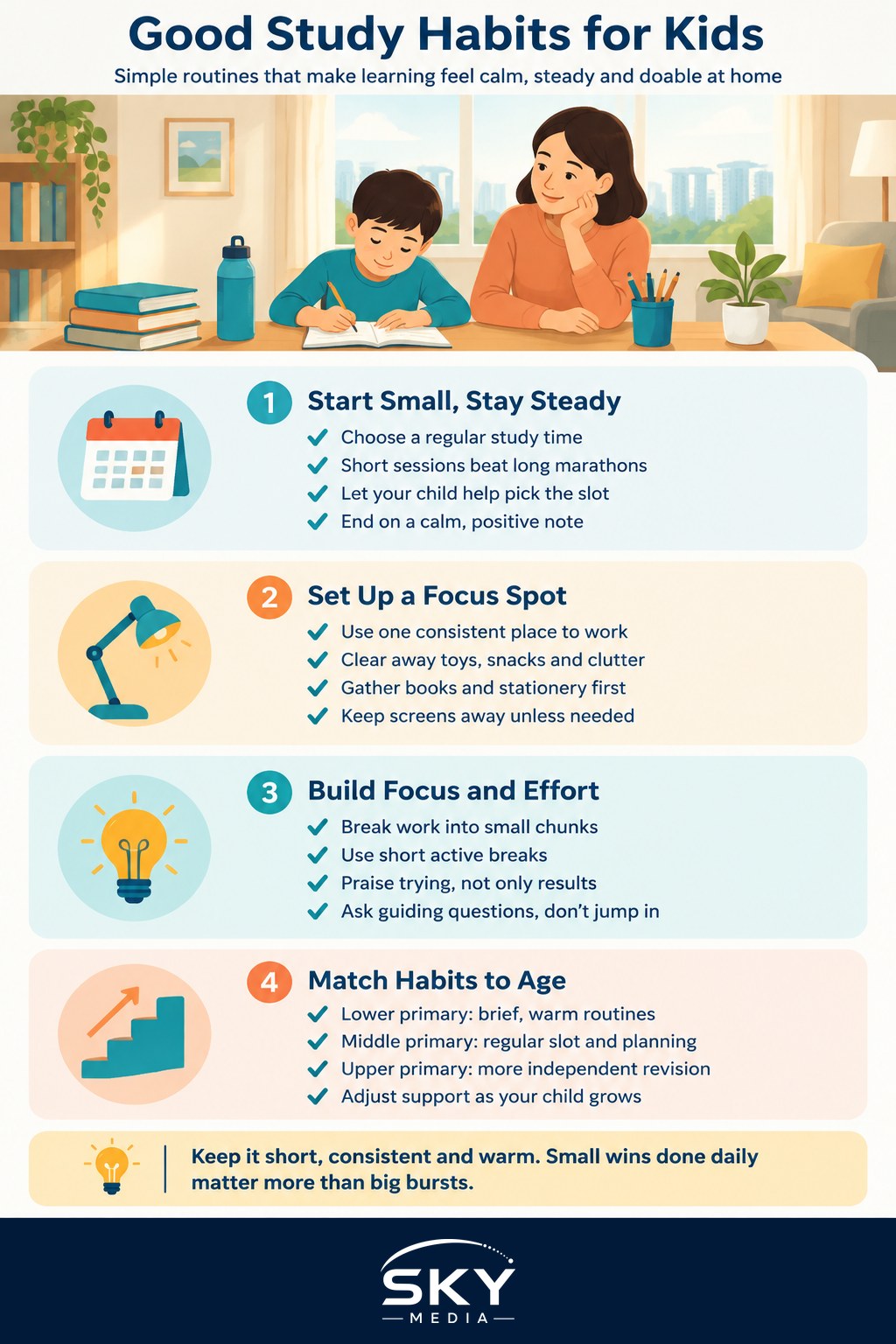
Start Small and Stay Consistent
Habits form through repetition, not intensity. A short, predictable study session each day beats a long, tearful marathon once a week. For younger children, ten to fifteen focused minutes is plenty; older primary children can manage a little more, with breaks. What matters is that it happens at roughly the same time and place, so sitting down to learn becomes automatic rather than a nightly negotiation.
Pick a slot that fits your family. Some children work best straight after a snack and a short rest; others need to run around first. Let your child help choose the time, since a little ownership makes them far more willing to cooperate. Keep the tone light and end on a positive note, even if only a small amount was done. Consistency, warmth and finishing calmly are what turn an activity into a habit.
Create a Study Spot That Helps Focus
Where your child works shapes how well they concentrate. You do not need a fancy study room; a cleared corner of the dining table works well as long as it is consistent and reasonably free of distractions. The aim is a spot the brain learns to associate with focus.
A few simple touches make a big difference:
- Clear the surface of toys, snacks and clutter before starting.
- Gather materials first so there is no wandering off for a pencil or eraser.
- Keep screens away unless a task truly needs one, then put the device out of reach afterwards.
- Set good light and a comfortable chair so your child can sit properly.
- Signal the start with a small ritual, such as filling a water bottle and opening the book together.
Managing devices is often the hardest part. If screens are a sticking point in your home, our companion guides on healthy screen limits can help you set boundaries that stick without daily arguments.
Teach Focus, Breaks and Effort
Concentration is a skill that grows with practice. Young children simply cannot focus for long stretches, so work with their attention span rather than against it. Break tasks into small chunks, and use short, active breaks between them: a stretch, a drink of water, or a quick walk to the window. This keeps energy up and stops sessions from dragging into frustration.
Praise the effort, not just the result. When you notice your child trying a hard question, sticking with a task or checking their own work, say so clearly. This builds the belief that ability grows with practice, which makes children far more willing to attempt difficult things. Avoid comparing siblings or classmates, and steer away from a marks-at-all-costs tone. A child who feels safe to make mistakes will keep trying; one who fears every error tends to give up or hide difficulties.
It also helps to let your child do the thinking. Resist jumping in with answers. Ask guiding questions like “What could you try first?” or “Where does this get tricky?” so they build problem-solving muscles rather than waiting to be rescued.
Match Habits to Your Child’s Stage
What works shifts as children grow. The table below offers a rough guide, though every child is different, so adjust to your own.
| Stage | Focus of study habits | Gentle parent role |
|---|---|---|
| Lower primary | Short routines, learning through play | Sit nearby, keep sessions brief and warm |
| Middle primary | A regular slot, simple planning | Coach organisation, check in lightly |
| Upper primary | Independent revision, self-checking | Step back, support planning and balance |
As children move up, the goal is to hand over more responsibility. Early on you may sit beside them; later you become more of a coach who helps them plan, then a quiet supporter who trusts them to manage. If your child faces major exams such as the PSLE, remember that pacing, rest and steady revision matter more than cramming, and that the school and MOE are the right sources for current syllabus and assessment details.
Keep Motivation and Balance
Habits last only when children do not feel crushed by them. Protect time for play, rest, family and physical activity, since sleep and downtime are when learning consolidates. A tired, over-scheduled child struggles to focus no matter how good the study corner looks.
Celebrate progress in small ways: a tick on a chart, a word of praise, or simply noticing that a task felt easier than last week. Keep goals realistic and short-term so success feels within reach. If your child is deeply reluctant or seems persistently anxious about schoolwork, gently explore why, and consider talking with their teacher or the school counsellor. This is general guidance, not medical or psychological advice, and a trusted professional can help if worries do not ease.
Most of all, model the habits you hope to see. Let your child catch you reading, planning your week or sticking with something difficult. When learning looks like a normal, calm part of everyday life, good study habits for kids stop feeling like a chore and start feeling like simply how the family gets things done.
Explore more
Turn these ideas into a daily rhythm with our guide to building a homework routine for kids, and keep devices in their place with managing screen time for learning. If getting started is the real struggle, you may also find motivating a reluctant learner helpful.
Related across Sky Media: How to Build Habits That Actually Stick · How to Build Good Daily Home Habits