

Shelves and surfaces are the small stages of your home, and how you arrange them shapes how the whole room feels. Styling shelves in Singapore homes is really about finding a calm balance between showing what you love and keeping things tidy, all while coping with our dust and humidity. Done well, a styled shelf looks intentional and settled rather than cluttered or bare, and it costs nothing but a little time and the things you already own.
This guide shares simple, repeatable principles for styling any surface, from a bookshelf and a console to a sideboard or a kitchen ledge. You do not need to buy anything special, just look at what you have with fresh eyes.
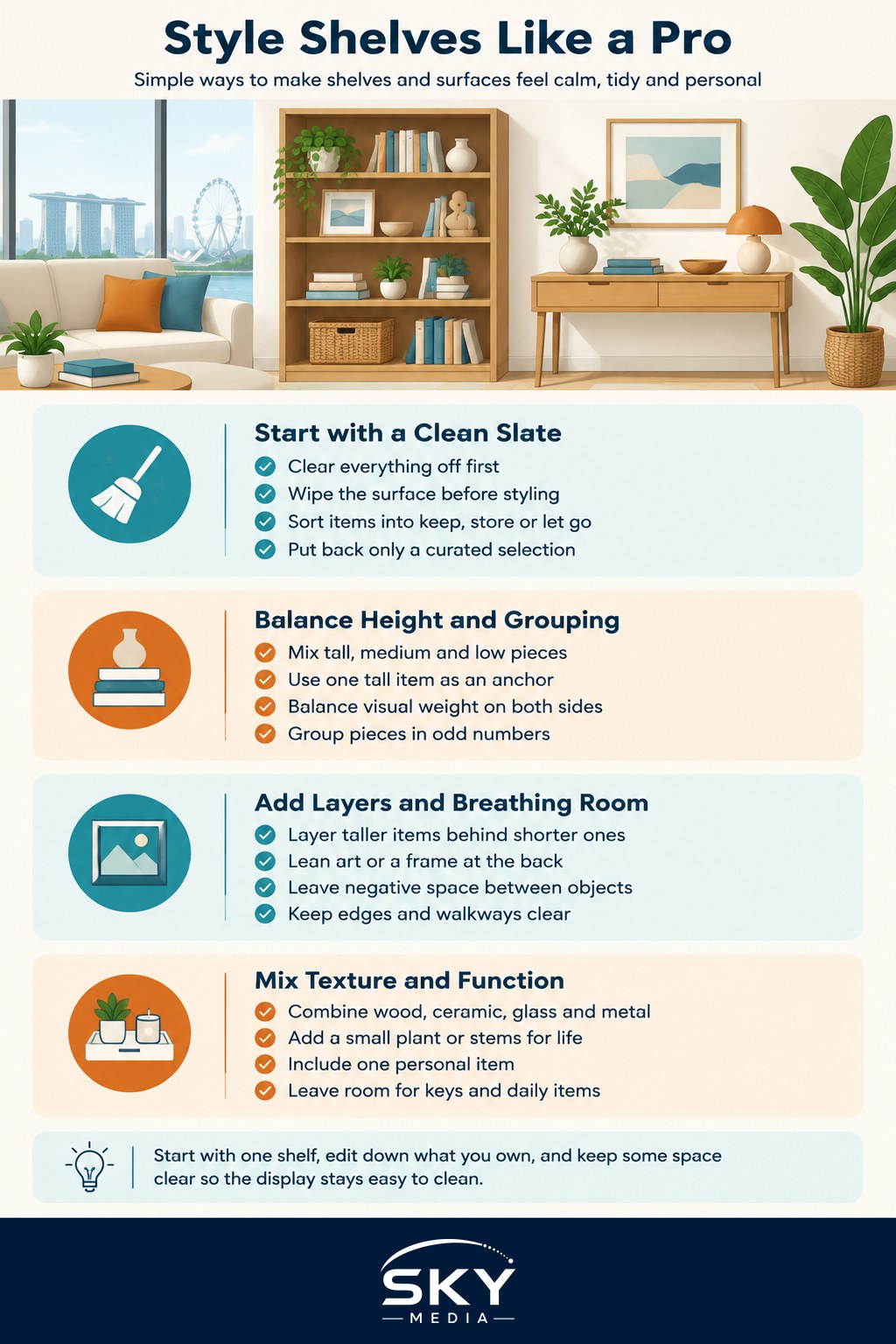
Start by Clearing and Editing
Good styling begins with an empty surface. Take everything off the shelf, give it a wipe, and look at your objects as a pile rather than a fixed arrangement. This reset lets you choose what earns a spot instead of styling around clutter.
- Clear the whole surface so you can start from scratch.
- Sort your objects into keep, store and let go, being honest about what you actually love or use.
- Put back only a curated selection, since a few well-chosen pieces look better than a crowded display.
- Store the rest or rotate it in later, so the shelf stays fresh over time.
The most common styling mistake is simply too much stuff. Editing down is the single biggest improvement most surfaces need, and it makes everything that follows easier.
Balance Height, Weight and Grouping
Once you have your edited selection, arrange it with a few basic principles that designers use instinctively. The aim is a display that feels balanced rather than lopsided or random.
Vary the height so the eye moves across the arrangement. A mix of tall, medium and low objects looks more natural than a row of items the same size.
- Use a tall item, such as a vase, a plant or a stack of books stood upright, to anchor one area.
- Add medium objects around it and finish with a few low pieces to fill in.
- Balance visual weight across the surface, so one side is not heavy while the other looks empty.
- Group in odd numbers, since clusters of three tend to look more pleasing than pairs.
Grouping is powerful. Bringing objects together into small clusters, rather than spacing them evenly like soldiers, creates a relaxed, collected look. Let some items touch or overlap slightly for a natural feel.
Use Layers and Negative Space
Depth and breathing room are what separate a styled shelf from a packed one. Layering adds interest, while negative space stops the display from feeling busy.
Layer by placing taller items behind shorter ones, and lean a framed picture or a piece of art at the back to give a backdrop. A stack of books can act as a small riser to lift a special object.
Just as important is what you leave empty. Negative space, the clear areas around and between objects, gives the eye somewhere to rest and makes the pieces you display feel more special.
- Do not fill every centimetre. Leave some clear space on each shelf.
- Let a favourite object stand a little alone so it gets noticed.
- Keep walkways and edges clear on surfaces like consoles so the display does not get knocked.
This restraint is especially handy in compact HDB and condo homes, where an over-full shelf quickly reads as clutter and makes the room feel smaller.
Mix Texture, and Keep It Practical
Interest comes from variety, so combine different materials and shapes. A styled surface usually mixes a few textures and a touch of nature for warmth.
- Combine materials such as wood, ceramic, glass, metal and woven baskets for contrast.
- Add greenery, like a small plant or a few stems, to bring life and soften hard lines.
- Include something personal, such as a framed photo, a book you love or a travel piece, so the display feels like yours.
- Bring in a little colour through one or two objects rather than a jumble of competing shades.
Keep function in mind too. On a working surface like an entryway console, leave room for keys and daily items, and use a small tray to corral them neatly within the display.
Match the Approach to the Surface
Different surfaces call for slightly different styling. Use this quick guide to set the right tone for each spot in your home.
| Surface | Styling goal | A simple approach |
|---|---|---|
| Bookshelf | Ordered but relaxed | Mix upright and stacked books with a few objects and a plant |
| Console or sideboard | Welcoming and functional | Anchor with a lamp or art, add a tray, keep space for daily items |
| Coffee table | Uncluttered and usable | A tray, one or two objects, and clear room for cups |
| Kitchen or open ledge | Practical and wipeable | Group a few items you use, keep it easy to clean |
| Windowsill | Light and airy | A small plant and one object, leaving the view open |
Keep Shelves Tidy in Our Climate
A styled surface only looks good if it stays clean, and our climate works against that. Dust settles quickly, and humidity can dull objects or leave a musty feel, so plan for easy upkeep.
- Choose displays you can dust in a minute, and avoid overloading a shelf so cleaning does not become a chore.
- Wipe surfaces regularly and lift objects to clean underneath, since dust collects at the base.
- Keep paper, books and fabric items away from damp spots, and air enclosed shelving now and then to prevent mould and that musty smell.
- Refresh the arrangement occasionally by swapping in stored pieces, which keeps the home feeling new without buying anything.
Styling is not a one-time task but a small, enjoyable habit. Edit down, arrange with balance and space, then keep it clean and switch things up when a surface feels stale. Start with a single shelf this week, and you will quickly see how much calmer and more considered a well-styled surface makes the whole room feel.
Explore more
Styled surfaces look their best in a bright, welcoming home, so pair this with our guides on making your home feel cosy and inviting and refreshing your home without renovating. If a reading corner is part of your plan, see how to set up a reading or hobby nook.
Frequently Asked Questions
How many objects should I put on a shelf? There is no set number. A few well-chosen pieces look better than a crowded display, and clusters in odd numbers, such as three, tend to look more pleasing than pairs. Leave some clear space on each shelf.
How do I style a shelf if I have a lot of books? Mix upright and stacked books, using a stack as a small riser to lift a favourite object. Add a plant or a couple of objects and leave some negative space so the shelf does not read as clutter.
What can I put on an entryway console without it looking messy? Anchor it with a lamp or art, add a small tray to corral keys and daily items, and leave room for what you actually use. A tidy tray keeps the practical bits within the display.
How do I stop dust from ruining a styled shelf? Choose displays you can dust in a minute and avoid overloading the shelf. Wipe regularly and lift objects to clean underneath, since dust collects at the base. Air enclosed shelving now and then too.
How can I change the look of my shelves without buying anything? Swap in pieces you have stored, rotate objects between rooms, or regroup them by height and texture. Editing down first usually makes the biggest difference and costs nothing, and the home feels new again.