

Whistling is one of those small joys that follows you through life, whether you are keeping time to a song on the MRT or trying to nail that famous high vocal note your favourite singer hits. In this guide we will cover both meanings: how to whistle with your lips, the everyday kind, and the whistle tone, a very high singing register that some vocalists use. Learning how to whistle is easier than you might think, and it is a fun skill that costs nothing and can be practised almost anywhere.
We will keep everything relaxed and gentle. Neither lip whistling nor whistle tone singing should ever involve straining. If it feels forced or uncomfortable, ease off and try a different approach.
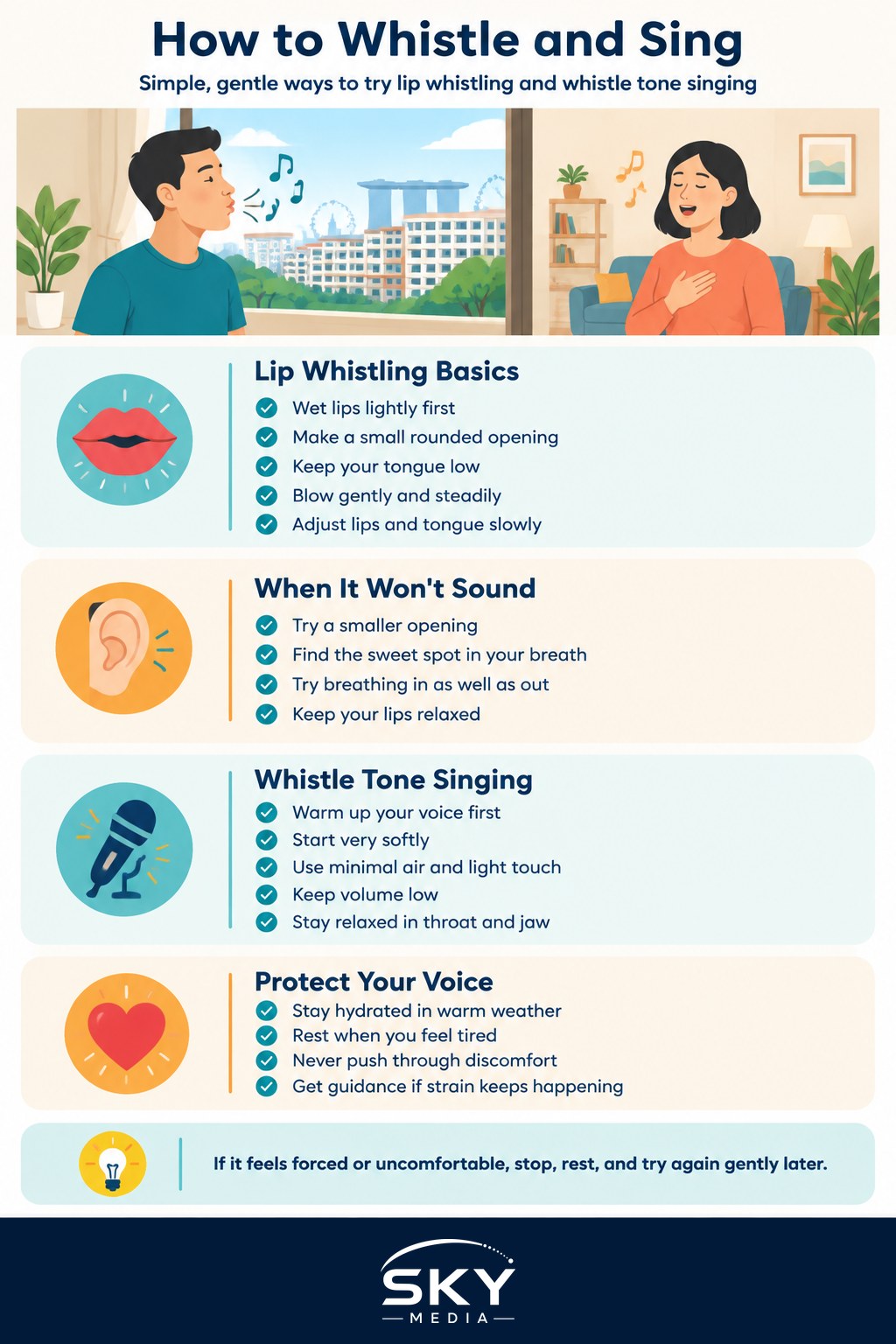
Part One: Whistling With Your Lips
This is the classic whistle, made by shaping your lips and pushing air through. If you have never managed it, do not worry. It clicks for different people in different ways, and it usually just needs patient experimenting.
Here is a simple method to try.
- Wet your lips lightly. Dry lips make it harder.
- Purse your lips into a small, rounded opening, as if you are about to say the word ooh.
- Rest the tip of your tongue low, near the bottom of your mouth behind your lower teeth.
- Blow gently and steadily through the small opening. Do not blast air. A soft, controlled stream works best.
- Slowly adjust the shape of your lips and the position of your tongue while blowing. Somewhere in that fiddling, a clear tone will appear.
The moment you get even a faint whistle, pause and remember exactly how it felt. That memory is the thing you build on. To change pitch, move your tongue and jaw slightly. Raising the tongue and tightening the space tends to raise the pitch, while lowering it deepens the tone. Experiment slowly.
Do not expect instant results. Many people take days or weeks of casual attempts before it suddenly works. Keep it light and playful.
Tips If You Just Cannot Get a Sound
- Try a smaller lip opening. A common mistake is leaving too big a gap.
- Adjust your breath. Too hard or too soft both fail, so hunt for the sweet spot.
- Try whistling while breathing in as well as out. Some people find one direction far easier.
- Keep your lips relaxed rather than tense. Tension usually kills the tone.
Part Two: Whistle Tone Singing
The whistle tone, or whistle register, is a separate thing entirely. It is the highest part of the human voice, sitting above your normal high notes, and it produces a light, flute like or piercing sound. Some singers use it for dramatic high moments.
Before anything else, understand this is an advanced and delicate area of singing. It should feel light and effortless, never strained. If reaching for these notes causes any discomfort, tightness, or pain, stop. This is general information for hobby singers, not medical or vocal advice. If you have ongoing voice concerns, see a doctor or a qualified vocal coach.
To explore the whistle register gently.
- Warm up your voice thoroughly first. Never jump straight to extreme high notes with a cold voice. Our guide to vocal warm ups for singers will get you started safely.
- Start very softly. Whistle tones are produced with minimal air and a light touch, not by pushing hard.
- Try tiny, quiet high sounds, almost like a soft squeak or a gentle hoot, and see if a clear high tone emerges.
- Keep the volume low. Loudness and force are the enemies of a healthy whistle tone.
- Stay relaxed in your throat, jaw, and shoulders throughout.
Understanding how your voice is built helps a lot here. Our guide to understanding your vocal registers explains how the whistle register relates to your other registers, and knowing how to find your vocal range will show you where your comfortable limits are before you reach beyond them.
Keeping Your Voice Healthy
Whether you are lip whistling or exploring whistle tones, treat your voice kindly. Stay hydrated, especially in our warm climate, rest when tired, and never push through discomfort. Whistle tone singing in particular is not something to force or drill for long stretches. Short, gentle, relaxed attempts are the way. Our guide to caring for your singing voice covers the daily habits that keep you singing comfortably.
If high, light singing consistently causes strain, tightness, or a scratchy feeling, ease off completely and consider working with a qualified vocal coach who can guide you in person. There is no rush, and no note is worth hurting your voice for.
A Fun Skill for Everyday Life
Lip whistling is a lovely everyday skill you can practise quietly around the flat, on a walk, or waiting for the bus. Just be mindful of others in shared spaces and keep it considerate. Whistle tone singing is a more specialised pursuit, best approached slowly, gently, and ideally with guidance.
Keep Going
Both kinds of whistling reward patience over force. Keep your attempts light, relaxed, and frequent, and celebrate the first clear tone when it arrives. Whether you just want to whistle a tune around the house or safely explore the very top of your voice, the same principle holds: stay gentle, stay relaxed, and have fun with it.
Frequently Asked Questions
Why can I not whistle even though I have tried for ages? Common culprits are a lip opening that is too big, air that is too hard or soft, or tense lips. Try a smaller, relaxed opening, keep your tongue low and hunt for a steady stream. Some people find breathing in easier. Casual, patient attempts over days or weeks usually work.
How do I change the pitch when whistling? Move your tongue and jaw slightly while keeping the airflow steady. Raising the tongue and narrowing the space tends to raise the pitch, while lowering it deepens the tone. Experiment slowly with a simple tune, and keep your lips relaxed.
Is whistle tone singing the same as whistling with your lips? No. Lip whistling uses shaped lips and air, whereas the whistle tone is the highest register of the singing voice, above normal high notes. The two are unrelated skills, and the whistle register is advanced and delicate.
Is it safe to practise whistle tones every day? Only in short, gentle, relaxed attempts. Never force or drill these notes for long stretches, and stop if you feel strain, tightness or scratchiness. If problems persist, see a doctor or a qualified vocal coach.
Can everyone learn to whistle? Most people can with patient practice, though it clicks at different speeds for different people. A few may find it difficult for physical reasons, such as how their lips or teeth are shaped. If it never works, try other ways of making music.