

It always seems to happen at the worst time. You have a performance, a rehearsal, or a recording session coming up, and then a cold arrives. Singing with a cold is tricky, and the honest truth is that sometimes the kindest thing you can do for your voice is to rest it completely. This guide offers careful, general advice on how to approach it, but please treat it as general information for everyday singers, not medical or vocal-medical advice. If your symptoms are severe or persistent, see a doctor.
The most important message up front is simple. Do not push through pain or heavy hoarseness. Your voice is delicate when you are unwell, and forcing it can make things worse and slow your recovery. When in doubt, rest.
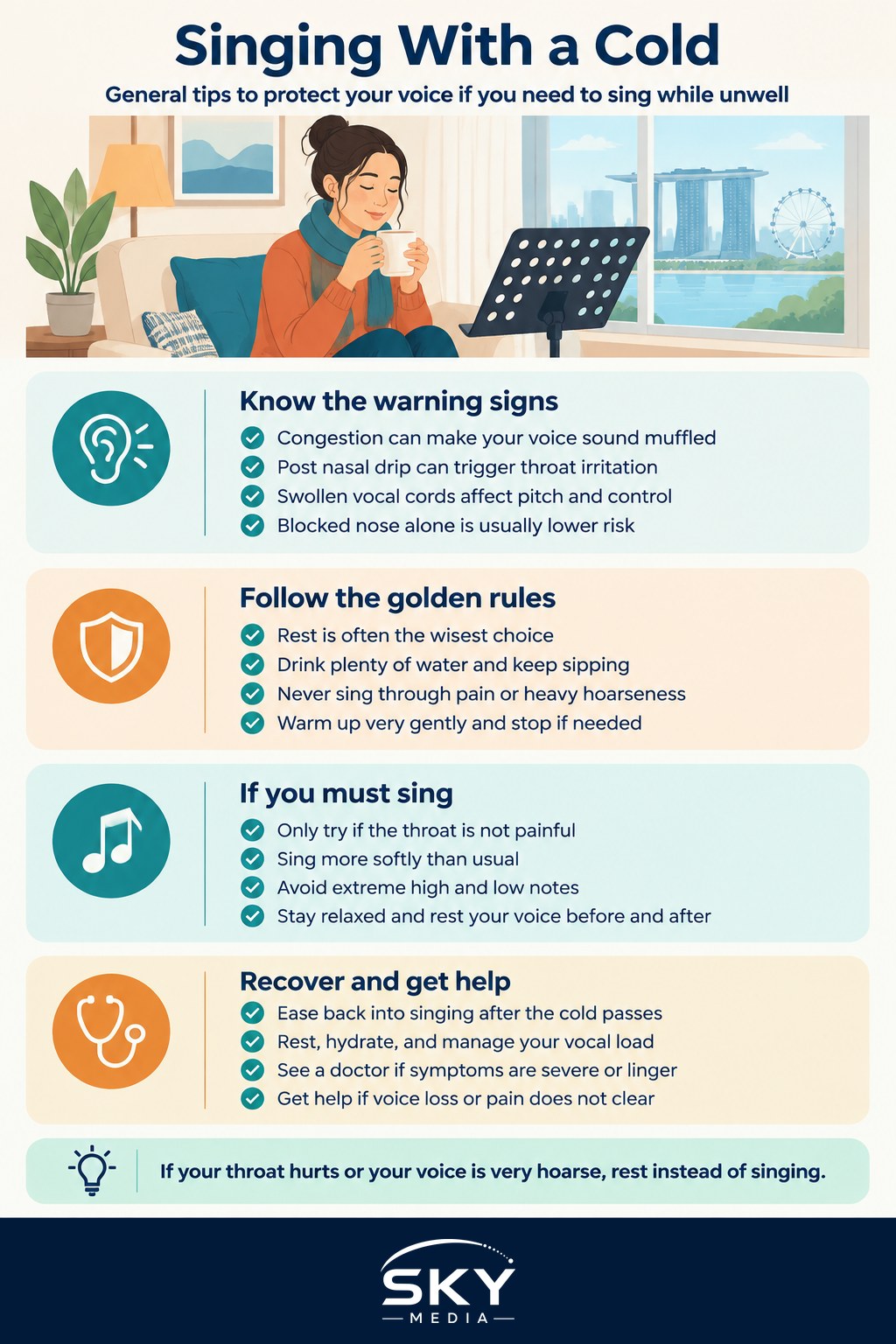
First, Understand What a Cold Does to Your Voice
A cold affects your voice in a few ways, and knowing this helps you make sensible choices.
- Congestion changes your resonance, so your voice sounds different and muffled, especially in the higher, brighter part of your tone.
- Post nasal drip and irritation can make your throat feel scratchy and can trigger coughing.
- If the infection reaches your vocal cords, they can swell, which affects pitch and control and makes singing genuinely risky.
Here is the key distinction. A blocked nose with an otherwise healthy throat is uncomfortable but usually low risk for gentle singing. Real hoarseness, pain, or a rough, breathy voice suggests your vocal cords are affected, and that is a strong signal to rest rather than sing.
The Golden Rules
Whatever you decide, keep these in mind.
- Rest is the best medicine for your voice. If you can cancel or postpone singing, that is often the wisest choice, especially if your throat is sore.
- Hydration matters enormously. Drink plenty of water so your body and your voice stay moist. In Singapore heat and air conditioned rooms, it is easy to get dry, so keep sipping.
- Never sing through pain. Pain is a clear stop sign. So is heavy hoarseness.
- Warm up extra gently. If you do sing, an easy, careful warm up is essential, and you should stop if anything feels wrong. Our guide to vocal warm ups for singers can help you keep it light.
We are not going to recommend any specific medicine, throat spray, or dosage here, because that is a matter for a pharmacist or doctor, not a singing article. Please do not self medicate based on internet advice.
If You Decide to Sing Anyway
Sometimes a commitment cannot be moved. If your throat is not painful and you are only mildly congested, you may be able to sing carefully. Here is how to reduce the risk.
- Do a slow, gentle warm up and pay close attention to how your voice responds. If it hurts or feels rough, stop.
- Sing more softly than usual and avoid your extreme high and low notes, which stress the voice most.
- Do not force. If a note will not come easily, let it go rather than pushing for it.
- Keep water nearby and sip often.
- Rest your voice completely before and after. Do not chat all day and then expect to sing well.
- Consider simplifying your parts, dropping the most demanding sections, or lowering the key if you can.
Staying relaxed helps too. Tension makes everything harder when your voice is already compromised. Our guide to breathing techniques for singing can help you support your voice gently rather than straining for it.
When to Absolutely Not Sing
Please do not sing if any of these are true.
- You have real pain in your throat when singing or speaking.
- Your voice is heavily hoarse, rough, or keeps cutting out.
- You have lost your voice or a big part of your range.
- You feel genuinely unwell, feverish, or exhausted.
Singing hard through a heavily affected voice can lead to strain and, in some cases, longer term problems. It is not worth it. Rest, recover, and come back stronger.
Recovering and Protecting Your Voice
Once the cold passes, ease back in gently rather than diving into heavy singing straight away. Give your voice a day or two of light use to recover fully. Good ongoing habits also make you more resilient, so our guide to caring for your singing voice is worth building into your routine, cold or no cold.
Prevention helps as well. Rest when you are tired, stay hydrated, and manage your overall vocal load so you are not run down. A well cared for voice tends to bounce back faster.
When to See a Doctor
See a doctor if your symptoms are severe, if they last longer than you would expect from a normal cold, if you have significant pain, or if your hoarseness or voice loss does not clear up as you recover. Persistent voice changes always deserve professional attention, and an ENT specialist can check things properly. This article cannot diagnose anything, and it is no substitute for real medical care.
Keep Going
Singing with a cold is one of those moments where patience beats determination. Rest, hydrate, listen to your body, and never push through pain or heavy hoarseness. Most colds pass in a few days, and a short rest now protects the voice you will rely on for years. Be kind to yourself, recover fully, and you will be back to singing at your best before long.