

When a child is unwell, keeping fluids going is often the single most helpful thing you can do at home. Fever, vomiting and loose stools all drain a little body of water quickly. Getting sick child hydration Singapore parents right, with small frequent sips and a watchful eye, helps your child feel better and recover faster. This is general information rather than medical advice, so please follow your doctor or pharmacist for anything specific to your child.
Why fluids matter so much when children are ill
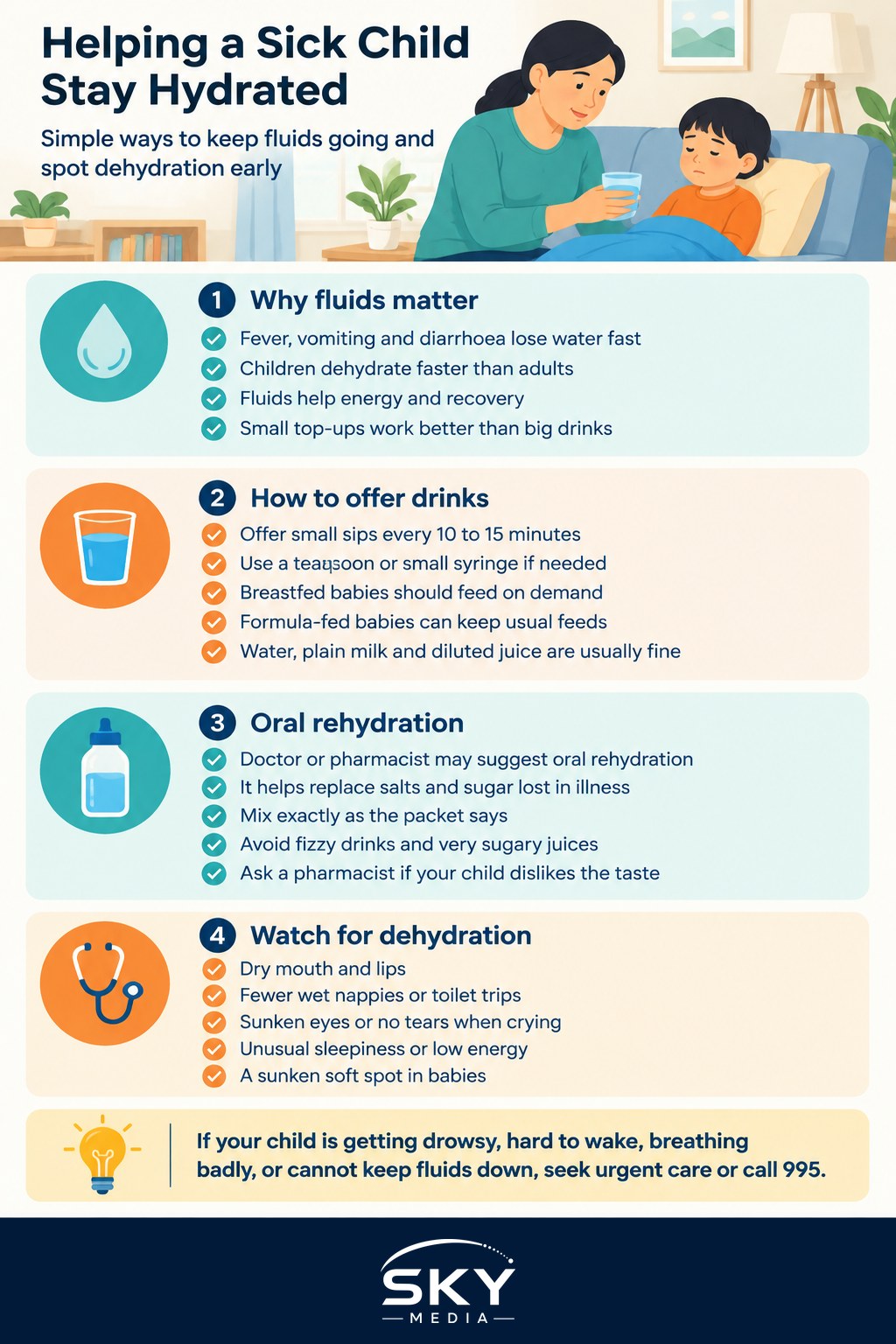
Children lose water faster than adults, and they have smaller reserves to fall back on. A fever raises the body’s temperature and increases fluid loss through the skin and breathing. Vomiting and diarrhoea flush fluids out directly. Add a reduced appetite and a reluctance to drink, and it is easy to see how a poorly child can slip towards dehydration.
Staying hydrated keeps energy up, helps the body fight infection, and simply makes your child more comfortable. It also reduces the chance of an illness that could have stayed mild turning into something that needs a clinic or hospital visit. The aim is steady, gentle top-ups rather than a race to drink large amounts at once.
Small frequent sips: the golden rule
The most effective approach with an unwell child is small amounts, offered often. A big cup all at once can overwhelm a queasy tummy and come straight back up. Instead, offer a few sips every ten to fifteen minutes. A teaspoon or a small medicine syringe can help with a baby or a child who is refusing a cup.
Water, plain milk and well-diluted juices are usually fine for everyday sips. Breastfed babies should keep breastfeeding on demand, and formula-fed babies should carry on with their usual feeds unless your doctor advises otherwise. For a child who is vomiting, wait a short while after a sick episode, then start again with tiny sips and build up slowly.
Make drinking as appealing as you can. A favourite cup, a fun straw, or an ice lolly made from a suitable drink can tempt a reluctant sipper. Offer fluids calmly and often rather than turning it into a battle, which only makes an unwell child more resistant.
Here is a simple guide to gentle, frequent hydration:
| Age or situation | A gentle approach to fluids |
|---|---|
| Breastfed baby | Continue feeding on demand, a little and often |
| Formula-fed baby | Carry on with usual feeds unless advised otherwise |
| Toddler or older child | Small sips every ten to fifteen minutes |
| After vomiting | Pause briefly, then restart with tiny sips |
| Diarrhoea | Keep offering fluids to replace what is lost |
Oral rehydration and when it helps
For children with vomiting or diarrhoea, your doctor or pharmacist may recommend an oral rehydration solution. These are specially balanced with the right amounts of salts and sugar to replace what the body loses, and they help the gut absorb fluid more effectively than water alone in some cases.
Use oral rehydration solutions only as advised, and always mix them exactly according to the instructions on the packet. Getting the concentration wrong can do more harm than good, so never guess or make up your own version. If your child dislikes the taste, ask your pharmacist about options. Plain water is still valuable, but rehydration solutions can be a useful tool when a doctor or pharmacist suggests them.
Avoid fizzy drinks and very sugary juices as the main fluid during a tummy bug, since these can sometimes make diarrhoea worse. When in doubt, ask a professional what is best for your child’s situation.
Spotting the signs of dehydration
Knowing the warning signs of dehydration lets you act early. Keep an eye out for a dry mouth and lips, fewer wet nappies or trips to the toilet, sunken eyes, no tears when crying, unusual sleepiness or lethargy, and a general lack of energy. In babies, a sunken soft spot on the head can be a sign too.
If you notice these signs, step up gentle fluids straight away and contact your doctor for advice. Do not wait to see if things improve on their own if your child is clearly becoming dehydrated.
Seek urgent care, or call 995, if your child shows signs of significant dehydration alongside other warning signs, such as being very drowsy or hard to wake, floppy or unresponsive, breathing with difficulty, or unable to keep any fluids down at all. A baby under three months who is unwell should always be seen promptly. Trust your instincts: if your child seems seriously unwell, get help without delay.
Keeping fluids going at home
Practical habits make hydration easier through an illness. Keep a drink within easy reach and offer it regularly, even before your child asks. Track wet nappies or toilet trips through the day so you have a real sense of how things are going, rather than relying on memory.
Foods with a high water content, such as soups, watery fruits and jelly, can add to fluid intake once your child feels like eating a little. There is no need to force food during the worst of an illness, since fluids matter far more in the short term, but gentle nibbles can return as your child perks up.
Above all, stay calm and patient. Hydration is a slow and steady effort, not a single big drink. With small frequent sips, the right guidance on rehydration solutions, and a careful watch for the signs of dehydration, you give your child the best support to recover comfortably at home, and you will know when it is time to call for help.
Explore more
- Common Baby Illnesses and When to Worry
- Children’s Fever and When to See a Doctor
- When to Take Your Child to A&E vs a GP
- Family First Aid and Emergency Preparedness
Frequently Asked Questions
What fluids are best for a child with a fever? Water, plain milk and well-diluted juice are usually fine for everyday sips. Breastfed babies should keep feeding on demand and formula-fed babies carry on with usual feeds unless a doctor says otherwise. Offer small amounts often rather than a big cup.
Can I make my own oral rehydration drink at home with salt and sugar? No. Getting the salt and sugar balance wrong can do more harm than good. Use a ready-made oral rehydration solution only as your doctor or pharmacist advises, and mix it exactly as the packet says.
My child vomits every time they drink, so what now? Pause briefly after a vomit, then restart with tiny sips, a teaspoon at a time, and build up slowly. If your child cannot keep any fluids down, seems very drowsy or shows signs of dehydration, contact a doctor promptly or seek urgent care.
Are fizzy drinks or sugary juice okay during a tummy bug? They are best avoided as the main fluid. Fizzy drinks and very sugary juices can sometimes make diarrhoea worse. Water, and a rehydration solution if a doctor or pharmacist suggests one, are usually better choices.
How do I get a sick toddler who refuses to drink to take fluids? Make it appealing and low-pressure: a favourite cup, a fun straw, or an ice lolly made from a suitable drink. A teaspoon or small medicine syringe can help. Battles make an unwell child more resistant, so stay calm and keep offering.
Official sources: HealthHub