
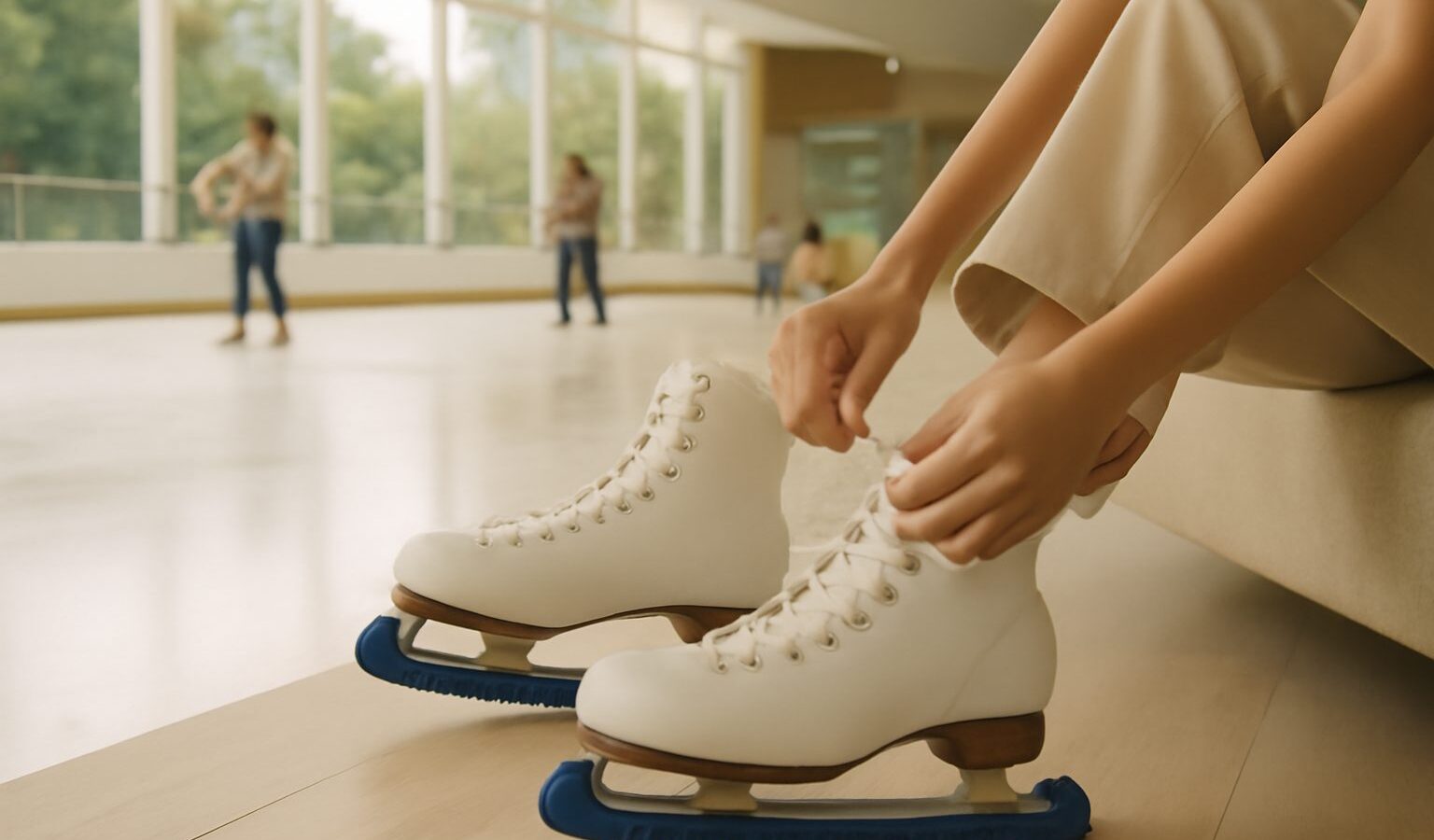
Gliding across the ice while it is 32 degrees and humid outside feels a little like magic, and that contrast is exactly why ice skating in Singapore is such a treat. You do not need a winter holiday to lace up a pair of blades here. A handful of indoor rinks stay cold and crisp all year round, so you can trade the tropical heat for a genuinely chilly, refreshing outing any weekend. Whether you are a complete beginner clinging to the barrier or someone who wants to practise crossovers, there is a session for you, and most rinks welcome families, dates, birthday groups and solo skaters alike.
This guide walks you through the main places to skate, how public sessions usually work, what to wear, and how to plan a smooth, budget friendly outing by MRT.
Where to go ice skating in Singapore
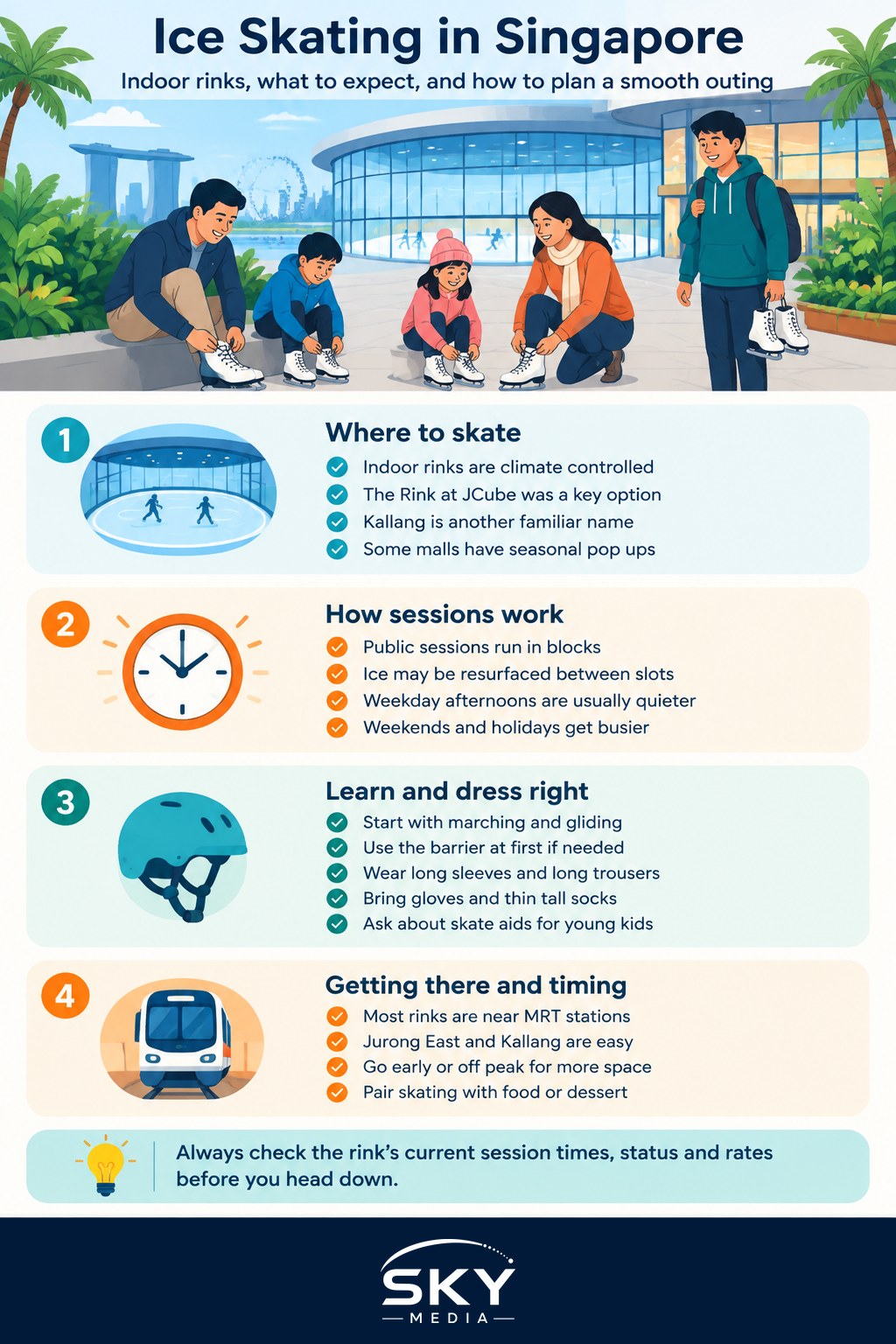
Singapore’s ice rinks are indoor and climate controlled, which is the whole point in our climate. The best known is The Rink at JCube in Jurong East, a full size Olympic standard rink that has long been a go to for lessons and casual skating, so do check its current status and hours before heading down, since malls and their tenants change over time. Over on the east, Kallang has been a familiar name for ice sports and rink activity near the Sports Hub area. You may also come across smaller or seasonal setups and pop up rinks that appear around the year end festive period in shopping malls.
Because line ups can change, treat any specific rink as something to confirm rather than assume. A quick check of the venue’s website or social media before you travel saves a wasted trip, especially if you are bringing kids or a group.
Here is a simple way to think about your options:
| Option | Best for | Good to know |
|---|---|---|
| Full size indoor rink | Lessons, serious practice, hockey | Larger ice, structured session times, skate rental usually available |
| Mall based or pop up rink | Casual fun, festive outings | Smaller ice, often busiest on weekends and holidays |
| Group or party booking | Birthdays, friend hangouts | Ask about group rates and off peak slots for more space |
Prices, session lengths and rental fees vary by venue and change often, so check the operator’s current rates rather than relying on old figures. Many rinks price a public session by the block of time and add a small skate rental fee if you do not own blades.
How public skating sessions work
Most rinks run public sessions in blocks throughout the day, with the ice cleared and resurfaced between some slots. You buy admission for a session, collect your rental skates if you need them, and skate at your own pace until the session ends. Weekday afternoons and the first sessions of the day tend to be quietest, while weekend evenings, school holidays and the festive season get busy, so go early if you want more room to wobble in peace.
A few practical pointers:
- Sizing skates: Rental skates run close to your shoe size, but try snug rather than loose. A firm fit around the ankle gives you far more control and fewer wobbles.
- Lacing: Tie them properly, tight over the foot and ankle, looser at the very top. Loose laces are the top reason beginners feel unstable.
- Session rules: Operators set safety and age requirements, and staff may pause skating for resurfacing or crowd control. Follow their directions and any posted rules.
- Little ones: Some rinks offer penguin style skate aids or have age and height guidance for young children, so ask ahead if you are bringing kids.
Learning to skate and getting better
If it is your first time, the goal of the first hour is simple: get comfortable standing, marching and gliding, and learn how to fall safely and get back up. Bend your knees, keep your weight slightly forward over the balls of your feet, and look ahead rather than down at your skates. Short marching steps come before smooth glides, and the barrier is there for everyone at the start, so use it without shame.
Many rinks and independent coaches offer learn to skate lessons, from casual group classes to private coaching and even figure skating or ice hockey pathways. Lessons are the fastest way to progress past the barrier stage and pick up crossovers, stopping and turning with good habits. If you think you will skate regularly, a short course usually pays off quickly in confidence.
For steady improvement, aim to skate for a full session every week or two. Consistency beats occasional marathon visits, and your ankles and balance will thank you.
What to wear and bring
The ice hall is genuinely cold, which is a lovely change of pace, but dress for it:
- Long sleeves and long trousers that let you move, plus a light jacket or hoodie you can peel off if you warm up.
- Thin, tall socks. One pair of proper socks beats thick bunched up ones that cause blisters.
- Gloves. They keep your hands warm and protect your fingers if you fall or others skate nearby.
- Optional protection. Wrist guards, and a helmet for children or nervous beginners, add real peace of mind. Some rinks rent or allow your own.
Leave the shorts, sandals and flimsy tops at home. Bring a little cash or card for rental and lockers, and a water bottle for after, since skating is more of a workout than it looks.
Getting there, timing and making a day of it
Singapore’s rinks sit inside or near shopping malls, which makes them easy to reach by MRT and simple to build a full outing around. Jurong East is a major interchange served by the East West and North South lines, and the Kallang area is on the East West line near the Sports Hub, so you can usually get within a short walk of the ice without driving. Check the specific venue’s directions, as mall entrances and rink levels vary.
Timing tips to skate smart:
- Go early or off peak on weekdays for quieter ice and shorter queues.
- Avoid the festive crush in late December unless the seasonal buzz is exactly what you want.
- Pair it with a meal. Being mall based means food courts, cafes and dessert spots are steps away, perfect for warming up afterwards.
Because you are indoors and cool the whole time, ice skating is one of the few activities in Singapore that completely sidesteps the heat and sudden rain, which makes it a reliable rainy day and school holiday plan. Just confirm session times and rink availability before you go, since operators update schedules regularly and some rinks close for private events or maintenance.
Explore more
Hunting for more indoor, weatherproof fun? See our guide to VR and immersive experiences in Singapore for another cool, air conditioned outing. If you are planning with a crew, our round up of group outings and friend hangouts in Singapore is packed with ideas, and families chasing rainy day energy burners can browse the best indoor playgrounds in Singapore.
Frequently Asked Questions
Is ice skating hard for complete beginners? It feels wobbly at first, but most people can stand, march and glide within the first hour. Bend your knees, look ahead and lean slightly forward. Use the barrier freely and learn to fall safely. A short lesson speeds things up a lot.
Should I book a lesson or just try public skating first? If you are nervous or want good habits early, a lesson is the fastest route past the barrier stage. If you only want a fun outing, a public session is enough. Many rinks offer both, so ask about current class options and rates.
Can young children go ice skating? Often yes, but rules differ by rink. Some offer penguin-style skate aids or set age and height guidance, so ask before you go. A helmet, gloves and wrist guards add peace of mind. Keep children within reach on the ice.
What are the common mistakes beginners make on the ice? Loosely laced skates, looking down at the feet and standing stiff-legged are the big ones. Tie skates firmly over the foot and ankle, bend your knees and keep your weight slightly forward. Wearing thick bunched-up socks also causes blisters.
How often should I skate to improve? One full session every week or two works better than the occasional marathon visit. Regular practice builds balance and ankle strength. If you plan to skate often, a short course is worth considering for steady progress.
Further reading: Ice Hockey in Singapore: How to Start Playing · Rollerblading and Inline Skating in Singapore