
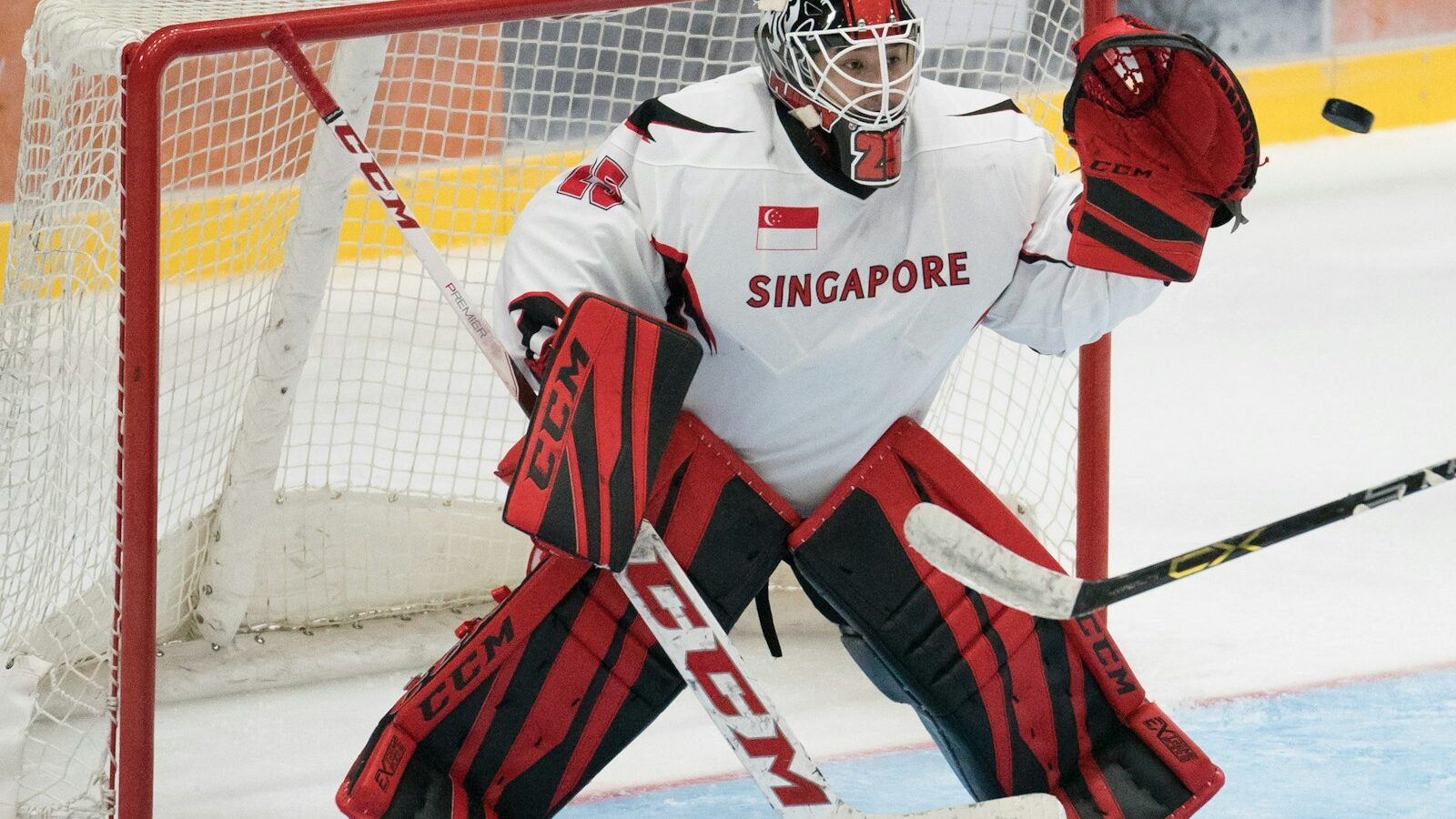
Ice hockey might seem like an odd fit for a country where it never drops below the mid-twenties, but the sport has a small, loyal and welcoming community here. Kids learn through youth programmes, adults join social leagues, and newcomers from hockey-playing countries often find a team within weeks. If you want to try ice hockey Singapore style, the path is clear once you know the steps.
This guide covers how to go from never having held a stick to playing in a game: learning to skate, finding a hockey programme, getting gear, and joining a league. It focuses on playing the sport. If you just want a fun session on the ice, our guide to ice skating in Singapore is a better starting point.
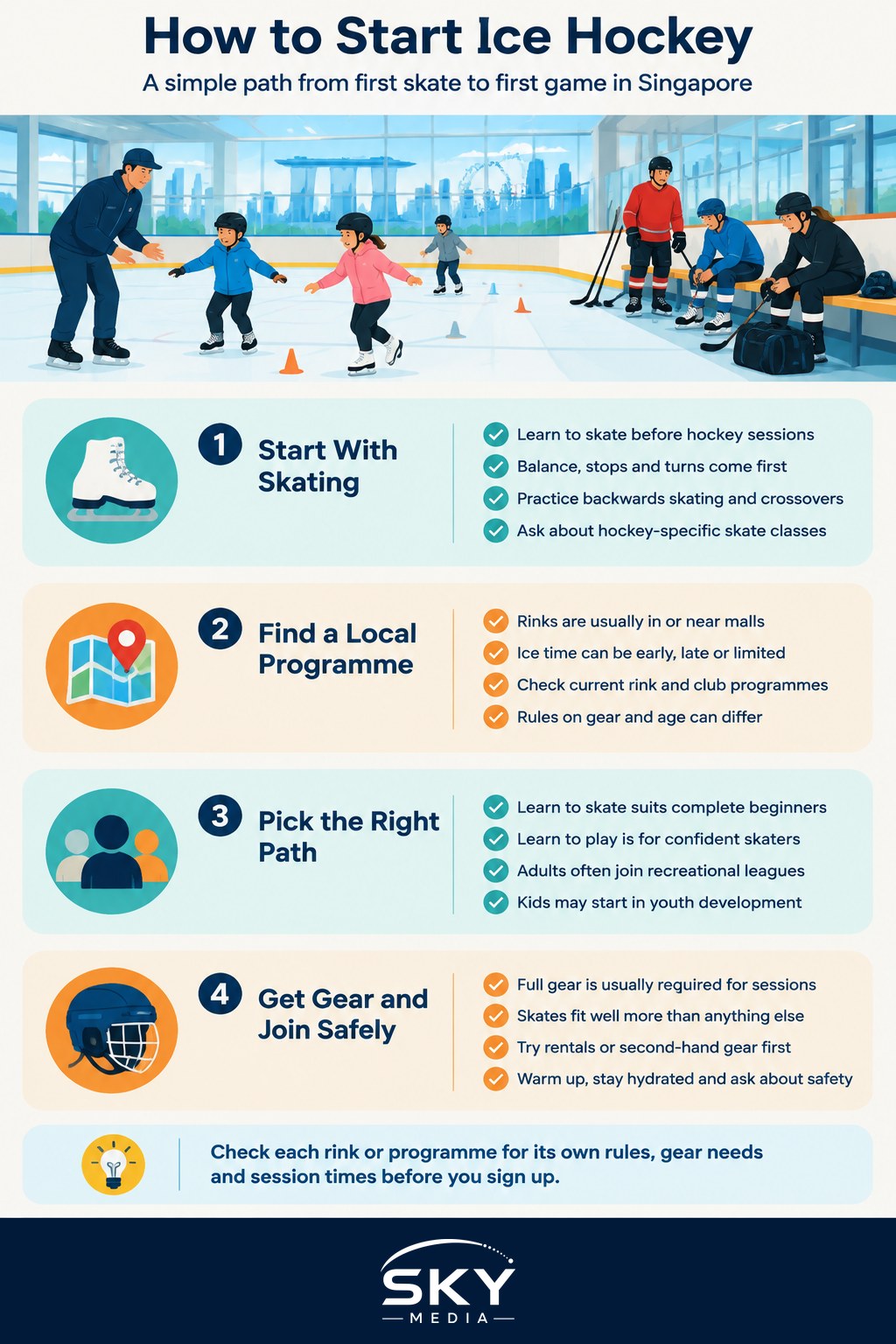
Start With Skating, Not the Stick
The biggest hurdle for beginners is not shooting or passing. It is skating. Hockey asks you to stop quickly, turn sharply, skate backwards and stay balanced when someone bumps into you. Most hockey programmes expect at least basic skating before you join hockey-specific sessions.
Typical skating milestones before hockey:
- Gliding forward on both feet and on one foot with control.
- Stopping reliably, ideally with a hockey stop rather than a snowplough.
- Skating backwards and making crossovers on both sides.
- Getting up quickly after a fall.
Learn-to-skate classes at local rinks are the usual first step. Some rinks and hockey groups also run “learn to skate for hockey” classes that teach skating in hockey skates from the start, which is worth asking about.
Where Ice Hockey Is Played Locally
Singapore has a small number of indoor ice rinks, usually inside or near shopping malls. Their availability can change as malls are redeveloped, so check the latest list before planning around one. Hockey sessions share ice time with public skating, figure skating and events, which explains a few quirks you will notice:
- Early mornings and late evenings. Hockey practice often runs before the rink opens to the public or after it closes.
- Limited ice time. Programmes can fill quickly, and some have waiting lists.
- Rink rules. Each rink sets its own rules on protective gear, age limits and who may use hockey sticks and pucks.
The national association for the sport, along with clubs and independent coaches, runs most organised hockey. Search for the national body’s website and the rinks’ own pages to find current programmes and contacts. If you are comparing team sports in Singapore with clubs and grounds, our cricket guide shows a similar club-based route.
Programmes for Kids and Adults
Different programmes suit different starting points. Here is how they usually compare.
| Programme type | Who it suits | What you do | What to check |
|---|---|---|---|
| Learn to skate | Complete beginners, any age | Balance, gliding, stopping, basic turns | Class size, skate rental, coach credentials |
| Learn to play hockey | Confident skaters new to hockey | Stickhandling, passing, shooting, positioning | Skating level required, full gear needed |
| Youth development | Children and teens | Skills training, drills, small-sided games | Age groups, schedule, tournament travel |
| Adult recreational league | Adults with basic hockey skills | Regular games, often by skill division | Body-checking rules, fees, commitment |
| Drop-in or pick-up sessions | Experienced players | Casual games with whoever turns up | Booking, skill level, gear rules |
Most local adult hockey is recreational and non-checking, meaning deliberate body contact is not allowed, which makes it more accessible for beginners. Rules vary between leagues, so confirm before you play.
Gear You Will Need
Ice hockey needs more equipment than most sports, and full gear is usually mandatory once you join a hockey session. A standard set includes:
- Hockey skates, fitted properly, which matter more than any other item.
- Helmet with a full cage or visor, especially for children.
- Shoulder pads, elbow pads and shin guards.
- Hockey gloves and hockey pants.
- Protective cup or pelvic protector, and a neck guard where required.
- Stick, sized to your height and position, plus a jersey and hockey socks.
- A mouthguard is often recommended or required.
Practical tips for buying in Singapore:
- Try before you buy. Some programmes lend or rent starter gear for the first few sessions.
- Buy skates in person if you can, at a specialist shop where staff can fit them.
- Consider second-hand gear for fast-growing children, but replace damaged helmets.
- Ask your coach about recommended brands and sizes before ordering online.
- Air out your gear. Singapore’s humidity makes damp hockey gear smell quickly, so unpack and dry it after every session.
How Much Time and Money to Expect
Ice hockey is one of the more expensive recreational sports, mainly because of gear and ice time. Costs depend on the programme, frequency, and whether you buy new or used equipment. Instead of focusing on headline prices, compare:
- Programme fees per term or per session, and what they include.
- Whether gear rental is available while you decide.
- Extra costs such as tournament entries, travel for overseas meets and team jerseys.
- Refund or make-up policies if sessions are cancelled for rink maintenance or events.
Time commitment matters too. Youth programmes may run several sessions a week, and early or late ice slots affect family schedules, school nights and travel across the island.
Joining a Team as an Adult or Newcomer
Adults who played hockey back home can usually join a league or pick-up group quickly. Contact the national association or the hockey programmes at local rinks, explain your experience level, and ask about trial sessions. Many teams mix locals, long-term residents and expats from hockey-playing countries, so it can be an easy way to make friends after moving here.
Complete beginners should be patient. Expect a few months of skating lessons and learn-to-play sessions before joining an adult league. Steps to take:
- Book learn-to-skate classes and practise during public skating sessions.
- Join a learn-to-play hockey programme once you can stop and turn confidently.
- Attend skills clinics or drop-in practices to build confidence with the puck.
- Ask coaches when you are ready for a beginner division in a recreational league.
Staying Safe on the Ice
Ice hockey involves hard surfaces, sharp blades and fast-moving pucks. Always wear full gear, warm up properly, stay hydrated even in a cold rink, and tell coaches about any injuries or health conditions. If you are new to intense exercise, check with your doctor first. Good programmes have qualified coaches, clear safety rules and first aid on hand, so ask about these before you sign up.
Frequently Asked Questions
How long does it take a total beginner to be ready to play hockey? Expect a few months. Beginners usually start with skating lessons and then a learn-to-play programme before a recreational league. You should be able to stop, turn and skate backwards confidently first. Coaches can tell you when you are ready for a beginner division.
Is ice hockey in Singapore a contact sport for adults? Most local adult hockey is recreational and non-checking, meaning deliberate body contact is not allowed. That makes it more accessible for beginners. Rules vary between leagues, so confirm the checking rules before you play.
Is ice hockey too expensive to try as a hobby? It is one of the pricier recreational sports, mainly because of gear and ice time. Ask whether your programme rents starter gear and compare fees, tournament entries and make-up policies. Second-hand kit helps for growing children, though damaged helmets should be replaced.
Can my child join ice hockey if they have never skated? Yes, but skating comes first. Youth programmes usually expect basic skating, so a learn-to-skate class is the normal starting point. Some groups run classes in hockey skates from the start, which is worth asking about.
How do I stop hockey gear from smelling in Singapore’s humidity? Unpack and air-dry everything after each session instead of leaving it in the bag. Humidity makes damp gear smell quickly. Hang pads, gloves and jerseys somewhere with airflow before packing them again.
Further reading: Field Hockey in Singapore: Clubs and Where to Play