
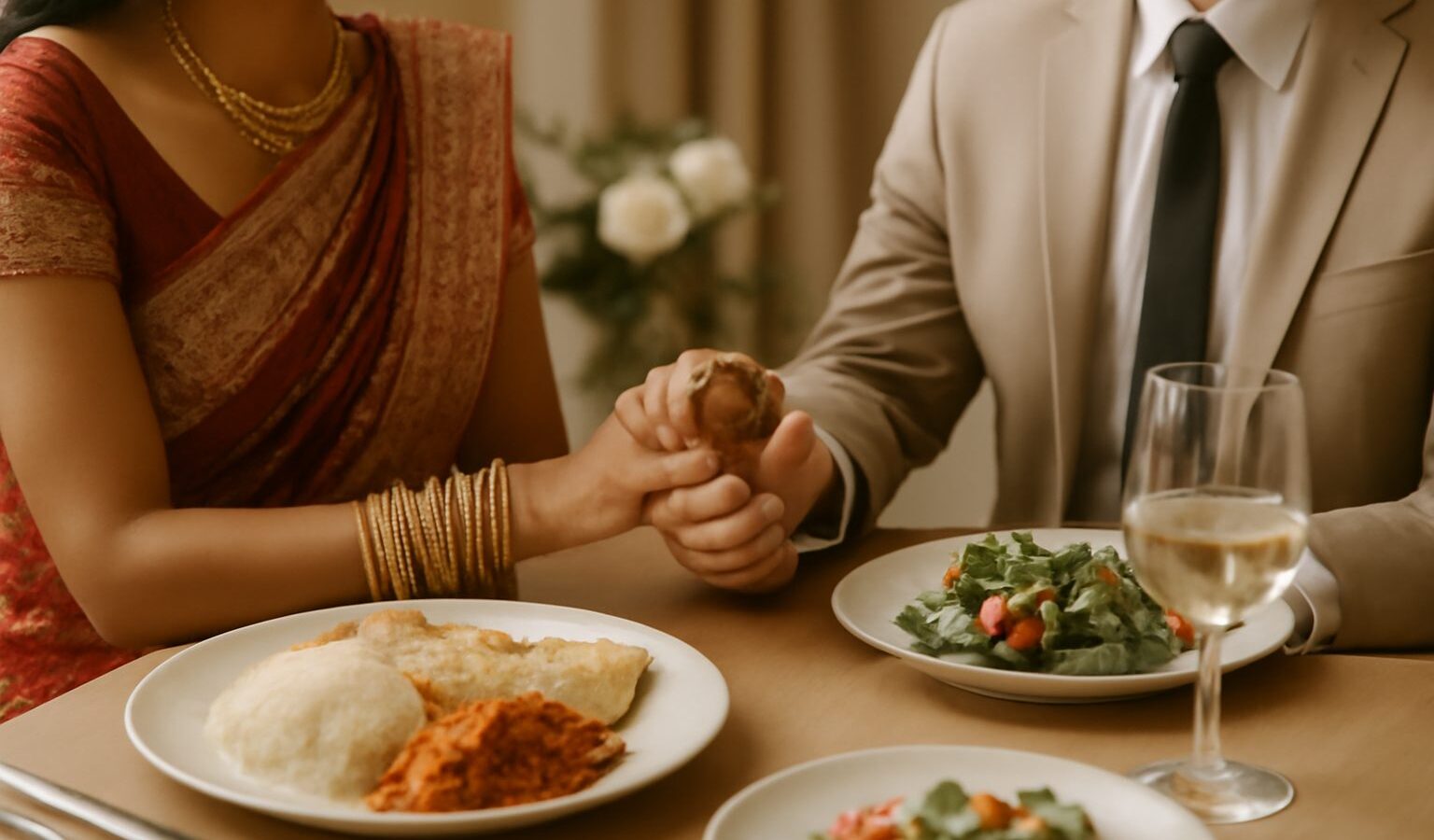
An intercultural wedding in Singapore brings together two people from different races, religions or nationalities, and with them, two sets of customs, two families and often two languages. In a country where Chinese, Malay, Indian, Eurasian and countless other communities share the same streets, food courts and public holidays, marrying across cultures is not unusual, it is part of the fabric of the place. That does not make it effortless. Blending traditions takes conversation, patience and a genuine willingness to honour where each of you comes from. This guide walks through the warm, practical decisions couples face, so your day feels like both of you rather than a compromise neither of you recognises.
The Singapore Advantage
Few places are better set up for a cross-cultural celebration than Singapore. Multiple faiths, cuisines and wedding traditions already sit side by side here, so vendors, venues and caterers are used to serving mixed families. You can find a hotel banquet team that has run a Chinese tea ceremony in the morning and an Indian reception in the evening, or a caterer who can lay on a halal-certified spread alongside dishes familiar to the other side of the family.
Because the country is small and diverse, your guests are likely to have attended weddings unlike their own before. That shared familiarity lowers the temperature. A grandaunt who has been to her neighbour’s Malay wedding will understand more than you expect. Lean on this. The multicultural setting means you rarely have to explain from scratch; you are building on customs your community already recognises.
Deciding Which Ceremonies to Hold
One of the first big conversations is which ceremonies and rituals to include. Most couples land somewhere on a spectrum, and there is no single right answer.
- Hold both, in sequence. Many couples run one culture’s ceremony in the morning and the other’s later in the day, or across two days. This honours both families fully but asks more of your time, budget and stamina.
- Blend into one ceremony. Some couples weave elements together, a tea ceremony followed by an exchange of garlands, or readings from two traditions in the same service.
- Choose a lead tradition with touches of the other. You might centre the day on one culture while including meaningful symbols from the other, such as an outfit change or a specific ritual.
Talk through what each ritual actually means to your families before you cut anything. Sometimes a ceremony that looks optional to one partner carries deep significance for the other’s parents. Understanding the meaning helps you decide with care rather than by convenience.
Faith, Solemnisation and Where ROMM Applies
Religion is often the most sensitive thread to weave, and it deserves honesty rather than avoidance. Interfaith couples in Singapore navigate a few distinct questions: whose religious rites, if any, feature in the ceremony; whether either partner converts; and where the legal solemnisation happens.
On the legal side, the key point is straightforward. Marriages where both parties are Muslim are solemnised under Muslim law through the Registry of Muslim Marriages (ROMM). Non-Muslim marriages, including many interfaith unions, are registered with the Registry of Marriages (ROM). If one partner is Muslim, the question of which framework applies, and what that means for conversion, is significant and personal. Do not rely on hearsay here. Check directly with ROMM and ROM about which registry applies to your situation before you make plans, and speak with your respective religious leaders about what your faith communities require.
Whether or not to convert is a deeply personal decision that belongs to the couple, guided by their own beliefs and, where they choose, their families and religious advisors. Some couples convert, some do not, some hold separate faith blessings. There is no obligation to decide quickly, and it is worth having these conversations early rather than under pressure close to the date.
Language, Menu and the Small Details
Beyond the big ceremonies, the texture of the day lives in the details, and this is where blending two cultures becomes a pleasure rather than a puzzle.
- Language. If your families speak different languages or dialects, consider a bilingual emcee, printed programmes in two languages, or a friend who can quietly translate for older relatives. Small gestures make guests feel included.
- Menu. Food carries culture. Decide early whether the meal needs to be halal or vegetarian for parts of the guest list, and whether you want dishes from both heritages. Many caterers in Singapore handle mixed and dietary-specific menus comfortably; ask for tastings.
- Attire and music. An outfit change lets you honour both sides, a cheongsam and a saree, a baju and a suit. A playlist or live set that moves between traditions signals that both cultures belong here.
Managing Family Expectations
The couple marries, but two families join, and their hopes do not always align. Parents may have pictured a specific kind of wedding for years. The most useful thing you can do is present decisions together, as a united couple, so neither family feels the other partner is “winning”.
Bring both sets of parents into the conversation early, listen to what matters most to each, and look for the non-negotiables on both sides. Often you will find there are only two or three things each family truly cares about, and the rest is flexible. Where tensions run deep and old, a calm, respectful boundary set jointly by the couple protects your relationship. If wider family dynamics feel hard to manage, you may find it helpful to read about building healthy relationships with the in-laws you are gaining.
Blending Approaches at a Glance
The table below sketches common ways couples combine two heritages. Use it as a starting point for your own conversation, not a rulebook, since every family and faith community differs.
| Blending approach | How it works |
|---|---|
| Two full ceremonies | Each culture’s ceremony held in sequence, often across a morning and evening or two days |
| Single blended ceremony | Rituals and readings from both traditions woven into one service |
| Lead tradition with touches | One culture anchors the day, with symbolic elements of the other added |
| Separate solemnisation and celebration | Legal registration handled with the correct registry, cultural rites held separately |
| Dual outfits and menu | One core ceremony, with attire, food and music honouring both heritages |
Celebrating Both Heritages
The couples who look back on their intercultural wedding most fondly are usually the ones who stopped seeing two cultures as a problem to solve and started seeing them as a gift to share. Your guests get to taste, hear and witness traditions many of them have never experienced. Your children, should you have them, inherit a richer story. And the work you put into understanding each other’s customs now becomes practice for a marriage that will keep asking you to meet in the middle. Done with openness, an intercultural wedding is not a diluted version of either culture; it is a fuller celebration of both.
Explore more
To go deeper into one side of the blend, see Chinese Wedding Customs in Singapore for the rituals and their meanings, and Managing In-Law Relationships in Singapore for the family side that every intercultural couple navigates. For anything touching legal solemnisation or conversion, always confirm current requirements with ROM or ROMM and your own religious advisors.