
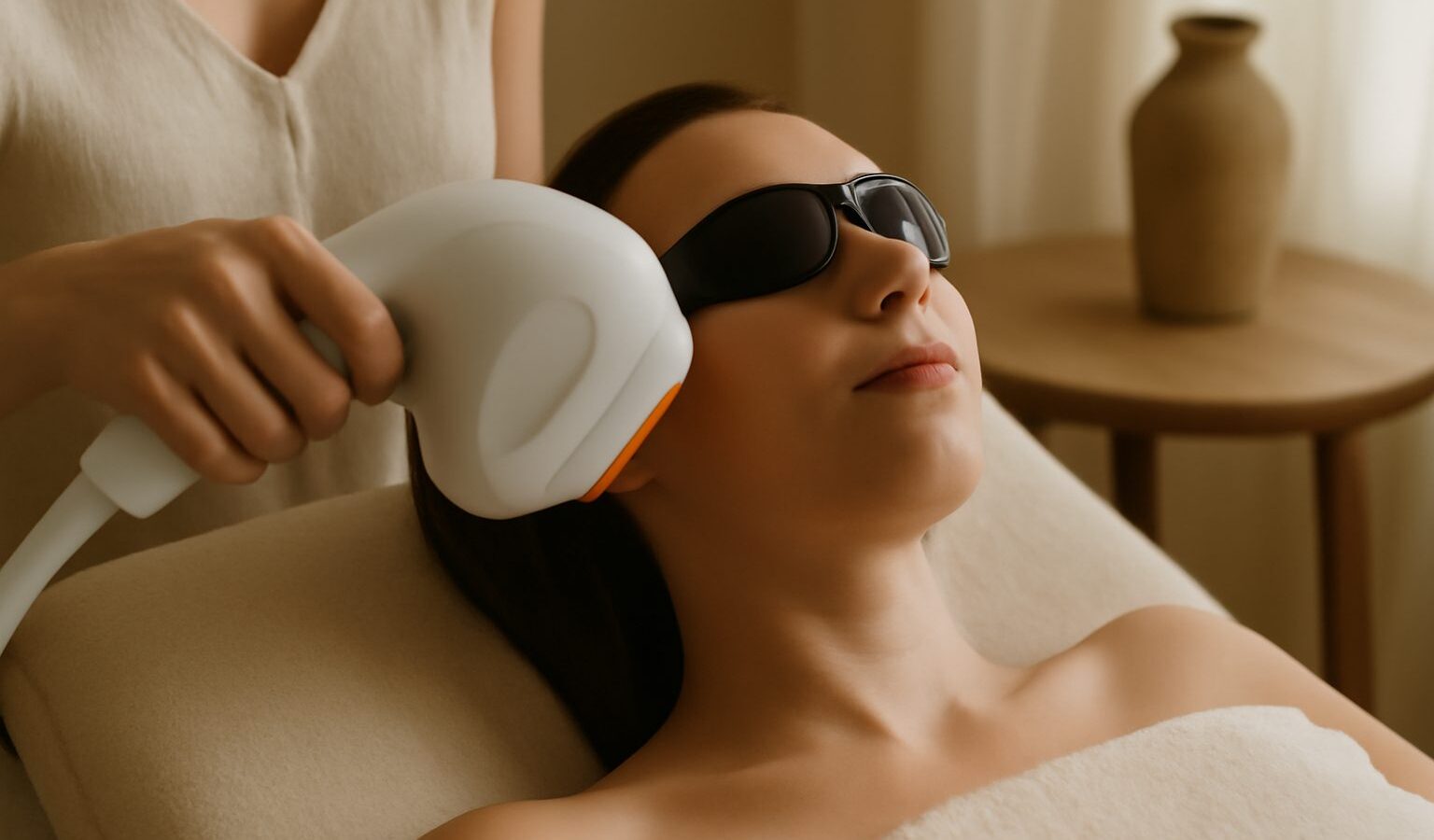
If you have looked into fading brown spots, calming a flushed complexion or evening out patchy tone, you have probably come across the IPL photofacial. It is one of the most talked about treatments in Singapore’s aesthetic clinics, and also one of the most misunderstood. Done well by the right hands it can genuinely help. Done carelessly, or on the wrong skin, it can leave burns and stubborn dark marks that take months to settle.
This guide explains what an IPL photofacial actually is, why your skin tone matters so much, and how to choose a clinic you can trust. It is general information for readers in Singapore, not medical advice. Any light based skin treatment is a medical procedure, so please see a qualified, MOH registered doctor for a proper assessment before you book.
What an IPL Photofacial Actually Does
IPL stands for intense pulsed light. Unlike a laser, which fires a single, focused wavelength, IPL sends out a broad spectrum of light in short pulses. That light is absorbed by pigment (the brown in sun spots and freckling) and by the red of tiny blood vessels near the surface. The energy heats those targets, the body then clears them over the following days and weeks, and the surrounding skin is meant to be left largely untouched.
Because it works on colour, IPL is most often used for sun damage, uneven tone, diffuse facial redness and the flushing linked to conditions like rosacea. Some clinics also use it to soften the look of pores or to give a general glow, which is where the friendly name photofacial comes from.
What IPL does not do is remove deep lines, lift sagging skin or fix scarring. It is a tone and clarity treatment, not a firming one. If lifting is your goal, that is a different treatment, such as a thread lift, with its own separate risks and recovery.
Why Your Skin Tone Changes the Equation
This is the single most important part of the article, and it matters enormously in a diverse society like Singapore. IPL cannot fully tell the difference between the pigment you want gone and the natural melanin in your skin. The more melanin you have, the more of that broad light your skin absorbs overall, and the higher the risk of a burn, a blister or a patch of pigmentation that is darker (or lighter) than before.
That does not mean IPL is only for very fair skin. It means the assessment, the settings and the operator’s experience become critical as skin gets deeper in tone. A careful doctor will look at your skin type, ask how easily you tan or burn, and may recommend gentler settings, more conservative spacing, or a different technology altogether if IPL is not a safe match. For many medium to deep skin tones, other approaches are often safer for pigment, and a good clinic will say so honestly rather than pushing ahead.
A patch test on a small, discreet area is a reasonable request before a full session, and any reputable clinic should be willing to do one. If someone waves away your skin tone as irrelevant, treat that as a warning sign.
IPL Photofacial vs Laser: A Quick Comparison
People often use IPL and laser interchangeably, but they are different tools with different strengths. This table gives you the plain version so you can ask better questions at your consultation.
| Feature | IPL photofacial | Laser treatment |
|---|---|---|
| Type of light | Broad spectrum, many wavelengths | Single, focused wavelength |
| Best suited to | Diffuse redness, general sun spots, overall tone | Targeted spots, specific pigment or vessels, resurfacing |
| Typical course | Several sessions spaced weeks apart | Varies widely by device and goal |
| Downtime | Usually mild, spots darken then flake | Ranges from minimal to significant peeling |
| Darker skin tones | Higher caution, not always suitable | Some lasers are designed to be safer, still needs assessment |
Neither is automatically better. The right choice depends on your concern, your skin tone and the device a clinic uses, which is why a professional consultation matters more than any online comparison.
What a Course Involves and How to Prepare
IPL is rarely a one and done treatment. Most concerns need a short course of sessions, commonly spaced a few weeks apart, followed by occasional maintenance because sun exposure keeps creating new pigment. In our climate that matters, as year round UV means fresh sun spots keep appearing if you do not protect your skin.
Preparation usually means avoiding sun and tanning for a couple of weeks beforehand, since treating recently tanned skin raises the risk of burns. You may be asked to pause certain actives, such as strong exfoliating acids or anything retinol related, for a few days before and after. Follow the instructions your clinic gives you rather than a generic checklist.
On the day, the treatment feels like a series of quick, warm snaps against the skin, often likened to a light elastic band flick. Cooling and a protective gel help. Afterwards your spots typically look darker for several days, almost like coffee grounds, before they flake away and fade. Redness for a few hours is normal.
Aftercare is simple but matters:
- Keep the skin cool and avoid heat, saunas, hot yoga and intense workouts for a day or two.
- Do not pick or scrub the darkened spots. Let them shed on their own.
- Moisturise gently and use a broad spectrum sunscreen every single day, reapplying in our sun.
- Pause strong actives until the skin feels completely normal again.
Choosing a Safe Clinic in Singapore
In Singapore, energy based aesthetic treatments should be carried out by, or under the proper supervision of, a qualified doctor at a licensed medical clinic. Be very wary of unregulated providers, beauty outlets or deals that seem far cheaper than everywhere else. IPL burns and pigment damage are among the more common complaints from bargain treatments, and fixing them costs far more than doing it properly the first time.
Good questions to ask before you commit:
- Who will actually operate the device, and are they medically qualified and experienced with my skin tone?
- Is a doctor assessing my skin and setting the parameters?
- What device is being used, and why is it suitable for my concern?
- Will you do a patch test first?
- What are the realistic risks for someone with my skin, and what is the plan if a reaction happens?
A trustworthy clinic will welcome these questions and give straight answers. Vague reassurance, high pressure sales or a refusal to discuss risk all point you toward the door.
Risks, Realistic Results and When to Skip It
Even in expert hands, IPL carries risks: temporary redness and swelling, blistering, burns, and changes in pigmentation that can be darker or lighter than your natural skin. Most side effects settle, but some pigment changes can linger for months, which is why the pre treatment assessment is so important.
IPL is not for everyone. It is generally avoided over recently tanned skin, active infections or certain skin conditions, and if you are taking medications or using products that make skin more light sensitive. If you are pregnant or breastfeeding, tell your doctor and expect them to advise waiting, as many clinics prefer not to treat during this time. Anyone with a history of pigmentation problems, keloids or unusual light reactions should raise it up front.
Be realistic about results too. IPL improves clarity and evens tone gradually over a course, and works best alongside daily sunscreen and sensible sun habits. It will not stop new sun damage forming, and no honest clinic will promise a permanent, flawless result. Treat any before and after guarantee with suspicion.
Used sensibly, on suitable skin, by the right professional, an IPL photofacial can be a genuinely useful way to fade sun spots and calm redness. The key is a proper consultation, honesty about your skin tone, and a licensed clinic that puts your safety ahead of the sale. When in doubt, see a doctor or dermatologist first and let your own skin, not a promotion, guide the decision.