

Playing alone can only take you so far. Raids, guild wars, ranked squads and late-night dungeon runs are often more fun, and more achievable, with a regular group. Joining a Singapore gaming guild also solves a practical problem: you get teammates on a similar ping and time zone, who are online when you are, and who share in-jokes and Singlish banter.
This guide explains how guild and clan culture works, where to look for a local group, the red flags to watch for, and how to settle in, whether you grew up here or have just arrived.
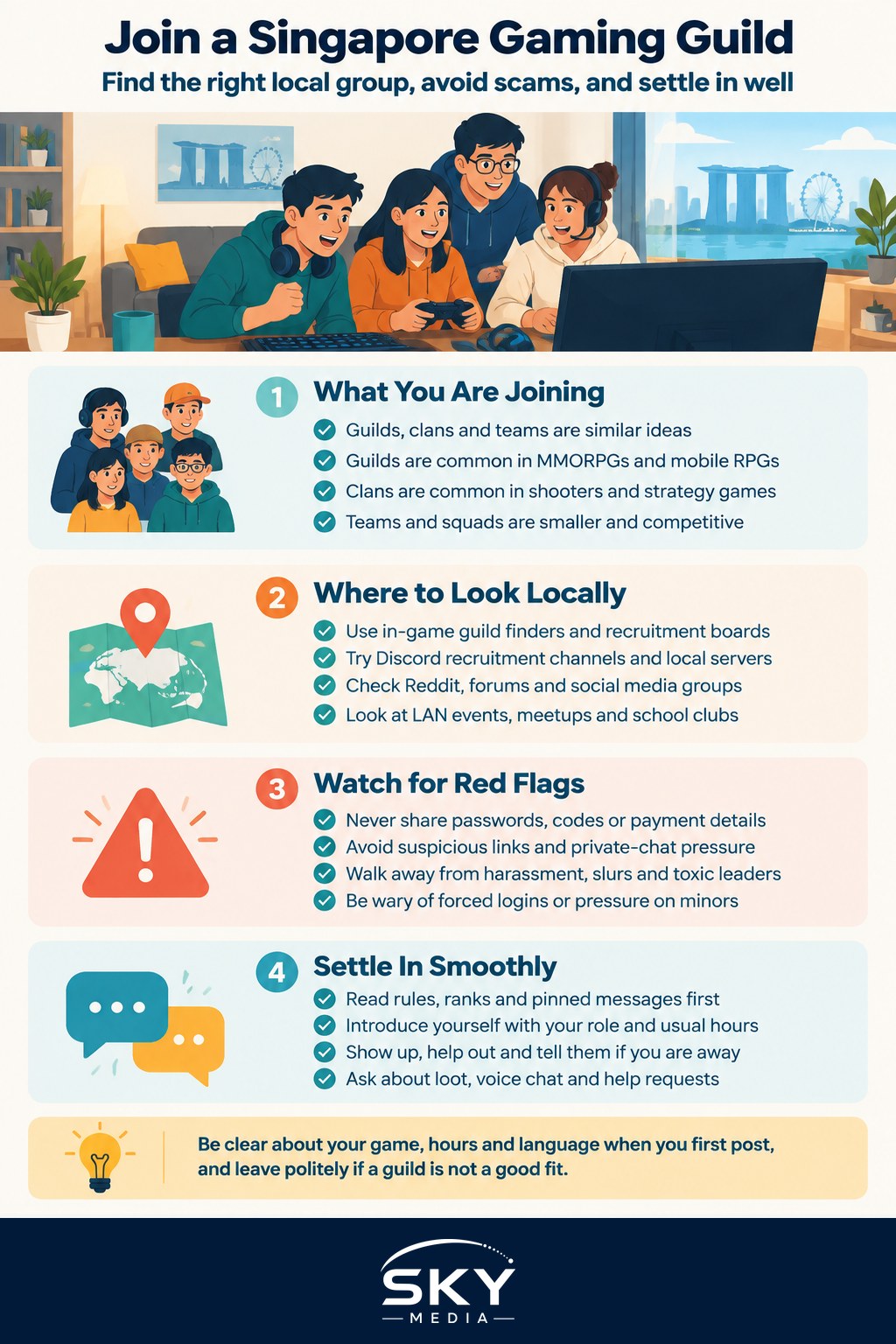
Guilds, Clans and Teams: What You Are Joining
The words differ by game, but the idea is similar: a persistent group of players who play together and share an identity.
- Guilds are common in MMORPGs (massively multiplayer online role-playing games) and many mobile RPGs. They often have in-game perks such as shared buffs, guild shops or guild-only events.
- Clans are the usual term in shooters, battle royales and strategy games. Clan tags appear beside your name.
- Teams and squads are smaller, usually five or fewer, and built around competitive play. If you are aiming for ranked or tournament play, our guide on how to join a Valorant team in Singapore covers that route in detail.
Most groups fall somewhere on a spectrum from casual to hardcore. Knowing where you sit saves a lot of friction later.
| Guild style | Typical expectations | Good for |
|---|---|---|
| Casual or social | No fixed schedule, relaxed chat, help when asked | Busy students and working adults, newcomers to a game |
| Semi-active | Some weekly events, light participation targets | Players who want structure without pressure |
| Progression or hardcore | Set raid or war times, attendance tracked, gear or rank requirements | Experienced players aiming for top content |
| Competitive clan or team | Scrims, practice schedules, tryouts | Players chasing ranked play or local tournaments |
Be honest with yourself about time. A hardcore guild expecting three fixed raid nights a week will not suit someone doing national service, exams or long working hours.
Where to Look for a Local Guild
Singapore players often play on Southeast Asian (SEA) servers alongside people from Malaysia, Indonesia, the Philippines, Thailand and further afield. Finding a group that is actually based in Singapore takes a little more searching.
In-game tools first. Many games have a guild finder or recruitment board where you can filter by language, region or activity. Look for groups mentioning “SG”, “Singapore” or “SEA” and a time zone of GMT+8 (Singapore time).
Discord servers. Discord is where most guild life happens outside the game. Official game servers usually have recruitment channels, and some Singapore gaming communities run their own servers with channels for different titles. Read each server’s rules before posting.
Reddit and forums. Singapore-focused subreddits and game-specific subreddits sometimes host recruitment threads. Game forums and fan wikis may also have recruitment pages.
Social media groups. Facebook groups, Telegram channels and similar communities exist for many popular games in Singapore. Quality varies, so lurk before joining.
Offline events. Gaming conventions, community meetups, LAN events and esports viewing parties are good places to meet people who play the same game. Students can also look at school or university clubs; see our guide to university esports clubs in Singapore.
When you post a recruitment request, keep it short and useful: your game, server, role or class, rough playing hours in Singapore time, language preference and what kind of guild you want.
Red Flags to Watch For
Most guilds are run by volunteers who simply enjoy the game. A few are not healthy places to spend your time. Be wary of:
- Requests for money or account details. No legitimate guild needs your password, login code or payment details. Never share them, and be sceptical of “membership fees” or pressure to buy items for officers.
- Pressure to move to private chats or unknown links. Scam links disguised as giveaways or “guild tools” are a common way accounts get stolen.
- Harassment, slurs and toxic leadership. If officers mock members, tolerate discriminatory jokes or single people out, it rarely improves.
- Unrealistic demands. Daily mandatory log-ins with penalties, or kicking people for missing one event, can turn a hobby into a chore.
- Pressure on younger players. Adults asking minors for photos, personal details or private meetups is a serious warning sign. Leave, block and report to the platform.
For practical steps on protecting your accounts and personal information, read our guide on staying safe while gaming online. If you experience abuse, our article on dealing with harassment in online games explains how to document and report it.
How to Fit In During Your First Weeks
Joining is the easy part; becoming a valued member takes a little effort.
- Read the rules and pinned messages. Many guilds have a Discord channel explaining ranks, event times and loot rules. Reading them first shows respect.
- Introduce yourself. A short message with your in-game name, role and usual playing hours helps officers plan around you.
- Show up to a few events. Even if you are under-geared, turning up for guild activities is how people get to know you.
- Ask before you assume. Loot distribution, voice chat etiquette and how to request help vary widely. If unsure, ask an officer.
- Contribute in small ways. Donating resources, helping newer members or sharing guides builds goodwill quickly.
- Communicate absences. A quick message saying you will be away for exams or travel is appreciated and avoids being removed for inactivity.
Tips for Newcomers to Singapore
If you have recently moved here, a local guild can be one of the easiest ways to make friends who share your interests.
- Language mix. Local groups often chat in English with some Singlish, and many also use Mandarin, Malay or other languages. If you are more comfortable in Mandarin, look for guilds that list it as a language. It is fine to say you are still learning local slang.
- Singlish basics. You may see words like “lah” (adds emphasis), “can” (yes, that works) and “jialat” (bad situation). People are usually happy to explain.
- Server and region. You may need to switch from a China, North America or Europe server to an SEA server for low ping. Check whether your progress carries over before switching, as rules differ by game.
- Meeting offline. Some guilds hold meetups at cafes or LAN events. Meet in public places, tell a friend where you are going, and only attend if you feel comfortable.
When a Guild Is Not the Right Fit
It is normal to try more than one guild before finding your people. If the schedule does not suit you, the culture feels off, or you simply are not enjoying it, leave politely: thank the leaders, return any borrowed items or resources, and move on. Most guild leaders understand that players come and go.
A good Singapore gaming guild gives you teammates, friends and a reason to log in. Search in the right places, check for red flags, and put in a little effort early on, and you will soon have a group that makes every session more fun.