
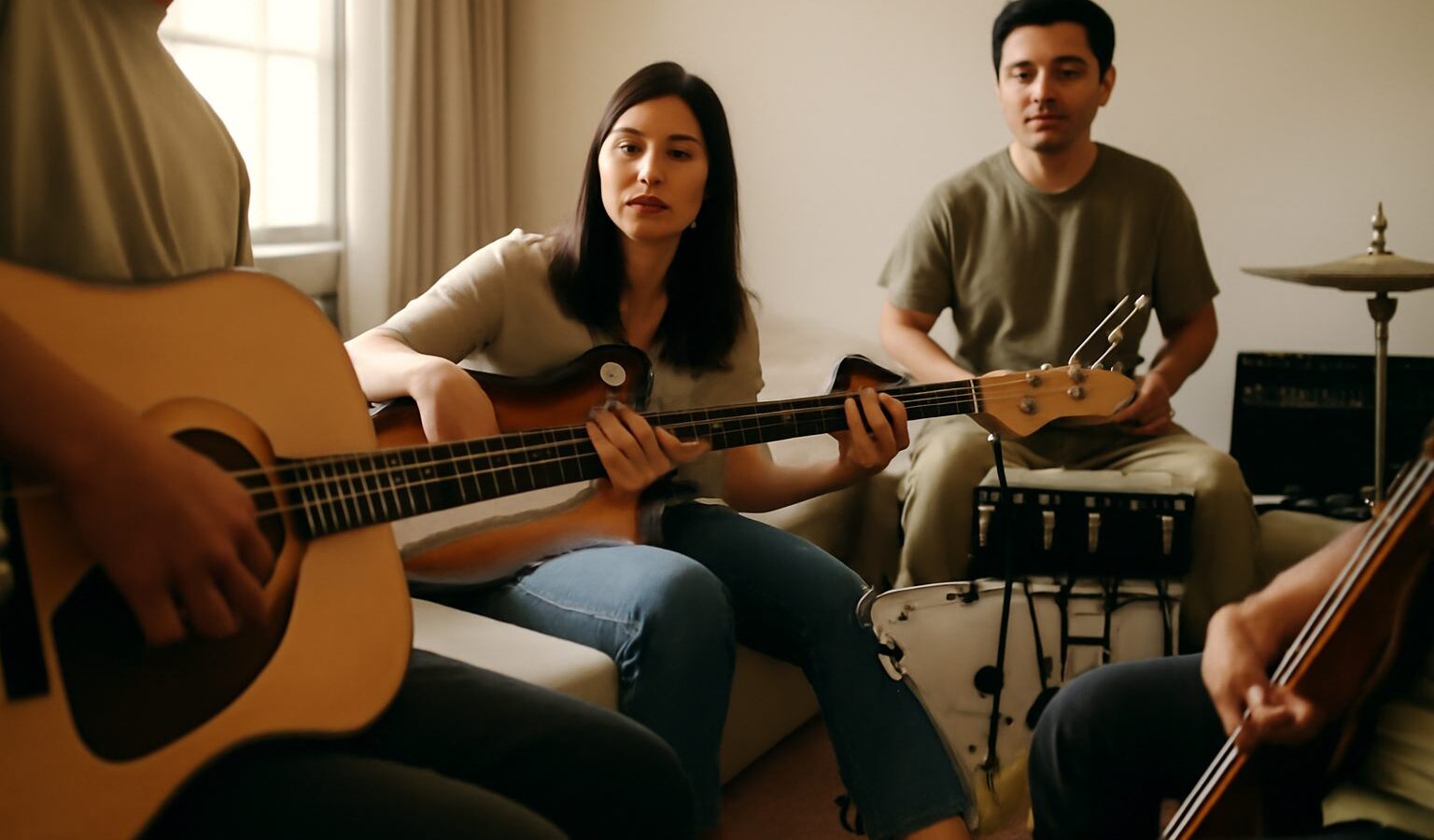
Playing music with other people changes everything. You can practise scales alone in your bedroom for months, but the first time you lock into a groove with a drummer and a bassist, something clicks that no solo practice can teach you. If you have been wondering how to go from playing alone to playing together, joining a band in Singapore is far more achievable than most beginners assume. The scene is small, friendly and surprisingly welcoming, and you do not need to be brilliant to start.
This guide walks you through finding bandmates, booking a jamming studio, surviving your first practice and easing into the wider local scene, all at a beginner-friendly pace and budget.
What “Jamming” Actually Means
“Jamming” simply means playing music together, usually in a relaxed, semi-improvised way rather than rehearsing a fixed setlist. In Singapore the word is often used loosely to cover everything from a casual play-together to a proper band rehearsal. A jamming studio (sometimes called a band studio or rehearsal room) is a soundproofed room you rent by the hour, kitted out with a drum kit, guitar and bass amplifiers, a PA system for vocals, and usually a few microphones.
You do not bring your own amp or drums. You turn up with your instrument (and your own guitar or bass if you play one), plug in, and play. This matters for beginners living in HDB flats, where a full drum kit or a loud amp at home is simply not neighbourly. The studio is where you get to be loud without a single complaint.
A few plain terms worth knowing before you walk in:
- PA system: the speakers and mixer that make vocals and other signals loud enough for the room.
- Amp: short for amplifier, the box that makes an electric guitar or bass audible.
- Setlist: the ordered list of songs you plan to play.
- Tightness: how well a band plays together in time; a “tight” band starts and stops cleanly.
Finding Bandmates When You Know No One
The most common reason people never join a band is that they think they need a ready-made group of musical friends. You do not. Bandmates are found, not inherited, and there are several reliable routes.
- Online communities: Singapore has active Facebook groups and forums for musicians looking for bandmates, often organised by genre or instrument. Post honestly: your instrument, your rough level, the music you like and how often you can practise.
- Music schools and classes: if you take lessons, ask your teacher. Teachers know which of their students are looking to play with others, and a good match often starts here.
- Open mics and gigs: turning up regularly to the same venues is one of the oldest ways to meet players. Musicians notice a familiar face, and conversations at the bar have started countless bands.
- Community centres and interest groups: many People’s Association clubs and tertiary institutions run music interest groups that welcome newcomers.
- Word of mouth: tell everyone you play. The colleague who “used to play a bit of bass” is more common than you would think.
When you reach out, be clear about what you want. A weekend hobby band and a group chasing paid gigs are very different commitments, and being upfront saves everyone time.
Booking and Surviving Your First Jamming Session
Once you have even one or two people to play with, book a studio. Jamming studios are dotted across Singapore, often clustered in industrial buildings and near town centres, and you book a room by the hour. Rates vary by studio, room size and time of day, and peak evening and weekend slots cost more and fill up fast, so book ahead. Always check the current rate and what gear is included when you enquire, as these change.
To make a first session count, a little preparation goes a long way.
- Agree on two or three songs beforehand. Everyone learns the same songs at home so you are not staring at each other in an expensive room.
- Learn your part properly. You do not need to be perfect, but know the structure: where the verses, choruses and endings are.
- Arrive early to set up. Tuning, plugging in and getting comfortable eats into your paid time.
- Start simple. Play the song slowly and cleanly before you try to play it fast. Tightness beats speed.
- Listen more than you play. The hardest beginner habit to break is playing over everyone else. Leave space.
Do not expect magic on day one. Early sessions are messy, and that is completely normal. The goal is to finish one song together, roughly, and want to come back.
Choosing Where and How to Play Together
Different setups suit different people, budgets and goals. Here is a quick comparison to help you decide what to try first.
| Option | Best for | Rough cost | What to know |
|---|---|---|---|
| Jamming studio (hourly) | Full-band practice with drums and amps | Hourly room rate, split between members | Loud, well-equipped, book peak slots early |
| Home acoustic jam | Duos, acoustic sets, casual practice | Free to low | Be mindful of HDB neighbours and quiet hours |
| Music school ensemble | Guided beginners who want structure | Course or term fee | Teacher-led, steady progress, ready-made group |
| Open mic or community jam | Meeting players and testing songs live | Usually free to join | Great for confidence and contacts, less control |
For an HDB acoustic jam at home, keep it to unplugged instruments, watch the volume, and respect quiet hours, generally late evening onwards. If in doubt, a studio is the courteous choice.
Growing Into the Local Music Scene
A band is your entry ticket to something bigger. Singapore’s local music scene is genuinely supportive once you show up. Start by watching more live music: local venues, bars and community events regularly host original and cover acts across genres, and audiences here are warm to newcomers.
When your band feels ready, an open mic is the gentlest first step onto a stage, with a low-pressure crowd and short sets. From there, some bands move on to busking, which in Singapore runs under the National Arts Council Busking Scheme, so check the current audition and licence requirements before you plan anything. Others aim for a slot on a small venue’s lineup.
A few habits help you become part of the community rather than just a visitor:
- Support other acts. Stay for the whole gig, not just your set.
- Be reliable. Turn up on time, learn your parts and treat shared gear well.
- Say yes to small things. A ten-minute community slot builds more experience than months of waiting for the perfect gig.
- Keep it kind. The scene is small and reputations travel, so be the person others want to play with.
Above all, remember why you started: the sheer joy of making a noise together. You will hit bum notes, lose the beat and laugh about it afterwards. That shared, slightly imperfect fun is the whole point, and it is waiting for you in a rehearsal room somewhere across the island.
Explore more
- /how-to-perform-live-music/
- /open-mics-and-busking-in-singapore/
- /overcoming-stage-fright/
- /writing-your-first-song/
- /learning-to-sing/