
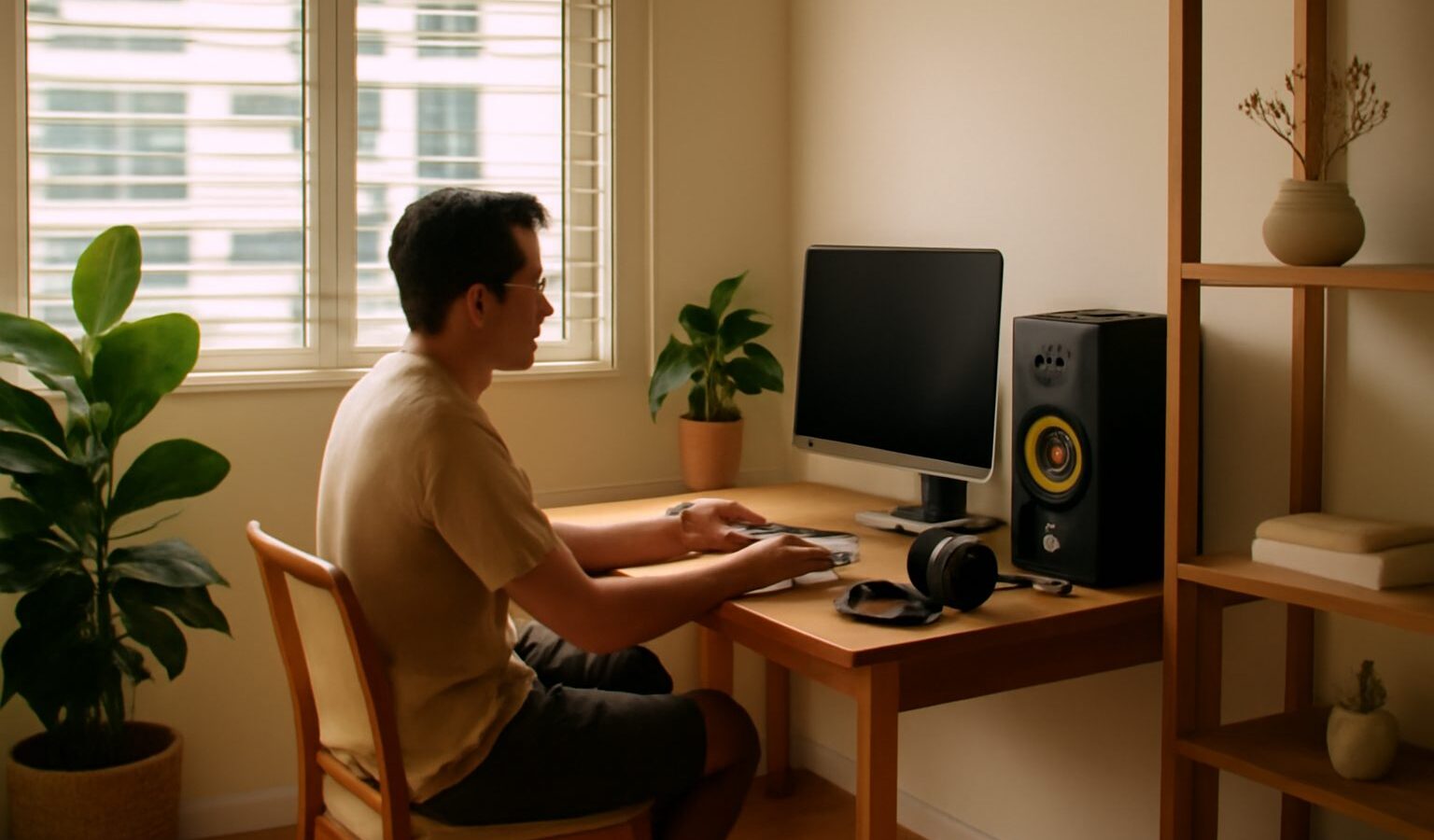
Most of us in Singapore live in flats with neighbours on the other side of a shared wall, so the dream of a home studio comes with a very local question: how do you make music without making enemies? The good news is that a small, respectful home studio HDB setup is completely achievable. It takes clear thinking about noise, a little acoustic treatment and some considerate habits, none of which cost a fortune. This guide shows you how.
Understand the Rules and Your Neighbours First
Before you buy a single item, it helps to be realistic about what a flat allows. HDB living is close-quarters living, and sound travels through walls, floors and ceilings more than you would like. Community rules and general courtesy expect you to keep noise reasonable, especially late at night and early in the morning. As a sensible guide, treat roughly 10.30pm to early morning as quiet hours, and keep anything loud to sociable daytime and evening times.
The single most important mindset shift is this: a home studio in an HDB flat is built around controlling and reducing noise, not blasting sound and hoping for the best. Once you accept that, every decision becomes easier. If you play a naturally loud instrument, lean towards electronic or headphone-based options. If you record with microphones, plan your loudest takes for considerate hours and give your neighbours the quiet they are entitled to.
A friendly word with the people next door also goes a long way. Letting them know you make music at home, and inviting them to tell you if anything ever bothers them, turns a potential complaint into a normal neighbourly chat.
Acoustic Treatment Versus True Soundproofing
This is the point that trips up almost every beginner, so it is worth being clear. Acoustic treatment and soundproofing are two completely different things, and mixing them up leads to wasted money and disappointment.
Acoustic treatment improves the sound inside your room. Soft, absorbent materials tame echo and harsh reflections so your recordings sound cleaner and your mixes translate better. This is affordable, effective and the right goal for most home studios.
Soundproofing stops sound getting in or out of the room. Real soundproofing means heavy mass, sealed gaps and often building a room within a room, which is expensive, structurally serious and usually impractical, and in some cases not permitted, in an HDB flat. You will not achieve true soundproofing by sticking foam on the wall, no matter what a product photo suggests.
For the vast majority of home studios, the realistic plan is good acoustic treatment plus quiet working habits, not a soundproofed bunker. The table below sets expectations honestly.
| Approach | What it does | Rough effort and cost | Realistic in an HDB flat |
|---|---|---|---|
| Soft furnishings | Reduces echo cheaply | Very low, use what you own | Yes, start here |
| Acoustic panels | Targets reflections properly | Low to moderate | Yes, a sensible upgrade |
| Bass traps in corners | Tames boomy low frequencies | Moderate | Yes, if space allows |
| Full soundproofing | Blocks sound in and out | High, structural work | Rarely, often impractical |
Basic Acoustic Treatment on a Budget
You can improve a room dramatically before spending anything. Start with what you already have, then add purpose-made pieces only where they help.
- Use soft furnishings. A bed, sofa, thick curtains, a rug and a full bookshelf all absorb sound. A furnished bedroom is already a decent recording space.
- Record in a wardrobe. Hanging clothes are excellent absorbers, which is why a walk-in wardrobe makes a superb vocal booth for free.
- Add acoustic panels at reflection points. Purpose-made absorbent panels on the wall beside and in front of you cut the harshest echoes. Mount them in ways that do not damage your walls if you rent or want to move them.
- Treat the corners. Low frequencies gather in room corners, so a couple of bass traps there smooth out boomy sound.
- Avoid the bare-box trap. An empty room with tiled floors and blank walls is the worst case. Every soft object you add is an improvement.
Buy acoustic products from established local or online suppliers and check current options, since ranges and prices change. You rarely need to cover every surface. Treating the key reflection points around where you sit gives most of the benefit.
Quiet Recording and Practice Tips
The real skill in an HDB home studio is making music at a volume that keeps the peace. These habits do most of the heavy lifting.
- Monitor on headphones, not speakers. Closed-back headphones let you hear your work in detail without any sound leaving the room. This is the biggest single win.
- Choose quiet-friendly instruments. An electronic drum kit played through headphones, a keyboard with a headphone output, or a guitar plugged into an amp simulator all let you play fully without disturbing anyone.
- Use a dynamic microphone. A dynamic mic mostly captures what is close in front of it and ignores much of the room, so you can record at a sensible volume without picking up the whole flat.
- Time your loud takes. Schedule any unavoidably louder recording, such as an acoustic instrument or a belted vocal, for daytime or early evening, never late at night.
- Tame household noise. Switch off the aircon and fan during short takes, close windows to street noise, and record when the home is calm.
- Isolate vibrations. Placing gear on a rug or foam pads stops thumps and taps travelling through the floor to the neighbour below.
For microphone-heavy work, our guide to recording vocals at home goes deeper into capturing clean takes in an imperfect room, and if beats are your thing, making beats and electronic music is a naturally quiet, headphone-friendly path.
Choosing and Arranging Your Gear
Once the room and the noise plan are sorted, the equipment itself is refreshingly simple, and it overlaps almost entirely with any beginner setup. You need a computer, a DAW, which is the software you record into, an audio interface to connect your microphone or instrument cleanly, a microphone, and closed-back headphones. That is genuinely enough to make finished music.
Fit it into your space sensibly. A small desk in a bedroom corner is a perfectly good studio. Keep your gear away from windows and direct sunlight, and mind Singapore’s humidity, which is hard on electronics: store microphones with a little silica gel and give equipment some airflow rather than sealing it in a damp cupboard. For the buying decisions, lean on our companion guides to choosing an audio interface, choosing a microphone for recording and understanding DAWs and music software.
Bringing It All Together
A home studio in an HDB flat is less about heavy engineering and more about smart, considerate choices. Treat your room with soft furnishings and a few well-placed panels, accept that true soundproofing is usually out of reach, and build every session around headphones and quiet-friendly instruments. Do that, and you can make music you are proud of without a single knock on the door.
Start small with what you own, add one improvement at a time, and keep your neighbours onside. If you are still finding your feet with the whole process, our beginner walkthrough on home recording for beginners is the perfect companion, and once your takes are clean, mixing basics for beginners will help you polish them.
Explore more
Building on this? Get the fundamentals with home recording for beginners, then choose your gear through choosing an audio interface and choosing a microphone for recording. Capture cleaner takes with recording vocals at home, and shape your final sound using mixing basics for beginners.