
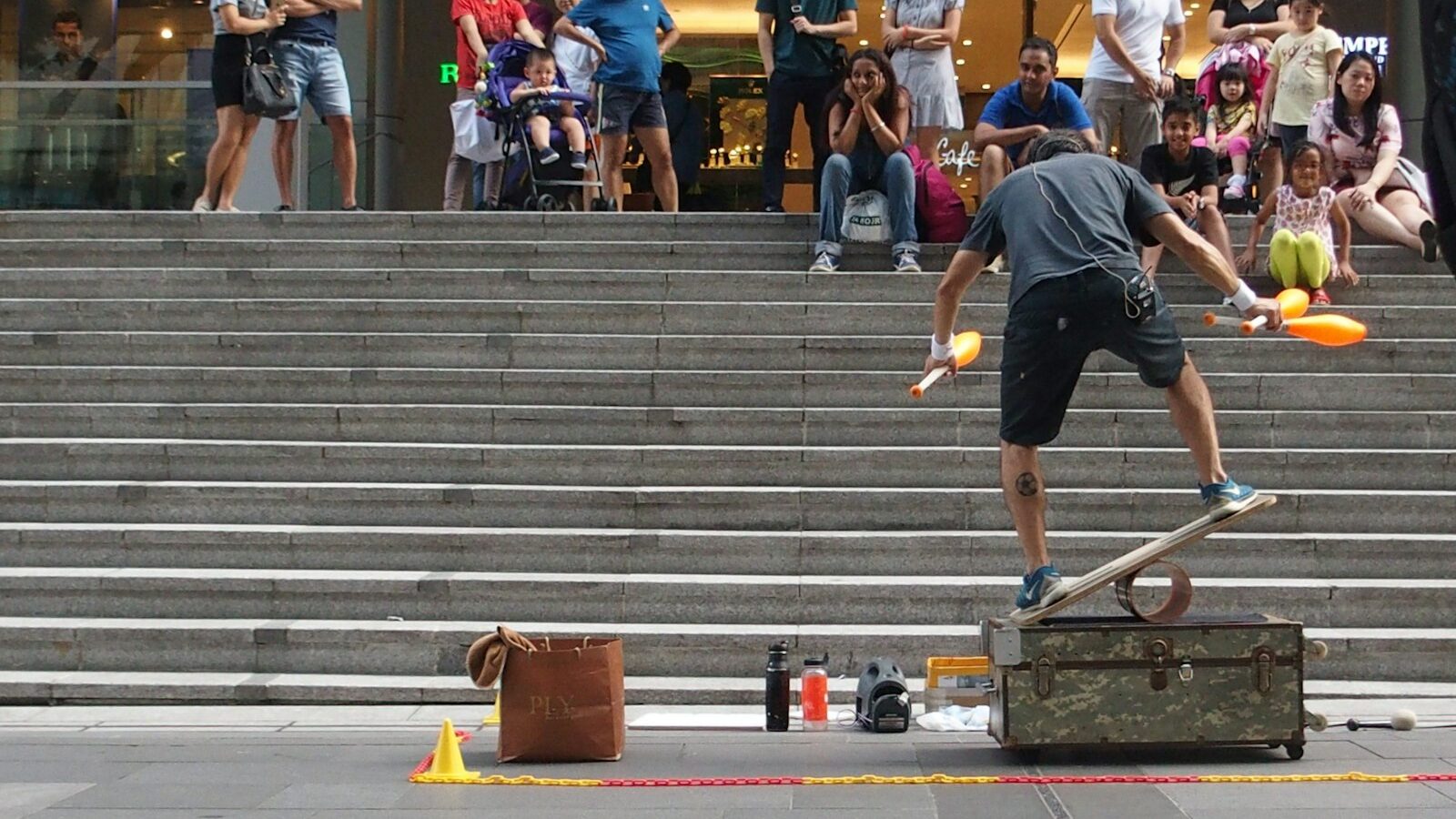
Few hobbies deliver as much delight for as little money as juggling. With three balls and a bit of patient practice, you can learn a genuine skill that improves coordination, calms a busy mind and never fails to impress. Juggling is the friendly front door to a whole family of circus skills, from spinning poi to the clever push and pull of a diabolo, and almost all of them can be learned at home on a modest budget. This guide is written for a total beginner in Singapore who wants an affordable, low-pressure way in, with no gym membership and no special talent required.
Why Juggling Is a Great First Circus Skill
Juggling is the ideal starting point because it teaches the core habit every circus skill relies on: staying relaxed while your hands do something unfamiliar. It costs almost nothing to begin, the progress is easy to measure, and every small win, from one throw to a steady pattern, feels genuinely rewarding. Because it is repetitive and rhythmic, many people find it calming, a screen-free way to unwind after work.
It is also kind to small spaces and neighbours. Soft juggling balls make no noise, need only a patch of floor, and can be practised over a bed or sofa so you spend less time picking them up. There is no impact, no loud music and nothing to disturb the flat next door. As a bonus, the hand-eye coordination and focus you build carry over to sports, music and everyday dexterity.
What You Need to Start
You need remarkably little to begin. Three matching juggling balls are the classic starter set, and beanbag-style balls are best for learning because they do not roll away when you drop them, which you will do often at first. You can buy purpose-made juggling balls from a toy shop, a sports shop or an online marketplace, or you can make your own by part-filling small balloons or socks with rice or dried beans. Singapore’s humidity means rice-filled balls can clump over time, so store them somewhere dry and give them an occasional squeeze to loosen them.
Beyond the balls, the main thing you need is a little clear space and a forgiving surface to practise over. Standing in front of a bed, a sofa or a low table saves your back from constant bending. A wall a step in front of you gives your throws something to aim against and stops you drifting forward, a very common beginner habit. That really is the whole shopping list; everything else is optional and can wait until you know which skills you enjoy.
Here is how the beginner-friendly props compare, so you can choose where to start.
| Prop | Difficulty to start | What it teaches |
|---|---|---|
| Scarves | Easiest, slow and floaty | The throw-and-catch pattern, great for children |
| Juggling balls | Beginner, the classic route | Timing, rhythm and the three-ball cascade |
| Poi | Beginner to moderate | Rhythm, arm control and flowing movement |
| Diabolo | Moderate | Balance, spin and hand coordination |
| Clubs | Hardest of these | Rotation and confident, larger throws |
Choosing Your First Prop
Most people should start with balls, but scarves are a wonderful gentler option, especially for younger beginners or anyone who feels rushed. Scarves float slowly, giving you plenty of time to see the pattern and move your hands, and they build the exact throw-and-catch habit that ball juggling needs. Once the pattern clicks with scarves, switching to balls feels natural.
Poi, a pair of soft weights on cords that you swing in circles, are another lovely early skill and a nice change of pace, since they are about flowing rhythm rather than catching. A diabolo, spun and tossed on a string held between two hand sticks, adds a satisfying balance challenge. Clubs look spectacular but are the trickiest of the beginner props because they must rotate exactly once per throw, so it is wise to master three-ball juggling before picking them up.
Learning the Three-Ball Cascade
The three-ball cascade is the foundation of ball juggling, and the secret is to build it up one step at a time rather than flinging all three balls at once. Start with a single ball, throwing it from one hand to the other in a gentle arc that peaks around eye level, and catch it softly. Do this until the throw is even and comfortable from both hands.
A simple step-by-step path to the cascade:
- Throw one ball in an arc from hand to hand until it feels smooth.
- Add a second ball: throw one, and when it peaks, throw the second underneath it.
- Practise that two-ball exchange until both land cleanly.
- Add the third ball and repeat the same throw-when-it-peaks timing.
- Count your catches, aiming to add one more each session.
The key is timing, not speed: each ball is thrown when the previous one reaches the top of its arc. Keep your throws in front of you, roughly to the same height, and let your eyes watch the peaks rather than your hands. Expect plenty of drops; they are simply part of learning, and juggling over a bed keeps them from becoming a chore.
Common Beginner Mistakes
The most common mistake is throwing too hard and too high, which sends the balls flying forward so you end up chasing them around the room. Throw gently, aim for a steady eye-level arc, and stand close to a wall so it gently corrects your aim. Another frequent slip is watching your hands instead of the top of each throw, which makes the pattern feel frantic and unpredictable.
Beginners also tend to rush to three balls before the two-ball exchange is reliable, then wonder why it collapses. Spend real time on one and two balls first; the third ball is far easier once the timing is grooved. Finally, do not grip the balls too tightly or tense your shoulders, since juggling flows best from loose, relaxed hands. Short, frequent practice beats long frustrating sessions, so five minutes a day will take you further than an occasional marathon.
Beyond the Basics and Staying Safe
Once the cascade is steady, a whole world opens up. You can learn tricks like the reverse cascade and columns, progress to clubs, or explore poi and the diabolo in more depth. Many beginners enjoy joining a casual juggling or flow-arts meet-up, where hobbyists in Singapore share tips in a relaxed, welcoming setting and you can try borrowed props before buying your own.
A word of caution as you grow. Some circus skills you may see online, such as fire poi, fire juggling and any form of fire performance, are genuinely dangerous and are not suitable for solo beginners at home; they require proper training, safety equipment and a qualified instructor. The same goes for acrobatics, aerial hoop and silks, and human balancing, which need trained coaching and proper mats or rigging to attempt safely. Enjoy building your ground-based skills first, and leave anything involving fire or height to structured, supervised classes.
Explore more
If you love a skill you can practise anywhere, you might also enjoy the sleight of hand in learning magic tricks as a hobby. For more hand-eye and focus challenges, try getting into speedcubing or take aim with getting into darts as a hobby.