

If you live in the west, or you are simply hunting for a free morning out with the kids, a Jurong Central Park playground visit is one of the easiest wins around. The park sits right in the middle of Jurong West, a short walk from Boon Lay MRT station, and it packs several distinct play areas into a green, walkable space. This guide focuses on how to get the most out of the playgrounds themselves: which areas suit which ages, how to deal with heat and crowds, what to bring, and where to eat afterwards.
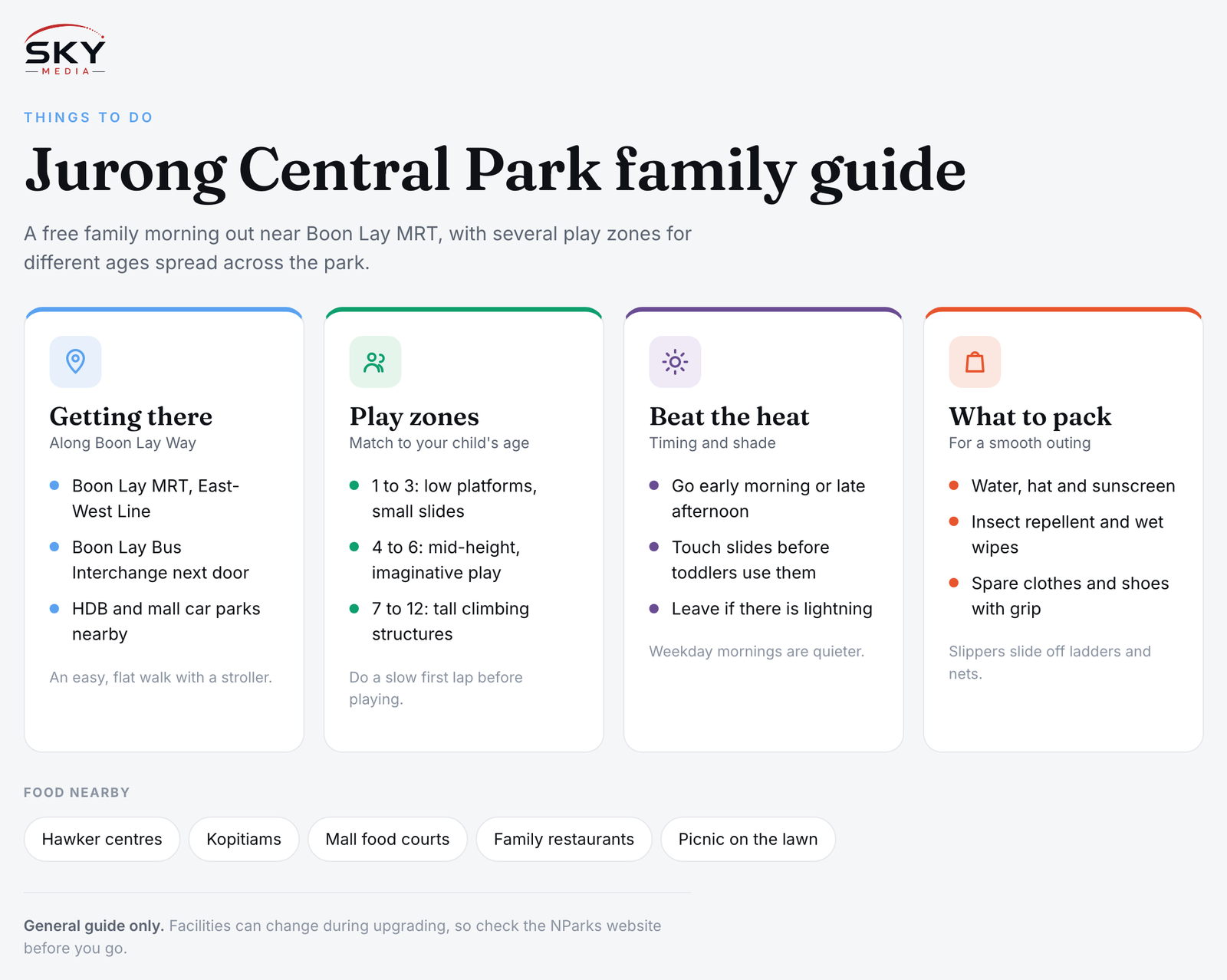
Where the Park Is and How to Get There
Jurong Central Park lies along Boon Lay Way, in the heart of the Jurong West town centre and close to the Boon Lay transport hub. Most families arrive in one of three ways:
- MRT: Boon Lay station on the East-West Line is the closest. From the station, walk past the bus interchange and the mall cluster towards the park. With a stroller it is an easy, flat walk.
- Bus: Boon Lay Bus Interchange is right next to the MRT, so plenty of feeder and trunk services stop within walking distance.
- Car: There are public car parks in the surrounding HDB estate and town centre. Charges follow the usual HDB or mall rates, so check the signs or the Parking.sg app before you leave the car.
If you want the bigger picture of the neighbourhood, including Jurong Lake District and the newer developments, see our guide to Jurong.
The Themed Play Areas, Explained for Parents
What makes this park stand out is that the play equipment is not one big cluster. Instead, there are several play zones spread across the grounds, each with its own look and level of challenge. Rather than list every structure (equipment does get replaced and upgraded over time), here is how to think about them as a parent.
Toddler-friendly zones. Look for the lower platforms, short slides, rockers and sand or rubber-floored areas. These suit children from roughly walking age to about four or five. Parents can stand close and the sight lines are generally good.
Climbing and adventure structures. The larger play structures have taller towers, nets, climbing walls and longer slides. Primary school children love these, but they can be a stretch for preschoolers. Stay near the bottom of anything with a high drop and let older kids take the lead.
Imaginative and themed corners. Parts of the park use playful, story-like designs that encourage children to invent games rather than just climb. These are great for sibling groups with a wide age gap, because younger and older children can play side by side.
Open lawns and paths. Between the play zones are grassy patches and footpaths. These are good for picnics, ball games and scooter practice, as long as you keep wheels away from busy pedestrian stretches.
A tip from many parents: do a slow first lap before letting children run off. It helps you spot which area suits your child today and where the nearest shade, toilets and water points are.
Matching Play Zones to Your Child’s Age
The table below is a quick way to plan your route around the park.
| Child’s age | Best-fit area | What to watch for |
|---|---|---|
| 1 to 3 years | Low platforms, small slides, soft-floor zones | Older kids running through; hot surfaces at midday |
| 4 to 6 years | Mid-height structures, imaginative play corners | Ladders and gaps they may not yet judge well |
| 7 to 12 years | Tall climbing structures, nets, longer slides | Rough play and queue-jumping at popular slides |
| Mixed-age siblings | Themed corners next to open lawns | Keeping both children in view at once |
These are rough guides only. Every child is different, so let your own child’s confidence and coordination set the pace.
Beating the Heat: Timing and Shade Tips
Singapore weather shapes every outdoor plan, and playgrounds are no exception. Metal slides and dark rubber flooring can get uncomfortably hot under direct sun.
- Go early or late. Mornings before the sun is high and late afternoons towards evening are usually the most pleasant. Midday is the hardest time for small children.
- Use the trees. Mature trees around the park give patchy shade. Set up your bag and water under a tree near the zone your child is using.
- Test surfaces with your hand. Before a toddler goes down a slide, touch it. If it is too hot for your palm, it is too hot for their legs.
- Watch for lightning. Leave the playground if you hear thunder or see lightning, and shelter indoors. Singapore’s afternoon storms build quickly, and the Meteorological Service Singapore and the myENV app give lightning alerts.
- Weekdays are quieter. During school holidays and weekends the park fills up, especially in the late afternoon. If you can, go on a weekday morning.
If your children love water play as much as climbing, you may also enjoy our round-up of water playgrounds and splash parks for days when you want to cool down.
What to Pack for a Playground Morning
A small, well-planned bag makes the outing far smoother:
- Water bottles for everyone, and a little more than you think you will need
- A hat and child-safe sunscreen
- Insect repellent, especially near grass and shrubs in the evening
- Wet wipes, tissues and a small first-aid pouch with plasters
- A change of clothes for toddlers, because sand and puddles happen
- A picnic mat if you plan to rest on the lawn
- A small bag for your own rubbish, as bins are not always next to where you sit
Comfortable shoes with grip matter more than people expect. Slippers slide off on ladders and nets, so trainers or sandals with straps are safer for climbing.
Toilets, Strollers and Practical Facilities
Park facilities such as toilets, shelters and drinking points are managed by NParks (the National Parks Board). Facilities can change during upgrading works, so check the NParks website or its park listing before you go if you rely on a particular amenity.
Paths around the park are mostly paved and stroller-friendly, although some play zones have sand or raised edges that make wheeling tricky. A lightweight stroller you can fold quickly is the easiest choice. For nursing or diaper changes, the malls near Boon Lay MRT typically have nursing rooms, which can be more comfortable than a park toilet.
Where to Eat Nearby
One of the best things about this park is how close it is to food. After a morning of play, you have options for every budget:
- Hawker and kopitiam food. The Boon Lay area has long-established hawker centres and coffee shops, so local favourites such as chicken rice, noodles and drinks are easy to find within walking distance or a short bus ride.
- Mall food courts and restaurants. The shopping malls next to Boon Lay MRT have food courts, family restaurants and fast-food outlets, with air-conditioning and clean toilets as a bonus.
- Picnic in the park. Bringing simple food from home works well for toddlers. Pack it in reusable containers and take all your rubbish home.
Avoid eating right inside the play zones. Food attracts ants and birds, and crumbs on play equipment are unpleasant for the next family.
Safety and Playground Etiquette
A few gentle habits keep everyone happy:
- Supervise young children at all times, especially on taller structures.
- Teach kids to wait their turn at slides and not to climb up the slide while others are coming down.
- Remind children not to throw sand or stones.
- Keep scooters and bicycles away from crowded play areas.
- Do not feed birds, monkeys or other animals you may see in the park.
If you enjoy a different park experience on another weekend, the riverside play spaces in our Bishan-Ang Mo Kio Park guide make a good comparison for families who like to explore.
Explore more: West Coast Park: A Complete Family Visitor Guide
Frequently Asked Questions
Is Jurong Central Park suitable for a baby or toddler? Yes, the toddler-friendly zones with lower platforms, short slides, rockers and soft floors suit children from walking age to about four or five. Go early before surfaces heat up, test slides with your hand, and keep older children running through in mind.
Can I bring a scooter or bicycle to the playground area? Scooters and bicycles can be used on open lawns and paths, but keep them away from busy pedestrian stretches and crowded play zones. Teach children to give way to walkers. Check NParks for any park rules before you go.
What should I do if it starts to thunder while we are at the playground? Leave the playground straight away and shelter indoors, since afternoon storms in Singapore build quickly. The Meteorological Service Singapore and the myENV app give lightning alerts. The malls near Boon Lay MRT offer easy indoor shelter.
Are there nursing rooms near the park? The malls near Boon Lay MRT typically have nursing rooms, which can be more comfortable than a park toilet for nursing or nappy changes. Park toilets and drinking points are managed by NParks, so check its website for any changes during upgrading works.
Can I eat or bring a picnic into the play zones? Picnicking on the lawn works well, especially for toddlers, but avoid eating right inside the play zones. Food attracts ants and birds, and crumbs on equipment are unpleasant for the next family. Pack reusable containers and take all rubbish home.
Further reading: A Day in Jurong East · Jurong Lake Gardens: A Guide