

Karaoke in Singapore is a beloved night out for friends, families and colleagues, and it comes in more shapes than newcomers expect. You can book a bright private room for an afternoon with the kids, gather a big group for a birthday session, or drop into a casual bar where the whole room takes turns at the mic. The local scene borrows heavily from the East Asian KTV tradition of private rooms rented by the hour, complete with huge song libraries spanning English, Mandarin, Cantonese, Malay, Korean and more. In short: most karaoke in Singapore means renting a private KTV room by the hour, either at a per-room rate split among your group or on a per-person package, with weekday afternoons the cheapest time to sing. This guide explains how it all works, the main types of venues, what a session usually involves, and how to plan a fun, relaxed night whether you are a shower singer or a seasoned performer.
A quick reminder before you book: pricing, packages, opening hours and promotions change often and vary by outlet and time slot. Treat any figure here as a rough, illustrative example and confirm the current rates with the venue.
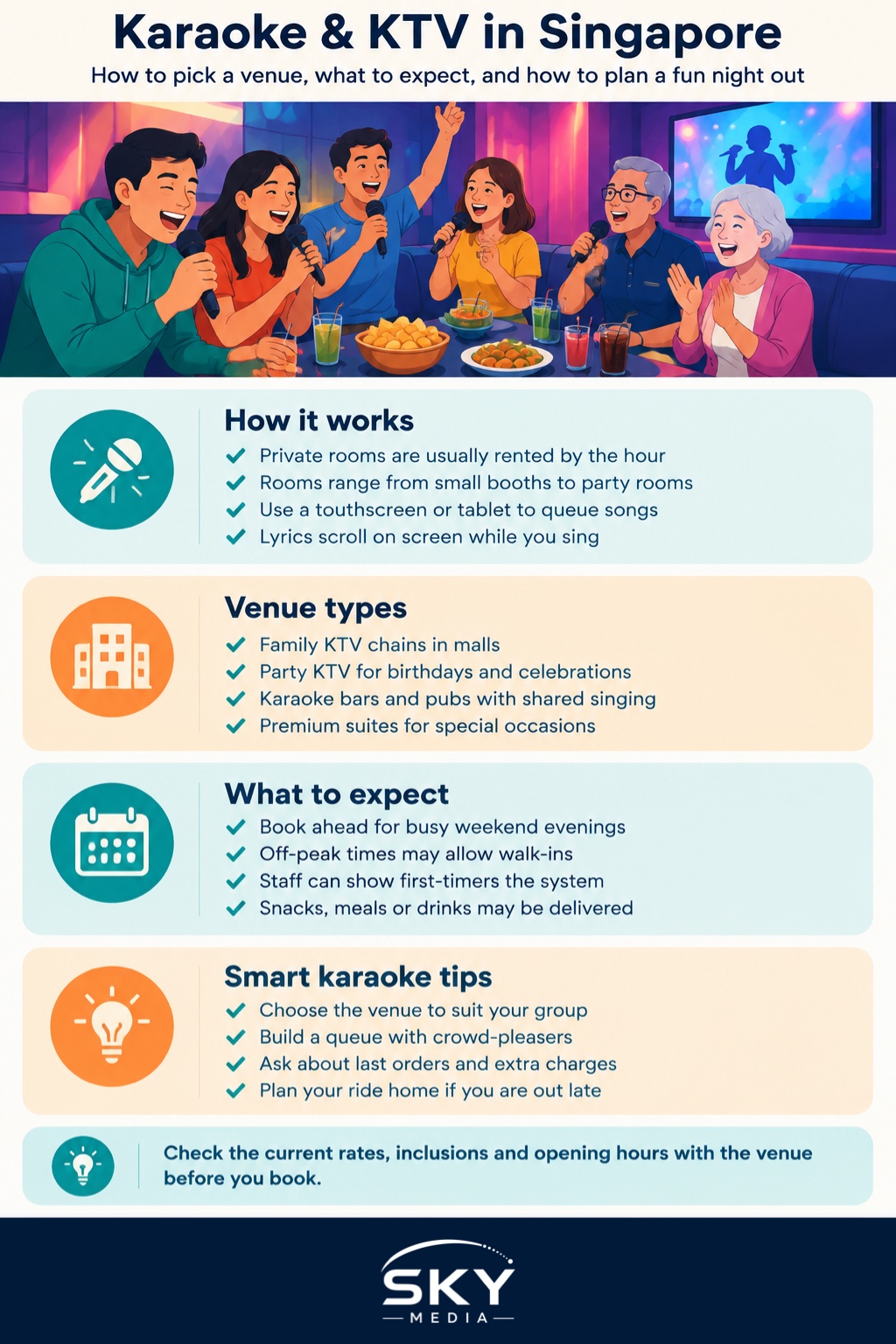
How KTV and Karaoke Work Here
The most common format is the private room KTV, where you rent a room by the hour for your group. Rooms come in different sizes, from cosy two-person booths to large party rooms, and each has a screen, a song system, microphones and comfortable seating. You pick songs from a touchscreen or tablet, queue them up, and take turns singing while the lyrics scroll on screen.
Alongside the private-room model, some bars and pubs run open karaoke, where there is a shared stage or a single system and everyone in the venue sings in turn. This is a more social, spontaneous format and usually cheaper, though you may wait longer for your song.
Pricing typically works one of two ways: a per-room hourly rate, where the cost is shared by however many people come, or a per-person package, usually a two- or three-hour block that often bundles soft drinks or snacks. Daytime and weekday slots are generally cheaper than weekend nights, and some outlets offer student or off-peak deals. Always check what is included before you book.
The Main Types of Venues
Singapore’s karaoke scene splits into a few clear categories, each suited to a different occasion.
- Family and casual KTV chains. Bright, wholesome outlets in malls that welcome all ages, with big song libraries, food menus and party packages. Ideal for families, students and daytime sessions.
- Party and lifestyle KTV. Trendier rooms aimed at younger groups and celebrations, often with better sound systems, themed decor and later hours.
- Karaoke bars and pubs. Venues where singing is part of a wider night out, mixing a bar atmosphere with a stage or shared system.
- Hotel and premium rooms. Upmarket private suites for special occasions, with polished interiors and table service.
Note that “KTV” can also refer to certain licensed nightlife lounges aimed at adults; this guide is about the mainstream sing-with-your-friends kind, which is the vast majority of what you will find in malls and family outlets.
What to Expect in a Session
A typical booking is easy and welcoming, even if it is your first time.
- Book or walk in. Popular outlets fill up on weekend evenings and holidays, so reserving a room ahead is wise for a group. Off-peak, you can often walk in.
- Choose your room and package. Tell the counter your group size and how long you want. They will suggest a room and any food-and-drink package.
- Load up songs. Use the tablet or screen to search by title, artist or language and build a queue. Most systems carry a deep catalogue across many languages.
- Order refreshments. Many places offer snacks, meals or drink packages delivered to your room.
- Sing and swap. Take turns, cheer each other on, and do not worry about hitting every note; the point is fun, not perfection.
Staff are used to first-timers and will happily show you how the song system works, so do not be shy about asking.
Song Selection, Food and Drink
The song search system is the heart of the experience. Most venues let you browse by artist, song title, language, or genre, and you queue up tracks so everyone gets a turn. A good tip is to line up several songs early so there is never an awkward silence while someone scrolls.
On the food front, options vary widely. Some venues run buffet or package deals covering snacks and soft drinks, which suits long sessions well. Others offer finger food, light meals, and drinks that you order as you go. If your group plans to settle in for a few hours, a package can work out better value, but it helps to check what is actually included so there are no surprises on the bill.
Rough Cost and Occasion Guide
The comparison below is a general, illustrative sense of how options differ, not a price list. Rates vary widely by outlet, room size, time and package, so confirm with the venue.
| Option | Typical setting | How you pay | Best for |
|---|---|---|---|
| Family KTV chain | Bright mall outlet, all ages | Hourly room or package | Families, students, daytime fun |
| Party KTV | Trendy private rooms | Package with food and drinks | Birthdays and group celebrations |
| Karaoke bar | Bar with stage or system | Drinks, sometimes cover | Casual, social sing-alongs |
| Premium suite | Upscale private room | Higher hourly or package | Special occasions, small groups |
Weekday and off-peak slots are usually the best value, and splitting a package across a group keeps the cost per person friendly.
Where You Generally Find Them
Karaoke venues cluster where crowds gather, especially in and around major shopping and entertainment districts in the city centre and along the popular malls in the central belt. You will also find them in larger suburban malls and regional town centres, which makes a session easy to slot into a day of shopping or a meal out in the heartlands.
City centre venues tend to be busiest and priciest during peak hours, while suburban outlets can be quieter and a little easier on the wallet. Rather than fixing on one spot, look up what is currently operating near where you already plan to be, then confirm the room rates and hours before heading down.
Who Karaoke Suits
Karaoke is one of the most flexible group activities around. It works beautifully for a birthday or a farewell, for a company gathering that needs an icebreaker, and for a casual catch up when a quiet dinner feels too tame. Because rooms are private, even shy singers tend to relax once they realise only their friends can hear them.
It suits mixed age groups too. Family friendly venues welcome children and older relatives, and the multilingual song libraries mean grandparents can sing their favourites right after the teenagers have had their turn. Couples looking for a livelier date, groups of friends wanting a low cost night, and travellers curious about a staple of local nightlife will all find something to enjoy.
Per Room or Per Person: How KTV Pricing Works
The single biggest factor in what you pay is how the venue charges. As of late 2026, Singapore karaoke outlets fall into two camps.
- Per room, per hour. Budget studios such as Teo Heng charge one hourly rate for the whole room, so the cost per head drops as more friends squeeze in. This usually works out cheapest for groups of three or more.
- Per person, per package. Chains such as Cash Studio and Party World mostly sell per-head packages, typically a two-hour block that may include soft drinks. This can be the better deal for just two people.
A few other points catch first-timers out:
- Read the “++”. A price marked “++” excludes service charge and GST (9%), which together add roughly a fifth to the bill. Some studios quote prices with GST already included.
- Know the cut-off. Off-peak rates usually end in the early evening, often around 6pm to 7pm, and night and weekend rates can be much higher.
- Check minimums. Many per-person deals require at least two guests or a minimum number of hours, especially on weekends.
- Look for promotions. Student rates, weekday happy hours and member discounts come and go, and often apply only at certain outlets, so confirm with the branch you plan to visit.
Tips for a Great Karaoke Night
A few small choices make the session more fun for everyone.
- Match the venue to your group. Families and mixed ages are happiest at wholesome mall chains; late-night groups may prefer party outlets.
- Book ahead for weekends. Rooms go fast on Friday and Saturday nights and during festive periods.
- Build an inclusive queue. Mix crowd-pleasers with a few numbers in different languages so everyone gets a turn.
- Mind the clock. Sessions are timed, so ask about last orders and any charges for extending.
- If drinks are involved, be sensible. Pace yourself, keep water on the table, and if you are out late, plan your ride home before the MRT and buses stop for the night.
Above all, relax and enjoy it; karaoke rewards enthusiasm far more than talent.
Karaoke in Singapore: Frequently Asked Questions
What is the cheapest time to sing?
Weekday afternoons before the evening cut-off are almost always the cheapest. Rates rise on nights, weekends and public holiday eves.
Can I bring my own food and drinks?
It depends on the venue. Some budget studios allow outside food and non-alcoholic drinks, while others ban outside food or charge corkage or a cleaning fee. Ask when you book, as policies can differ even between branches of the same brand.
How late are karaoke places open?
Family studios in malls and community clubs often close around 1am, a little later on Saturdays and holiday eves. Some city centre KTV and nightlife outlets stay open until the early morning, typically at higher rates.
Are KTV rooms suitable for children?
Mainstream family karaoke chains welcome all ages, and daytime sessions are popular with families. Venues serving alcohol cannot sell it to anyone under 18, and nightlife-style KTV lounges are best avoided with kids.
Do I need to book?
For weekend evenings, school holidays and festive periods, yes. On weekday afternoons you can usually walk in, though calling ahead saves a wasted trip.
Explore more
If karaoke leaves you wanting the real thing played on stage, our guide to live music venues in Singapore is a natural next step, and for something more intimate try jazz bars in Singapore. Rounding off a session with a wider night out is easy too; see a late-night guide to Singapore for where to head after the last song.
Related across Sky Media: Karaoke and KTV in Singapore
Further reading: Setting Up Home Karaoke: Mics, Apps and Speakers · How to Choose Karaoke Rooms in Singapore