
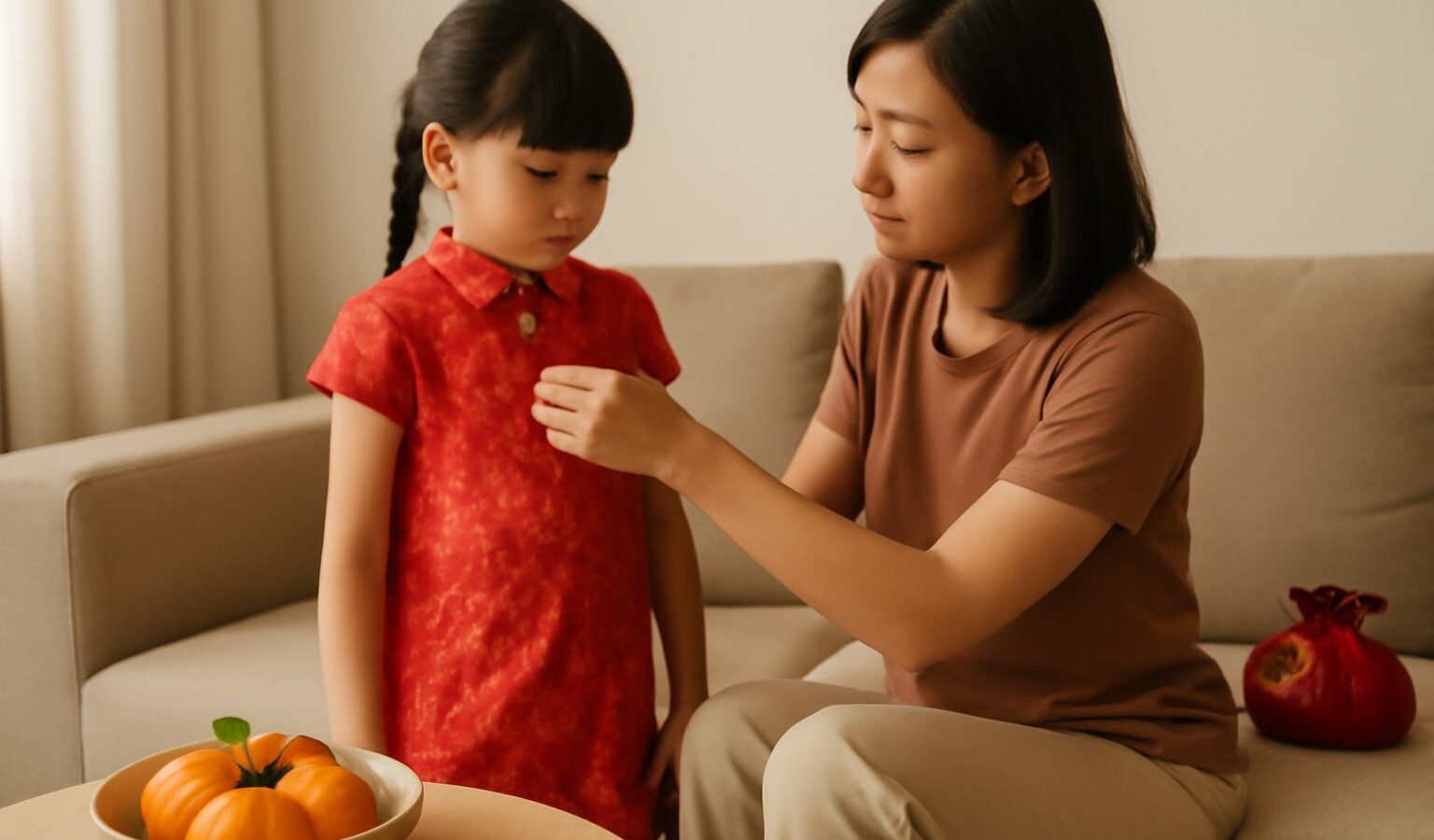
Choosing a kids Chinese New Year outfit in Singapore is not quite the same as dressing yourself for the festival. Adults can tolerate a stiff collar for a few hours; a four-year-old cannot. Children get hot faster, wriggle more, sit on floors, spill pineapple tart crumbs and fall asleep in car seats between houses. The best festive outfit for a child is one that still looks cheerful at the fifth house of the day and has not made anyone cry along the way.
This guide focuses on comfort first: fabrics that cope with tropical heat, layers for cold air-conditioned homes and malls, shoes that come on and off easily for house visits, and practical ways to keep the festive look without the fuss. For grown-up outfit ideas, see our general guide on what to wear for Chinese New Year.
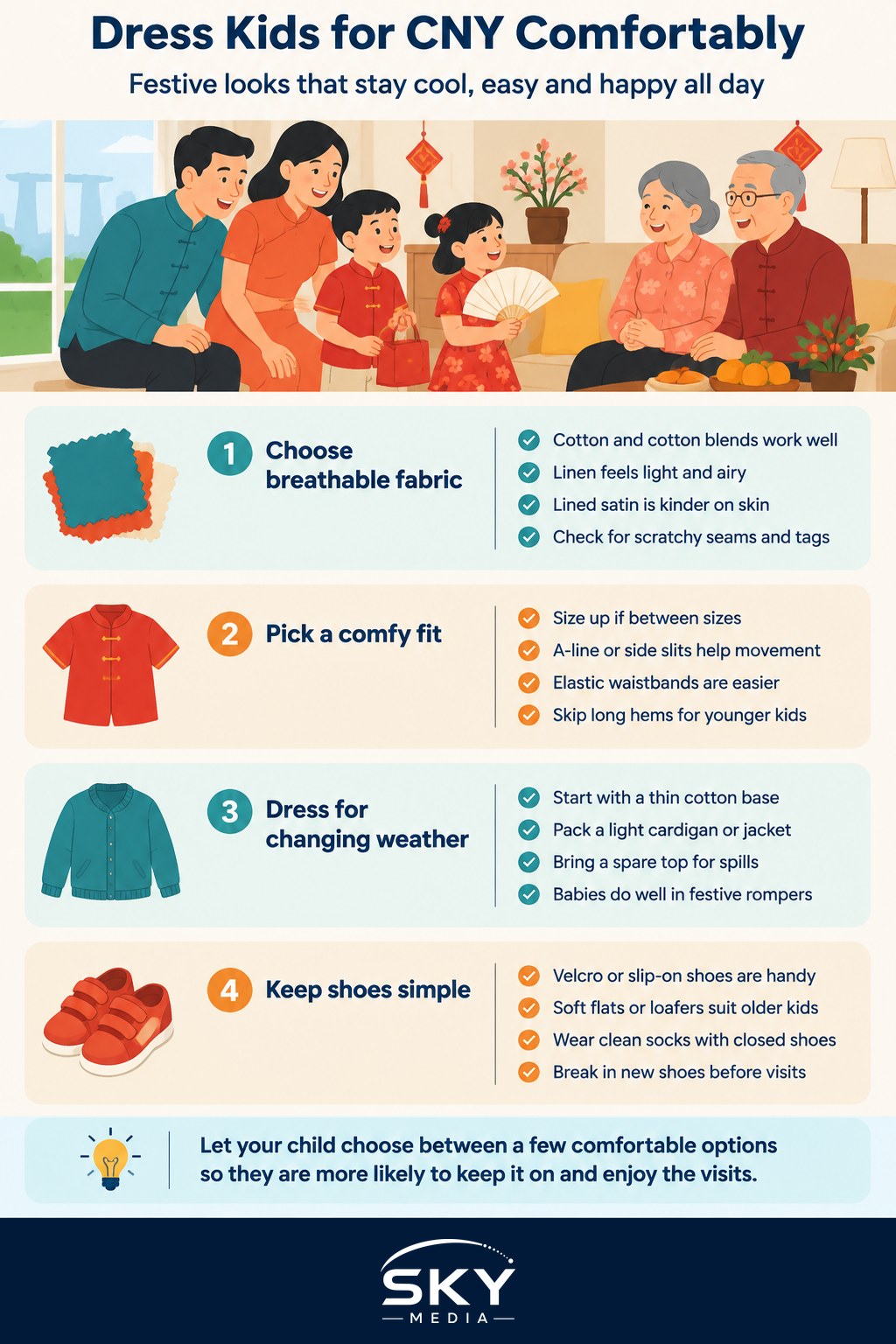
Start With Fabric, Not the Print
Many ready-made children’s cheongsams and Tang-style jackets are sold in satin, brocade or polyester blends because they look shiny and festive on the rack. On a hot, humid afternoon, these can trap heat and sweat against the skin. Before you fall for a print, feel the fabric and check the label.
Fabrics that tend to work well for children in Singapore:
- Cotton and cotton blends. Breathable, soft and easy to wash. Many brands now sell cheongsam-style dresses and mandarin-collar shirts in printed cotton.
- Linen and linen blends. Light and airy, though they crease. For kids this rarely matters.
- Lined satin or brocade. If your child loves a shiny traditional piece, look for one with a cotton lining so the slippery fabric does not sit directly on the skin.
Also check the inside seams. Scratchy sequins, stiff embroidery and rough lace on the inside of a collar or armhole are the most common reason a child refuses to keep an outfit on. Run your fingers along the neckline and cuffs before buying, and cut off tags that poke.
Fit and Movement for a Full Day of Visiting
Traditional silhouettes are often cut close to the body. On a toddler who climbs onto sofas and crawls under tables, a tight cheongsam can restrict movement and ride up. A few simple fit checks help:
- Size up slightly if your child is between sizes. A little room helps with heat and movement, and the outfit may still fit next year.
- Look for side slits or an A-line cut in dresses so children can sit cross-legged or climb steps.
- Choose elastic waistbands for trousers and skirts rather than buttons and zips, especially for children who are toilet training.
- Check the closures. Traditional frog buttons (the knotted fabric loops on cheongsams and Tang jackets) look lovely but can be fiddly. Hidden zips or snap buttons are quicker for toilet trips.
- Avoid long trailing hems on younger children. They catch on shoes and stairs.
For babies, a festive romper or onesie in red or gold with snap buttons at the crotch is usually far more practical than a mini dress or a two-piece set. Nappy changes on a relative’s sofa are much easier.
Layering for Heat Outdoors and Chill Indoors
A typical visiting day in Singapore swings between hot void decks, car parks and lift lobbies, and homes or restaurants with the air-conditioning turned right down. Children feel both extremes. Rather than one heavy outfit, think in light layers:
- A thin cotton base, such as a sleeveless dress or a simple T-shirt, that is comfortable on its own outdoors.
- A light cardigan, bolero or open jacket in a festive colour for chilly rooms. A red or pink knit cardigan over a plain dress still reads as festive in photos.
- A spare top in the bag for sweat, spills or the inevitable dip of a sleeve into a bowl of soup.
The table below compares common choices so you can match the outfit to the kind of day you have planned.
| Outfit choice | Comfort in heat | Ease for toilet trips and changes | Best for |
|---|---|---|---|
| Cotton cheongsam-style dress | Good, breathable | Good if it has a back zip or side opening | Girls aged 3 and up doing several house visits |
| Satin or brocade cheongsam, unlined | Poor, traps heat | Fair, often tight and fitted | Short photo sessions or a single dinner |
| Mandarin-collar cotton shirt with shorts | Very good | Very good with an elastic waist | Boys and girls on long visiting days |
| Full Tang-style jacket and trousers set | Fair to poor outdoors | Fair, many buttons | Air-conditioned reunion dinners and photos |
| Festive romper with snap buttons | Very good | Excellent for nappy changes | Babies and young toddlers |
Footwear for House Visits
Shoes are where many outfits fail. In most Singapore homes, guests take their shoes off at the door, so your child might put shoes on and take them off a dozen times in a day. Laces and fiddly buckles get old quickly.
Practical choices include:
- Velcro sandals or slip-on shoes that children can manage themselves.
- Soft-soled ballet flats or loafers for older children who want something dressier.
- Clean, matching socks if your child wears closed shoes. Check for holes the night before, because socks will be on show indoors.
New shoes are a popular tradition at Chinese New Year, as new clothes and shoes are associated with a fresh start. If you buy new shoes, let your child wear them around the house for a few days first to soften them and spot any rubbing. A blister on the first morning can derail a full day of visits. Some families also avoid buying shoes at certain times for superstitious reasons, so follow what feels right for your family.
Colours and Traditions Without the Pressure
Red is the classic colour for the festival, associated with luck and celebration. Gold, pink, orange and bright prints are also common. Many families avoid dressing children head to toe in black or white for visits, since these colours are often associated with mourning in Chinese custom. Practices vary from family to family, so if you are unsure, ask the grandparents what they would like to see.
A child does not need a full traditional outfit to look festive. Easy ways to add colour:
- A plain red T-shirt or dress with a small festive accessory, such as a hair clip or a knotted bracelet.
- A cotton shirt with a mandarin collar worn with ordinary shorts.
- Matching family colours rather than matching outfits, which keeps photos coordinated without forcing anyone into stiff clothing.
If your family enjoys traditional dress, our guide to wearing the qipao and Chinese traditional dress in Singapore explains the styles and how they are worn today.
Pack a Visiting Day Kit
A small bag of extras makes a big difference on the first and second days, when most families visit several homes. Consider packing:
- One full change of clothes, including underwear and socks.
- A light cardigan for air-conditioned rooms.
- Wet wipes and a small towel for sticky fingers after snacks.
- A bib or large napkin for younger children at the reunion table.
- A foldable fan or a small water bottle for waiting outdoors.
- A zip bag for wet or stained clothes.
Shopping Smart for Fast-Growing Children
Children outgrow festive wear quickly, so it helps to keep costs sensible. Buying a size up, choosing pieces that work beyond the festival (a red cotton dress is fine for birthdays too), and swapping outfits with cousins or friends are common ways to stretch your spending. Neighbourhood shops, malls and Chinatown stalls all carry children’s festive clothing in the weeks before the new year, and prices and quality vary widely, so check fabric and stitching rather than relying on the price tag. For wider planning, see our guide on how to budget for Chinese New Year in Singapore.
Above all, involve your child. Let them pick between two or three comfortable options. A child who chose their own outfit is far more likely to keep it on, smile for the family photo and enjoy the visits.
Frequently Asked Questions
Do children have to wear red for Chinese New Year? No, red is traditional but not compulsory. Gold, pink, orange or a bright print all look festive, and a plain top with a red hair clip or bracelet is enough. Many families simply avoid black and white head to toe, so ask the grandparents if unsure.
How do I stop my toddler from overheating during CNY visits? Pick breathable cotton, dress them in thin layers and carry a spare top. Let them cool down in air-conditioned rooms, offer water often, and avoid heavy satin or full jacket sets for long days outdoors.
Is it better to buy a size up for festive clothes? Slightly bigger is usually a sensible choice, especially if your child is between sizes. The extra room helps with heat and movement, and the outfit may fit again next year. Avoid anything so large that hems trip them.
What should my baby wear for reunion dinner photos? A soft cotton romper with snap buttons in red or gold is easiest, since nappy changes are quick. Bring a spare outfit and a light cardigan, and take photos early before the baby gets tired or messy.
How can I get a child to keep a festive outfit on? Let them choose between two or three comfortable options and check the inside seams, tags and collar for scratchy bits. Children who picked their own outfit are far more likely to wear it happily through the day.