
Chinese New Year is one of the warmest times of the year, and also one of the most expensive. Between reunion meals, ang bao, new outfits, goodies and visiting, the little costs add up quietly until the credit card statement lands in February. Budgeting for Chinese New Year in Singapore is not about spending less on the people you love. It is about deciding early where your money goes, so the season feels generous rather than stressful. With a simple plan, you can enjoy the celebration and start the new year without a money hangover.
The good news is that Chinese New Year comes on the same date every lunar calendar, so you always have months to prepare. A little planning now means fewer panic purchases later, and a clearer sense of what the festive season truly costs your household.
Map Out Where the Money Really Goes
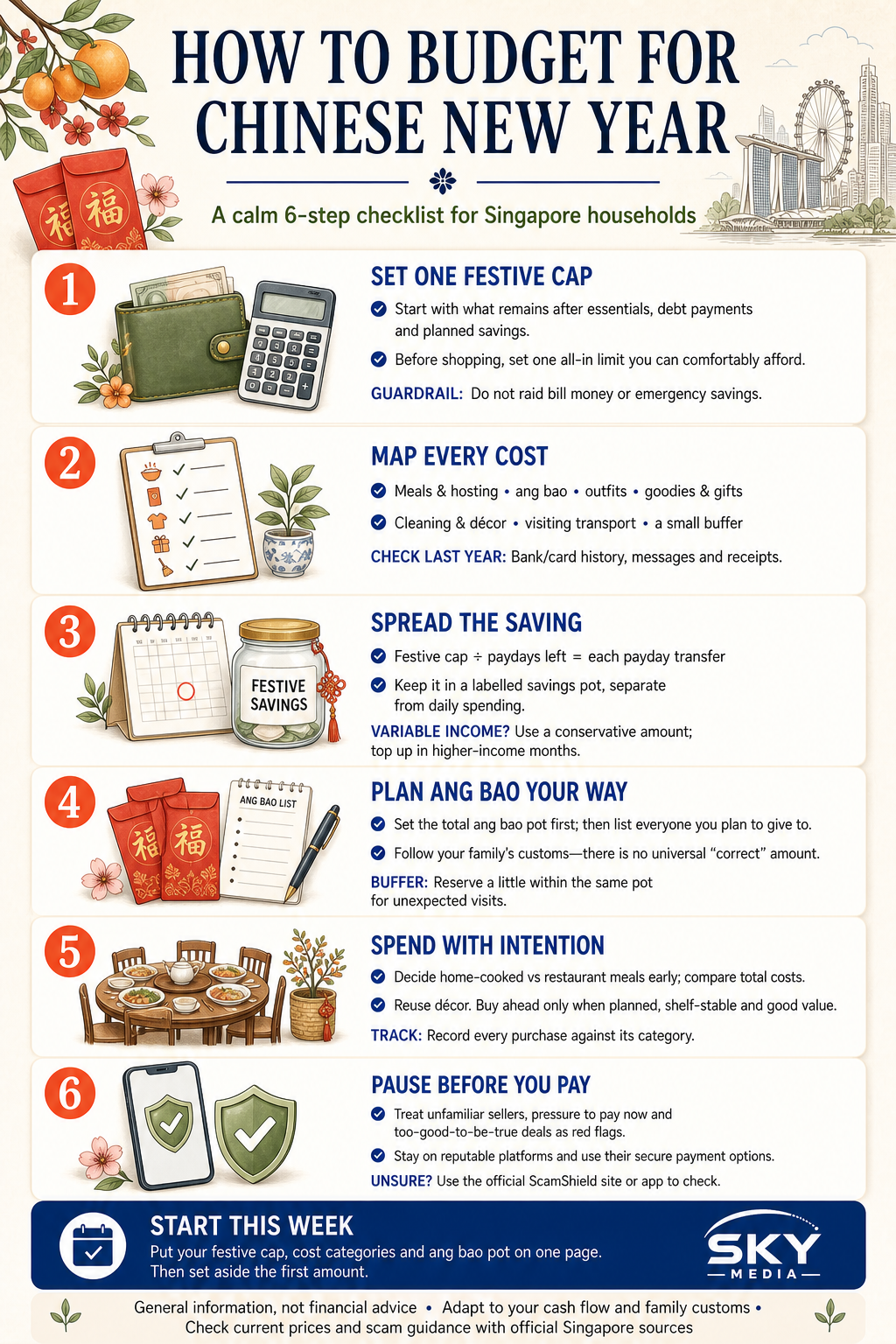
Before you set any numbers, list every category the festive season touches. Most families are surprised by how many small streams there are once they write them down. Common ones include reunion and gathering meals, ang bao, new clothes and shoes, home cleaning and decorations, goodies and gifts for hosts, and the extra transport and parking of visiting relatives.
Give each category a rough share of your total festive budget rather than an exact figure you invent on the spot. Look back at last year if you can remember, or check old messages and receipts. The point is to see the whole picture on one page. Once everything is visible, you can decide what matters most to you and where you are happy to keep things simple.
Here is a simple way to see how a festive budget can shift depending on your priorities.
| Spending area | If you keep it simple | If it is a priority for you |
|---|---|---|
| Reunion meal | Cook at home together | Book a restaurant set early |
| Ang bao | Give within your comfort zone | Set aside a larger dedicated pot |
| New outfits | Refresh one or two pieces | Buy a full new set for everyone |
| Goodies and gifts | Make or buy a few staples | Curate premium hampers |
| Decorations | Reuse and add one new item | Redecorate the whole home |
There is no correct column. The value is in choosing on purpose, so that the money follows what you actually care about rather than whatever catches your eye at the mall in January.
Start Saving Early and Spread the Cost
The hardest part of Chinese New Year is that so many costs land in the same short window. The fix is to spread the saving across the months before. Work out a comfortable total, then divide it by the number of months until the new year and set that amount aside each payday. A separate savings account or a labelled pot in your banking app keeps it out of sight and out of your daily spending.
Spreading the cost has another benefit. It lets you buy ahead when items are cheaper. Non-perishable goodies, decorations and gift items often appear in stores well before the peak, and prices tend to climb as the date nears. Buying a few staples early, during ordinary promotions or the seasonal sales, means you are not paying a rush premium in the final week. Just be honest about what will actually keep and get used, so early buying does not turn into clutter.
If cash flow is tight, remember that CDC and government vouchers, when they are available, can ease everyday grocery and household costs and free up a little room in your festive plan. Eligibility, amounts and timing change each year, so check the official announcement rather than assuming last year’s details still apply.
Handle Ang Bao Without the Pressure
Ang bao is where budgets often wobble, because it feels personal and social. The kindest thing you can do for yourself is to accept that there is no fixed correct amount. Giving is a gesture of good wishes, and a respectful ang bao is one you can comfortably afford, given with a warm heart. Comparing yourself to what others give is a fast route to overspending and quiet resentment.
A few habits keep ang bao calm:
- Decide your total ang bao pot first, then divide it among the people you plan to give to.
- Group recipients sensibly, for example children, unmarried younger relatives, and elders, and keep each group consistent.
- Withdraw fresh notes early, before the long bank and ATM queues near the new year.
- Keep a small buffer for the unexpected relative or child you did not plan for.
If money is tight this year, give what you can and let the warmth carry the rest. People who matter will remember your presence far longer than the amount inside the red packet.
Enjoy the Season and Protect Your Guard
Festive months are also peak season for tempting offers and, unfortunately, for scams and fake discounts. Slow down before big or unusual purchases. If a deal seems too good to be true, it usually is. Be wary of unfamiliar sellers, pushy time pressure and requests to pay through odd channels. For anything suspicious, look up the current ScamShield resources or the Police advisory rather than trusting a link sent to you.
To keep the joy without the strain, focus on the parts of Chinese New Year that no amount of spending can buy. Slower afternoons with family, home cooked favourites, and the ritual of cleaning and reopening the home. A homemade dish, a heartfelt visit and time together are the heart of the season. When you spend on purpose, the celebration feels fuller, not thinner.
Where to start this week: write your festive categories on one page, set one comfortable monthly savings amount, and decide your ang bao pot before anything else. Those three moves take the anxiety out of the season. For big or unclear money decisions, MoneySense offers general guidance worth a look, and this article is general information rather than financial advice.
Explore more
Ready to keep your festive money calm and intentional? Dig deeper into planning your ang bao giving so the red packets never derail your plan. If year-end celebrations sneak up on you too, see our guide to budgeting for the year-end festive season, and for households sharing the load, managing money as a family ties it all together.