
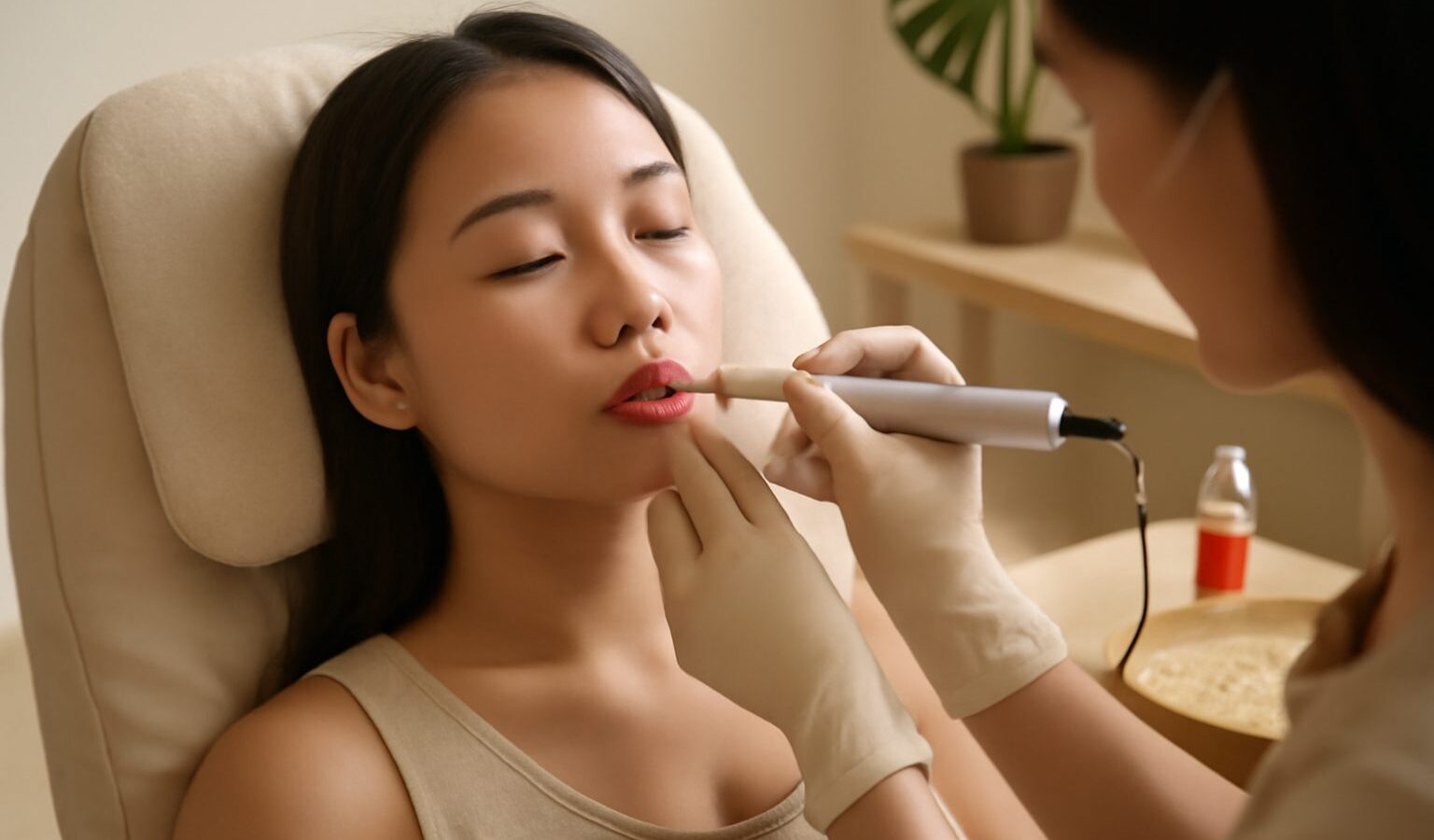
Tired of reapplying lipstick after every kopi or meal? Lip blush is a semi-permanent cosmetic tattoo that adds soft colour and definition to the lips, so they look naturally tinted even without makeup. Interest in lip blush in Singapore has grown alongside brow embroidery and other semi-permanent treatments, but many people book without really knowing what the process and healing involve.
This guide walks through how lip blush works, how to prepare, what the first weeks look like, and what to check when choosing a provider. It is general information, not medical advice. If you have any health conditions, speak to your doctor before booking.

What Lip Blush Actually Is
Lip blush uses a fine needle or machine to deposit pigment into the upper layer of the skin on and around the lips. The goal is usually a soft, diffused wash of colour rather than the solid, opaque look of lipstick.
It can be used to:
- Even out patchy or uneven lip colour
- Add warmth to pale or darker lips
- Slightly define a blurred lip border
- Create the look of a sheer tint that lasts
Unlike a lip stain or lip tint, which wears off within a day, lip blush fades gradually over a period that can range from about one to a few years, depending on your skin, lifestyle and the pigment used. Most people need a touch-up session after initial healing and occasional refreshers later.
It is not the same as lip fillers, which add volume through injections. Lip blush changes colour and definition only, not size.
Who It Suits, and Who Should Wait
Lip blush can suit people who wear lip colour daily, those with uneven pigmentation, or anyone who wants a low-maintenance routine. That said, it is not right for everyone.
You may need to postpone or check with a doctor first if you:
- Are pregnant or breastfeeding
- Get cold sores, since the procedure can trigger an outbreak. Your doctor may advise preventive medication beforehand
- Have recently had lip fillers or other lip treatments
- Have active skin conditions, cuts or irritation on or near the lips
- Have conditions or take medication that affect healing or bleeding
- Are prone to keloid scarring
A good provider will ask about these during a consultation and may decline or delay treatment if needed.
How to Prepare for Your Appointment
Preparation helps the pigment settle more evenly and reduces discomfort.
- Book a consultation first. Discuss the shade, the look you want and your health history. Ask to see healed results, not just fresh ones.
- Exfoliate and moisturise gently. In the week before, keep lips soft and hydrated. Flaky or chapped lips can make pigment uneven. Our guide to treating dark and chapped lips has tips.
- Avoid sun damage. Sunburnt or peeling lips may need to heal before treatment.
- Follow your provider’s instructions on alcohol and blood-thinning substances. Many providers ask clients to avoid alcohol and certain supplements before treatment. Never stop prescribed medication without speaking to your doctor.
- Plan your calendar. Avoid booking right before a wedding, holiday or important event. The first week can look quite intense.
The Healing Timeline, Day by Day
Healing varies from person to person, but the general pattern is fairly predictable. Knowing it in advance can save a lot of worry.
| Stage | Roughly when | What you might see | What to do |
|---|---|---|---|
| Fresh | Day 1 to 2 | Bright, bold colour, swelling and tenderness | Follow aftercare, keep lips clean, avoid touching |
| Flaking | Around day 3 to 7 | Dryness, light flaking, colour looks patchy | Let flakes fall naturally, do not peel or pick |
| Ghosting | Around week 1 to 3 | Colour looks very faded or almost gone | Be patient, colour often returns as skin settles |
| Settled | Around week 4 to 6 | Softer, more natural final shade appears | Assess results, book a touch-up if advised |
The “ghosting” phase surprises many first-timers. It is common for colour to seem to vanish before slowly coming back. Avoid judging the result until it has fully healed.
Aftercare That Makes a Difference
Your provider will give specific instructions, and those come first. Common aftercare advice includes:
- Keep lips clean with gentle blotting as directed, and apply only the balm or ointment recommended.
- Avoid very hot, spicy, salty or acidic food for the first few days, which can sting and irritate. That may mean skipping the chilli crab or mala hotpot for a short while.
- Drink through a straw to reduce contact with the lips.
- Skip lipstick and lip products until your provider says it is safe.
- Stay out of pools, saunas and the sea for the recommended period.
- Protect from sun once healed, as UV can fade pigment faster. A lip balm with SPF helps.
- Do not pick flakes, even when tempting. This can lead to patchy colour or scarring.
Seek medical advice promptly if you notice signs of infection, such as increasing pain, heat, pus, or swelling that worsens rather than settles after the first few days.
Choosing a Provider and Asking the Right Questions
Quality and hygiene standards vary, so do your homework. Rather than choosing by price or promotions alone, ask these questions:
- What training and experience do you have with lip blush specifically? Lips are more delicate than brows.
- Can I see healed photos of clients with a similar skin tone to mine?
- What pigments do you use, and how do they tend to heal on different undertones? Some shades can heal cooler or warmer than expected.
- What hygiene practices do you follow? Look for single-use needles opened in front of you, gloves and a clean treatment area.
- What numbing is used, and who applies it?
- Is the touch-up included, and what is the policy if I am unhappy with the result?
- What happens if I react badly? A responsible provider will tell you to see a doctor and support you.
Prices vary widely across salons and clinics, and promotional rates can change. Compare what is included rather than headline numbers.
Living With Lip Blush Long Term
Once healed, many people find they reach for lip products far less often. You can still wear lipstick, gloss or tint over the top. Our lipstick and lip products guide covers formulas that pair well with a natural base.
Keep in mind that semi-permanent does not mean temporary in the short term. Colour can be lightened or removed, but that usually takes more sessions and cost than the original treatment. Choose a shade a little softer than you think you want; it is easier to deepen colour at a touch-up than to take it away.
Done carefully, with a qualified provider and realistic expectations, lip blush can be a simple way to wake up looking polished. Take your time, ask plenty of questions, and give your lips the patience they need to heal.
Further reading: Lip Liner and Lip Shaping