

Walk into a show flat with a double-volume living room and it is easy to fall for it on the spot. Loft and duplex layouts feel more like a house than an apartment, and they stand out in a market dominated by single-level units. But a loft unit condo Singapore buyers fall in love with can also bring higher running costs, practical quirks and a narrower pool of future buyers. This guide walks through what these layouts are, how they live day to day, and what to weigh before you commit.
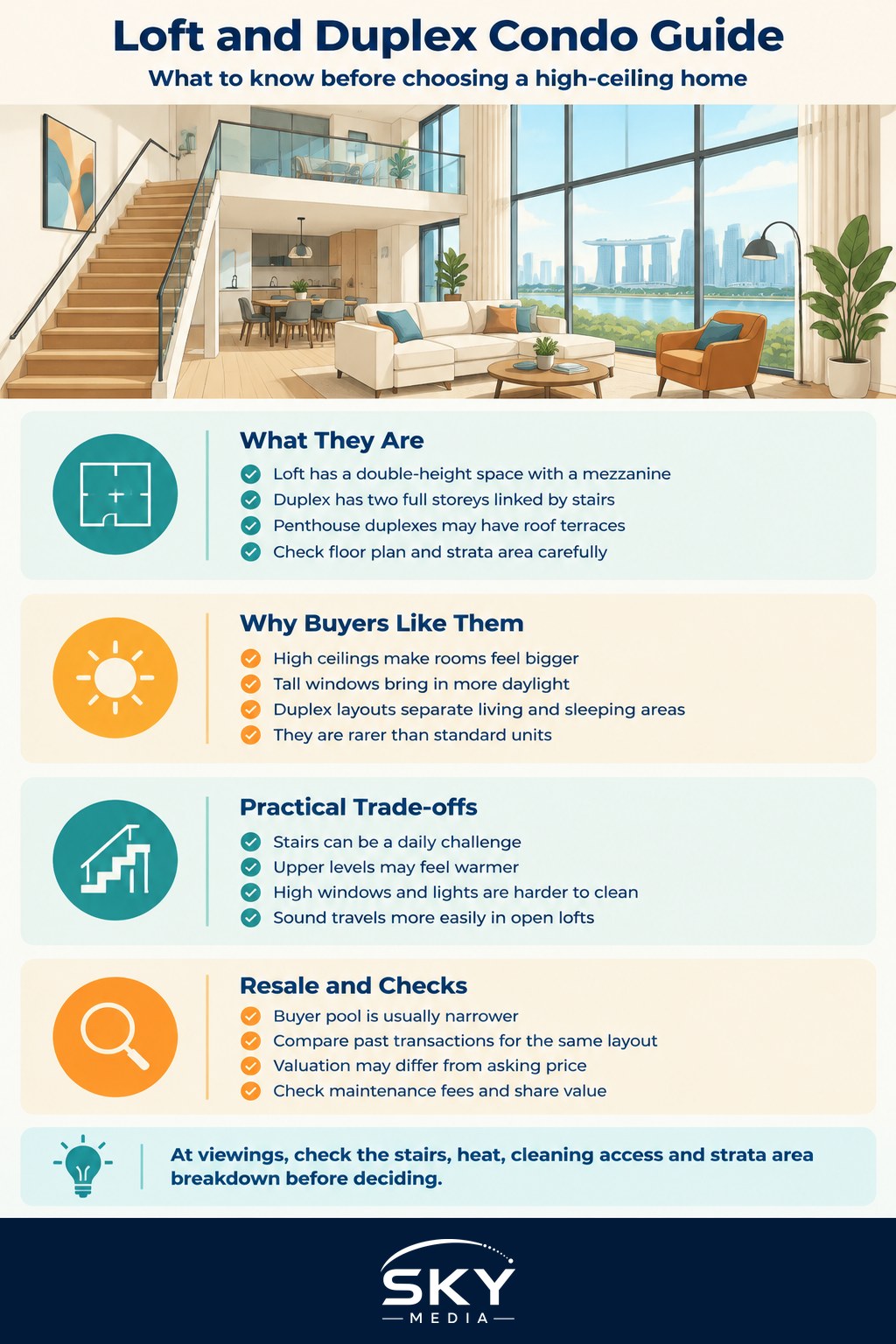
What Counts as a Loft or Duplex Unit
The terms are used loosely by developers and agents, so it helps to be precise when comparing listings.
- Loft unit. Usually a unit with a double-height (sometimes called double-volume) ceiling over part of the space, with a mezzanine or upper platform that overlooks the lower floor. The upper level is partly open to the space below.
- Duplex unit. A unit spread across two full storeys connected by an internal staircase, with the upper floor typically enclosed as separate rooms. It is closer to a terrace house stacked inside a condo block.
- Penthouse duplex. A duplex on the top floors, often with a roof terrace. Many have private pools or outdoor areas that bring their own maintenance considerations.
- Ground-floor or “garden” duplex. Less common, sometimes with a private enclosed space.
Always check the floor plan and the strata area. Some areas, such as the void over a double-volume space, may or may not be counted in the strata area depending on the development and the rules that applied when it was approved. Ask the agent or your conveyancing lawyer how the area was computed, and compare the price per square foot with that in mind.
The Real Advantages
Space and light. High ceilings make even a moderate floor area feel generous. Tall windows bring in more daylight, and the sense of openness is hard to replicate in a standard unit.
Separation of zones. In a duplex, bedrooms can sit upstairs while living, dining and kitchen stay downstairs. Families with teenagers, multi-generational households and people who work from home often value this split. Guests can be entertained without wandering past private rooms.
Character and rarity. These layouts are usually a small share of the units in a project. For the right buyer, that rarity is part of the appeal and can help a well-kept unit stand out in a resale listing.
Possible quieter upper level. Bedrooms on the upper floor of a duplex are one level removed from the main living area, which can reduce noise between household members.
The Practical Drawbacks
Stairs, every day. Internal staircases are fine for many people but become a real issue with young children, elderly parents, injuries or carrying laundry and shopping. Think about whether you will still want stairs in ten or fifteen years. Stair gates and handrails help, but they change how the space looks and functions.
Aircon and heat. Warm air rises. In a loft with an open mezzanine, the upper level can feel noticeably warmer, and cooling a double-height volume takes more effort than cooling a standard room. Expect to plan aircon placement carefully, and possibly to use ceiling fans to move air. Running costs vary with usage, equipment and tariffs, so ask current owners or an aircon contractor rather than relying on a rule of thumb.
Cleaning and maintenance. High windows, tall curtains and lights mounted on a high ceiling need ladders, extension tools or professional help. Changing a downlight at double height is not a quick job. Factor this in, especially if you plan to manage the home without help.
Sound travel. In an open loft, sound carries freely between levels. Someone watching TV downstairs will be heard on the mezzanine. If you need quiet for sleep or calls, a loft can be harder to live with than a duplex with enclosed rooms. For the separate issue of noise from neighbouring units, see our guide on handling inter-unit noise in condos.
Furniture and renovation. Large items must get up the staircase, which can limit choices for the upper level. Renovation works such as building out a mezzanine, adding a room or changing the staircase need approval from the MCST (the Management Corporation Strata Title that runs the condo) and may need authority approvals. Our guide on renovating a condo unit and MCST approval covers the process.
Loft vs Duplex vs Standard Unit at a Glance
| Factor | Loft unit | Duplex unit | Standard single-level unit |
|---|---|---|---|
| Ceiling height | Double height over part of the space | Normal per floor, sometimes a double-volume living area | Normal throughout |
| Privacy between levels | Low, upper level is open | High, upper rooms are enclosed | Depends on layout |
| Stairs | Yes, usually lighter staircase | Yes, full internal staircase | No |
| Cooling effort | Higher, heat collects upstairs | Moderate, each floor cooled separately | Lowest |
| Cleaning high areas | Harder | Moderate | Easy |
| Pool of resale buyers | Narrower, niche appeal | Moderate, suits families | Widest |
Resale Demand and Financing
Resale is where buyers most often underestimate the trade-offs. Loft and duplex units appeal strongly to some people and not at all to others. Buyers who need step-free living, such as elderly owners or families with very young children, tend to filter them out, which shrinks the pool. In some projects, these units may take longer to sell or need sharper pricing. In others, especially well-located penthouse duplexes, scarcity works in the seller’s favour. There is no single answer, so look at actual transaction records for the specific development and comparable units nearby.
Things to check before buying:
- Past transactions for the same stack or layout, not just the project average. URA’s property market information and caveat records are a starting point.
- How long similar units stayed on the market, which a property agent can help with.
- Valuation. Banks lend based on valuation, and an unusual layout can sometimes value differently from the asking price. Get an indicative valuation before you commit. This is general information, not financial advice, so confirm loan terms with your bank.
- Maintenance fees and share value. Larger strata areas often mean a higher share value and higher monthly fees. Check the figures with the MCST or managing agent.
Our article on buying a corner unit uses a similar framework for weighing an unusual unit against resale appeal, and pool-facing vs road-facing units covers how facing affects value.
Who These Layouts Suit Best
A loft or duplex is likely to work well if you:
- Value space, light and character over pure efficiency.
- Have no one in the household who struggles with stairs, and do not expect that to change soon.
- Plan to hold for the long term and are less sensitive to resale speed.
- Are willing to spend on thoughtful aircon design, fans and occasional professional cleaning.
You may be happier in a standard unit if you:
- Are buying mainly as an investment and want the widest pool of tenants and buyers.
- Expect to age in place or care for elderly parents at home.
- Need quiet, separate spaces for work calls or light sleepers and are looking at an open loft.
Questions to Ask at a Viewing
Visit at different times of day if possible. Stand on the upper level in the afternoon to feel the heat. Ask the owner or agent how they cool the space and what their electricity usage is like. Check how high windows are cleaned, whether the stairs feel safe and well lit, how sound carries, and whether any past renovations to the mezzanine had proper approval. Ask for the strata area breakdown and the most recent transactions of similar layouts.
A loft or duplex can be a wonderful home when it fits how you actually live. Go in with clear eyes about the stairs, the heat and the resale market, and you will be able to judge whether the extra height is worth it for you.
Further reading: SOHO Units in Singapore: Can You Live and Work There?