

Tucked between Punggol and Pasir Ris, Lorong Halus Wetland is one of Singapore’s quieter nature spots, and one of its most unusual. Beneath the reeds and ponds lies a former landfill. Today the lorong halus wetland is a peaceful open space with water views, birdlife and a bridge that photographers love, and it tells a story about how Singapore reuses land.
This guide covers the site’s history, how to get there, what you can see, and how to plan a comfortable and safe visit. Facilities and access arrangements can change, so check the latest details with PUB, Singapore’s national water agency, and NParks before you go.
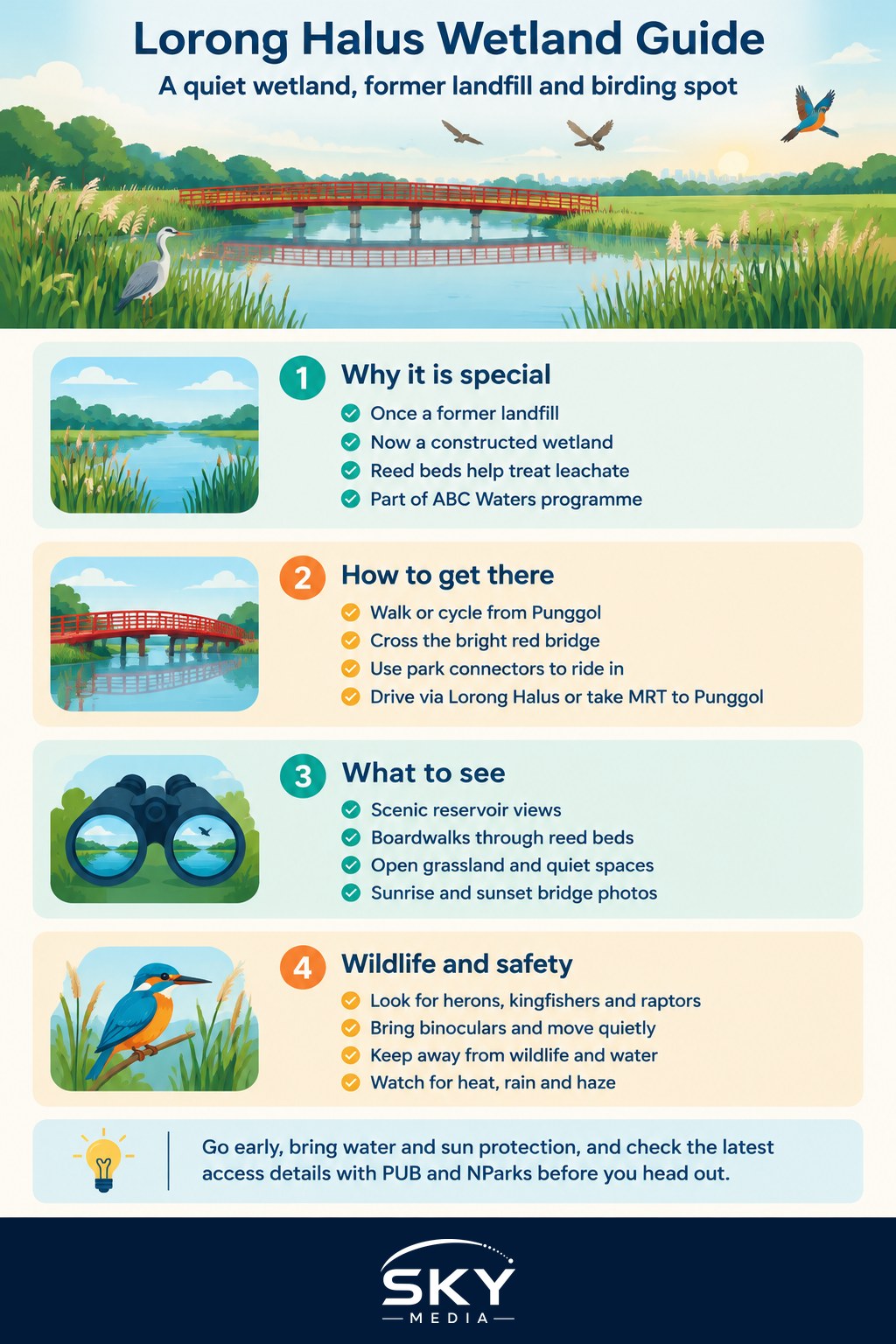
From Rubbish Dump to Reed Beds
For decades, the Lorong Halus area was used as a dumping ground for Singapore’s waste. After it closed, the land could not simply be built on, and rainwater seeping through the old landfill picked up pollutants. This contaminated water, known as leachate, needed treatment before it could reach the nearby river and reservoir.
The answer was a constructed wetland. PUB developed the site with reed beds and ponds that use plants and natural processes to help treat the leachate, alongside other treatment systems. The project opened to the public as part of the wider effort to turn Serangoon Reservoir and its surroundings into a recreational space under PUB’s Active, Beautiful, Clean Waters (ABC Waters) programme.
So when you walk here, you are seeing working infrastructure as well as a park. Interpretive signs along the paths explain how the wetland functions, which makes it a good outing for curious children and anyone interested in sustainability.
Getting There
Lorong Halus Wetland sits on the eastern bank of Serangoon Reservoir, across the water from Punggol. There are a few common approaches:
- Walk or cycle from Punggol. The most popular route is to cross the bright red Lorong Halus Bridge from the Punggol side. The bridge links the Punggol waterfront area to the wetland and is a destination in itself.
- Use the park connectors. The site connects to Singapore’s park connector network, so cyclists often include it on longer rides around the north-east.
- Drive. There is road access via Lorong Halus, with parking near the wetland. Check signage on arrival, as parking arrangements can change.
- Public transport. Punggol MRT/LRT is the usual starting point, followed by a walk or bike ride to the bridge. Use a journey planner app for the current best route.
The table below compares the main ways to arrive.
| Approach | Best for | What to expect |
|---|---|---|
| Walk across the red bridge from Punggol | First-time visitors and photographers | Scenic arrival with reservoir views |
| Cycle via park connectors | Active visitors combining several parks | Longer outing with mixed shade |
| Drive to Lorong Halus | Families with young children or gear | Shorter walk in, less of the bridge experience |
| MRT to Punggol, then walk | Visitors without a car | A longer walk, so plan for heat and water |
What to See and Do
The wetland is not a big theme park of attractions. Its appeal is space, calm and nature. Highlights include:
- The red bridge. The Lorong Halus Bridge is a favourite spot for sunrise and sunset photos, with long views across the reservoir.
- Reed beds and ponds. Walk the boardwalks and paths through the treatment cells, and read the signs explaining each stage of the process.
- Open grassland and water views. The flat, open landscape feels very different from Singapore’s forested parks.
- Quiet time. Compared with busier waterfronts, you can often find stretches with few people around, especially on weekday mornings.
Families sometimes combine a visit with nearby spots on the Punggol side, such as the waterfront promenades and Coney Island, for a fuller day out.
Birdwatching and Wildlife
Wetlands attract birds, and Lorong Halus is a known spot among local birdwatchers. Depending on the season and time of day, you may see:
- herons and egrets hunting in the shallows,
- kingfishers perched near the water,
- bee-eaters and swallows over open ground,
- munias and other small birds in the reeds and grasses, and
- raptors circling above the reservoir.
During the northern hemisphere winter, migratory birds pass through Singapore, which can add variety. Bring binoculars if you have them, and move slowly and quietly. Early morning is usually best for activity and cooler temperatures.
You may also encounter monitor lizards, insects, and occasionally snakes. Keep a respectful distance, never feed or touch wildlife, and supervise children closely. If you see an animal in distress, contact NParks or the relevant animal welfare authority rather than handling it yourself.
If wetlands spark your interest, compare this experience with Sungei Buloh Wetland Reserve, which focuses on mangroves and migratory shorebirds, or the coastal habitats at Chek Jawa on Pulau Ubin.
Planning a Safe, Comfortable Visit
The wetland is very exposed, with limited shade, so preparation matters:
- Go early or late. Mornings and late afternoons are cooler and better for birds. Avoid the midday sun.
- Bring water. Facilities can be limited, so carry enough for everyone, plus a little extra.
- Sun protection. A hat, sunscreen and light, breathable clothing help a lot.
- Insect repellent. Wetlands and grassland can have mosquitoes and other biting insects.
- Check the weather. Lightning risk is serious in open areas. If thunderstorms are forecast or you hear thunder, leave exposed ground and seek shelter.
- Watch the air quality. During haze periods, check the National Environment Agency’s air quality readings and consider postponing if levels are high, especially for children, seniors and anyone with breathing conditions.
- Stay on paths. Some areas are part of an active treatment system. Respect barriers and signs, and do not wade into or touch the water.
- Take your rubbish home. It is a fitting habit at a site that was once a landfill.
Cyclists should ride at a considerate speed on shared paths, especially on and around the bridge where people stop for photos.
Is It Worth the Trip?
If you enjoy open landscapes, birdwatching or photography, Lorong Halus Wetland is well worth an early-morning visit. It is also an interesting place to show visitors a different side of Singapore, one where old infrastructure has been reimagined for nature and recreation.
It is less suited to anyone looking for shaded forest trails, cafes on site or play facilities. In that case, combine it with the more developed parks on the Punggol side, or choose a forested nature park instead, such as Windsor Nature Park.
Go with water, a hat and a bit of curiosity, and you will leave with a new appreciation of how a rubbish dump became a quiet home for herons and reed beds.