

Eating with fewer carbohydrates sounds tricky in a city built on rice, noodles and prata, but it is more doable than you might think. Low carb eating in Singapore is really about making smarter swaps at the hawker centre, the food court and your own kitchen, without giving up the flavours you love. This guide walks through what “low-carb” means, where the easy wins are around the island, and how to keep meals satisfying. One important note up front: low-carb is just one approach and it does not suit everyone, so treat this as general information, not medical or nutrition advice, and speak to a doctor or accredited dietitian before making any big change to how you eat.
What Low-Carb Eating Actually Means
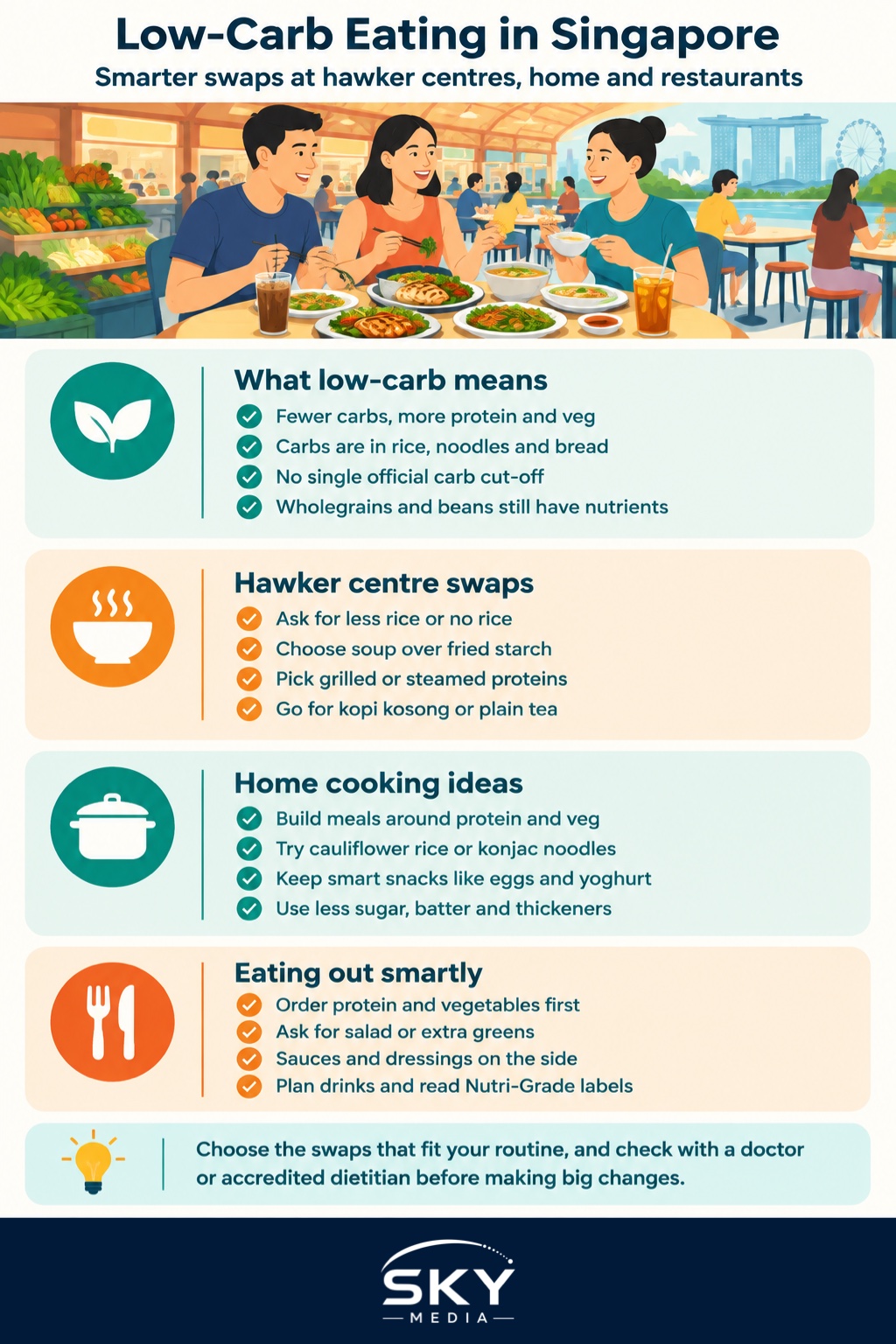
Carbohydrates are one of the three main nutrients, alongside protein and fat, and they turn up in rice, noodles, bread, potatoes, sugary drinks and sweets. “Low-carb” simply means eating fewer of these and leaning more on protein, vegetables and healthy fats. There is no single official cut-off, and approaches range from a gentle trim of rice and sugar to stricter plans such as keto, which keep carbs very low.
The key idea is quality and quantity, not fear. Wholegrains, beans, fruit and vegetables all contain carbs, and they bring fibre and nutrients too. Many people who feel better on a lower-carb pattern are mostly cutting refined starches and sugary drinks rather than banishing every carb. Because the right level is genuinely personal, and because some people, including those on certain medications or with particular health conditions, should not cut carbs sharply, this is one area where checking with a dietitian pays off.
Low-Carb at the Hawker Centre
Our hawker centres and food courts are surprisingly friendly to lower-carb eating once you know the moves. The general trick is to keep the protein and vegetables, and ease back on the rice, noodle and sugary elements.
- Ask for less rice or no rice. Many economy rice (cai fan) stalls will happily give you extra vegetables in place of a scoop of rice. Load up on greens, egg, tofu and a meat or fish dish.
- Choose soup over fried starch. Sliced fish soup (ask for it without the bee hoon, or with vegetables instead), yong tau foo in clear soup with more veg and less noodle, and soup-based dishes tend to work well.
- Go for grilled and steamed proteins. Satay (watch the sweet sauce and ketupat), grilled fish, steamed chicken, and hard-boiled or soft eggs are all handy.
- Rethink the drink. A kopi or teh “kosong” or “siew dai” cuts sugar sharply compared with the sweetened default, and plain water or unsweetened tea is the simplest swap of all.
- Salads and vegetable sides. Chap chye, blanched vegetables, achar in moderation and a bowl of soup round out a plate nicely.
You will not be perfect every time, and that is fine. The aim is a pattern that works most days, not a joyless one.
A Comparison of Common Local Swaps
Small swaps add up. This table shows some everyday changes people make, so you can pick the ones that suit your taste and routine.
| Usual choice | Lower-carb swap | Why it helps | Watch out for |
|---|---|---|---|
| Plain rice, full scoop | Half rice or extra vegetables | Cuts refined starch, adds fibre | Gravy and fried sides add up |
| Bee hoon or noodles in soup | More vegetables, keep the protein | Fewer carbs, still filling | Thick, sweet sauces |
| Sweetened kopi or bubble tea | Kopi kosong, water or plain tea | Cuts a lot of added sugar | “Less sweet” is not sugar-free |
| White bread kaya toast | Egg with a small portion of bread | More protein, less refined starch | Butter and sugar in kaya |
| Roti prata with curry | One prata plus extra egg or dhal | Trims the refined flour load | Second and third prata |
Cooking Low-Carb at Home
Your own kitchen gives you the most control, and wet markets and supermarkets make it easy.
- Build meals around protein and vegetables. Fish, chicken, eggs, tofu, tempeh and lean meats, plus a big pile of greens, form a satisfying base.
- Try rice and noodle alternatives. Cauliflower “rice”, konjac (shirataki) noodles, extra vegetables, or simply a smaller portion of wholegrain rice can all lighten a meal.
- Cook the flavours you love. Stir-fries, curries, soups and grills all adapt well; just go easy on sugar, thickeners and battered, deep-fried elements.
- Keep smart snacks around. Nuts, plain yoghurt, hard-boiled eggs, edamame and cut vegetables beat reaching for biscuits when hunger strikes.
- Do not forget fibre. Vegetables, beans and a little fruit keep things balanced, which matters if you are eating fewer wholegrains.
On food safety, handle raw fish, chicken and eggs with care, cook them through, keep cooked food cold if you are not eating straight away, and remember the heat here spoils leftovers quickly. When in doubt, throw it out.
Eating Out, Drinks and Staying Realistic
Restaurants and cafes are easy to navigate once you look past the starch. Order a protein and vegetables, ask for salad or extra greens instead of fries or rice, and request sauces and dressings on the side so you control how much you use. Zi char is great for lower-carb feasting: steamed fish, stir-fried vegetables, egg dishes, tofu and a shared portion of rice for the table. Delivery apps often show the menu clearly, so you can plan before you order.
Drinks are where a lot of hidden carbs live. Sugary bubble tea, soft drinks, sweetened kopi and juices add up fast, and the Nutri-Grade labels on packaged and freshly prepared drinks can help you compare at a glance. If you drink alcohol, do so responsibly, remember the legal drinking age here is 18, and note that many cocktails and beers carry carbs too.
Finally, keep it realistic. Low-carb is one approach among many, it is not for everyone, and there is no need to be strict every single day. Aim for a sustainable pattern, enjoy the odd plate of char kway teow guilt-free, and, because your ideal balance is personal, check in with a doctor or accredited dietitian before any major change, especially if you have a medical condition or take medication. Low carb eating in Singapore works best as a flexible habit, not a rulebook.
Explore more
For more on eating well around the island, browse our related guides. Learn to assemble satisfying meals with building a balanced plate, boost your protein with our guide to high-protein eating, and cut hidden sugar with our look at Nutri-Grade drinks and cutting sugar.
Frequently Asked Questions
Can I try low-carb eating if I take diabetes medication? Do not change your eating on your own. Cutting carbs sharply can affect blood sugar and how your medication works, so your doctor may need to adjust your treatment. Talk to your doctor or an accredited dietitian first, and they can tell you what is safe for you.
Will cutting carbs help me lose weight quickly? Some people lose weight when they trim carbs, but a lot of that depends on eating less overall and avoiding sugary drinks. It is not guaranteed and it does not suit everyone. Aim for a sustainable pattern, and ask a dietitian if you have a specific target.
Can I still eat fruit on a low-carb diet? Yes, in sensible amounts, because fruit brings fibre and nutrients along with its carbs. Many people favour smaller portions and whole fruit over juice. How much suits you depends on your approach and health, so a dietitian can help if you follow a stricter plan.
What is the difference between low-carb and keto? Low-carb is a broad idea of eating fewer carbs, from a gentle trim of rice and sugar to something stricter. Keto is a much stricter version that keeps carbs very low. Keto is not suited to everyone, so see a doctor before starting it.
Why do I feel tired when I cut back on carbs? Your body may be adjusting, or you might simply be eating too little overall. Make sure meals still have enough protein, vegetables and fibre, and drink water. If tiredness, dizziness or other symptoms last, stop and see a doctor, especially if you take medication.
Further reading: Keto and Low-Carb Dining in Singapore