
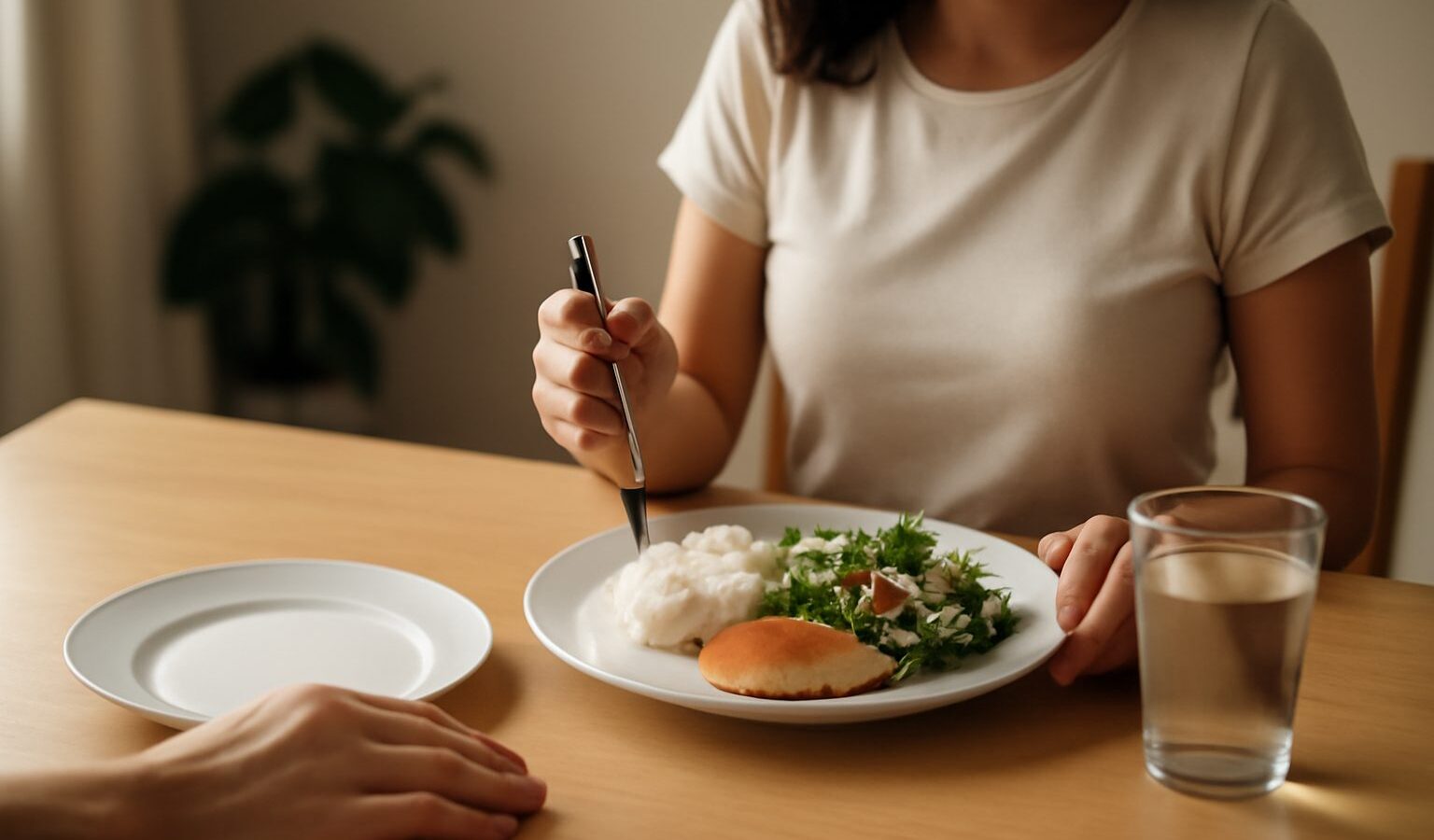
Eating out is a way of life in Singapore, from breakfast kopi to supper prata. That makes it a wonderful food city, and it also means many of us eat most of our meals away from home. Mindful eating in Singapore is not about restriction or guilt. It is about paying attention, enjoying your food, and letting your body guide how much you need. This is general information to support that habit, not medical or personalised nutrition advice.
A quick note before we start. Everyone’s needs are different, and portion sizes that suit one person may not suit another. If you are managing a health condition, planning major changes to how you eat, or have any concerns, please speak to a doctor or an accredited dietitian. This article is general guidance, not a prescription, and no food is off limits or something to feel bad about.
What Mindful Eating Actually Means
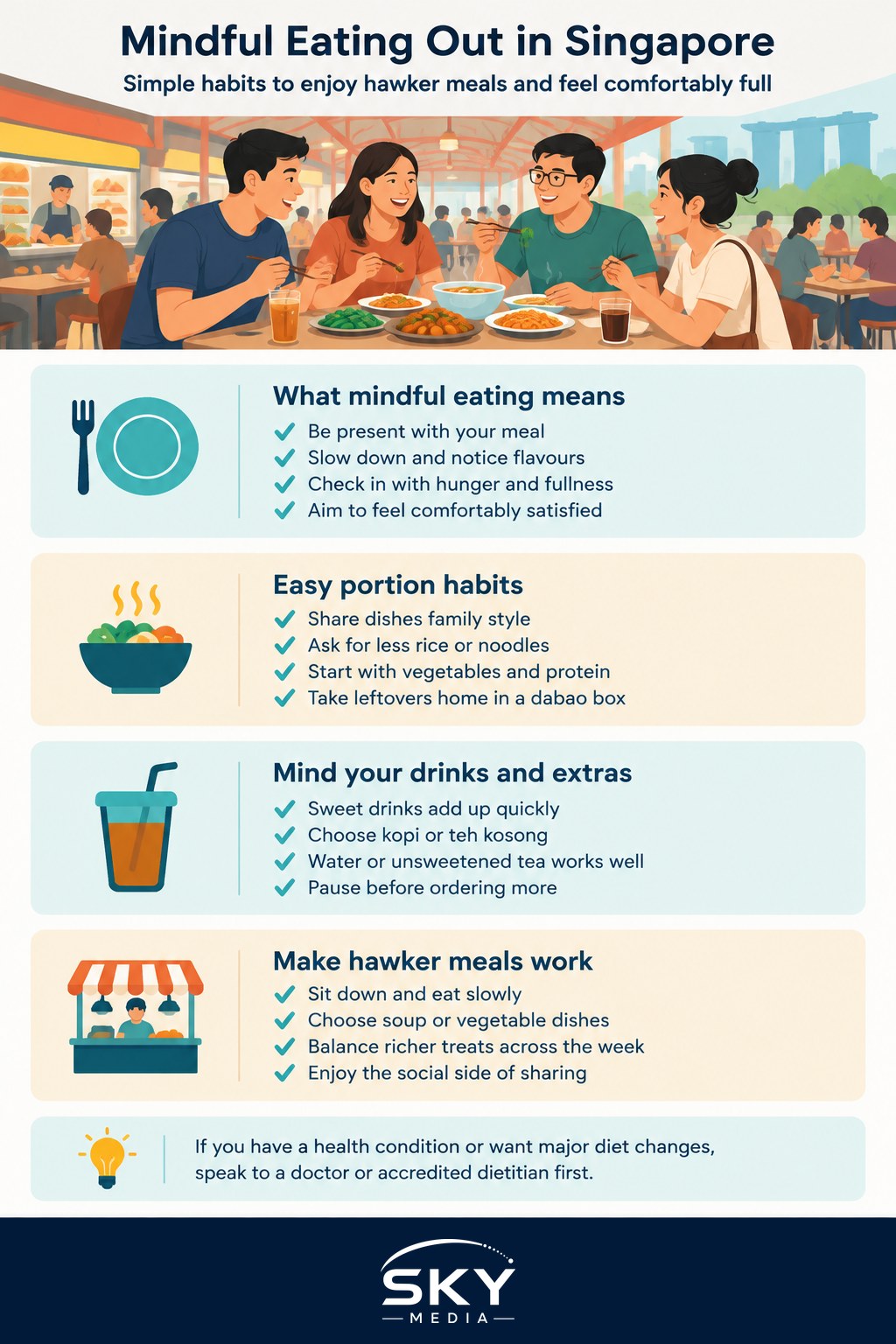
Mindful eating simply means being present with your meal. Instead of eating on autopilot while scrolling your phone or rushing between meetings, you slow down, notice the flavours and textures, and check in with how hungry or full you feel. Because fullness signals take time to register, eating a little more slowly often helps you feel satisfied with a sensible amount, without needing to clean every plate.
The goal is a relaxed, sustainable relationship with food. You do not need to count every mouthful or swear off your favourite char kway teow. You are just tuning back in to your body’s own cues, which is something many of us lose when meals become hurried.
Practical Portion Habits When Eating Out
Portion sizes at hawker centres, food courts, and restaurants are set by the stall, not by you, so a few simple habits help you eat an amount that feels right.
- Share dishes. Ordering several plates to share, family style, lets you enjoy variety while naturally moderating how much of any one dish you eat. Zi char and dim sum are made for this.
- Ask for adjustments. Many stalls will happily give less rice or noodles, more vegetables, or sauces and gravies on the side. It never hurts to ask.
- Start with vegetables and protein. Filling up on greens and protein first, then enjoying the rice or noodles, tends to leave you comfortably full. Our guide to building a balanced plate in Singapore explains this in more detail.
- Pause before a second serving. If you are tempted to order more, wait a few minutes and check whether you are actually still hungry.
- Mind the drinks. Sweet drinks and bubble tea add up quickly. Ordering kopi or teh kosong, or choosing water or unsweetened tea, is an easy adjustment. You do not have to give up treats, just to notice them.
- Take leftovers. There is no rule that says you must finish everything. A dabao, or takeaway, box saves the rest for later and reduces waste.
None of this means avoiding your favourites. Balance across the week matters more than any single meal, which is also the spirit behind our guide to eating out on a diet in Singapore.
Reading Your Hunger and Fullness
A helpful practice is to check in before, during, and after eating. Before ordering, ask how hungry you really are. Very hungry, a little peckish, or eating mostly out of habit or boredom? During the meal, put your utensils down between mouthfuls now and then, and notice when you shift from hungry to comfortably satisfied. Aiming to stop at comfortably full, rather than stuffed, is a gentle target that leaves you feeling good after the meal.
This is a skill, not a test. Some meals you will eat more, some less, and both are fine. Over time, tuning in becomes second nature.
Making It Work at Hawker Centres
Hawker centres reward a mindful approach. The sheer variety makes sharing easy, and portions can often be tweaked. Choosing more steamed, soup-based, and vegetable-forward dishes, and balancing richer fried treats across the week, keeps meals varied without cutting anything out. For stall-by-stall ideas, our guide to eating healthily at hawker centres in Singapore is a good companion, and if you are watching carbohydrates, our notes on low-carb eating in Singapore may help too.
Eat slowly enough to taste your food, sit down where you can rather than eating on the go, and enjoy the social side of a shared table. Mindful eating and good company go together naturally.
A Kind and Balanced Final Word
Portion control and mindful eating are not about willpower or rules. They are about paying attention and being kind to yourself. Enjoy Singapore’s food fully, notice how you feel, and let your appetite guide you. No food needs to be feared, and no meal needs to be perfect. If you find a relaxed, sustainable rhythm that lets you savour your meals and feel good afterwards, you have got the balance right. And as always, treat this as general information and check with a qualified professional before making significant changes.
Frequently Asked Questions
Does eating slowly really help me feel full? It often does, because fullness signals take time to register. Slowing down, putting utensils down between mouthfuls and noticing flavour usually helps you feel satisfied with a sensible amount, without needing to clear every plate.
Is it rude to ask a hawker stall for less rice? No, it is generally fine, and many stalls will happily give less rice or noodles, or sauces on the side. A polite request never hurts. Some stalls may price by the dish regardless, so do not expect a discount.
What can I do if I overeat at a buffet or celebration? Do not punish yourself, since one meal does not define your health. Carry on with your normal routine, perhaps with lighter meals the next day. If overeating feels frequent or distressing, speak to a doctor or dietitian.
How can I practise mindful eating at work lunches? Sit down away from your desk, put your phone aside and eat without rushing. Check in on hunger before ordering and again partway through the meal. Even a short, unhurried lunch is better than eating on autopilot.
Should children also be taught portion control? Children’s needs differ, so it is better to encourage listening to hunger and fullness than to restrict portions. Offer varied foods and avoid pressuring them to finish. A paediatrician or dietitian can advise on your child’s specific needs.
Further reading: Diabetic-Friendly Eating in Singapore