
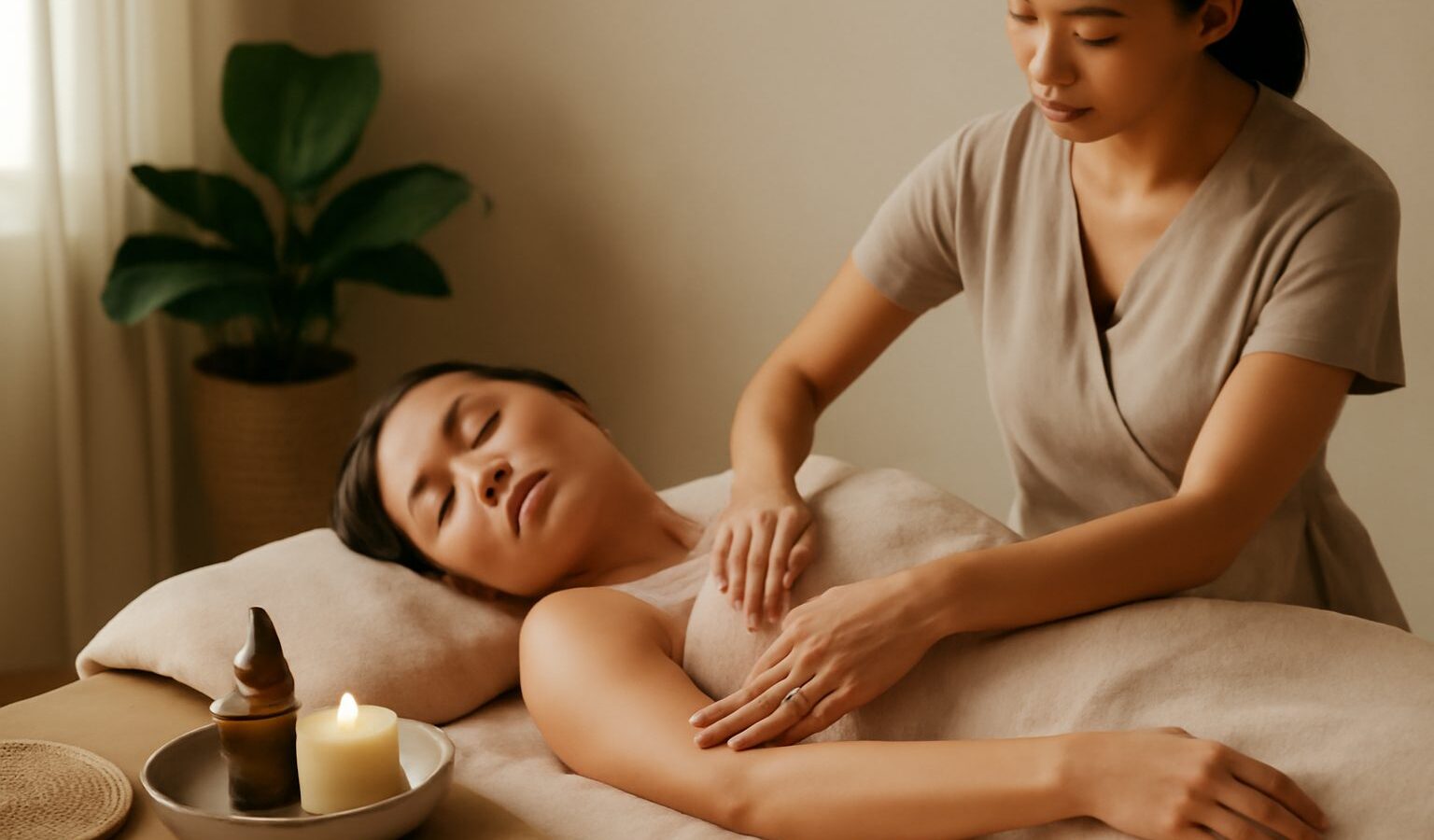
Lymphatic drainage massage has become a familiar term in Singapore spas, wellness studios and even skincare routines, often promised alongside a “less puffy” face or a “flatter” tummy. It sounds clinical, but the everyday version is simply a very light, rhythmic form of massage. This guide explains what it is, what it can realistically do in our hot, humid climate, and the safety points that matter, so you can decide whether it belongs in your routine.
Before anything else: this is general wellbeing information, not medical advice. Lymphatic drainage massage is not a treatment or cure for any condition. If you are pregnant, have a health issue such as heart, kidney or circulation problems, an active infection, or any lump or swelling you cannot explain, speak to a doctor before booking or trying self-massage.
What Lymphatic Drainage Massage Actually Is
Your lymphatic system is a network of tiny vessels and nodes that carries lymph, a clear fluid full of immune cells and waste, back towards your bloodstream. Unlike your heart-driven blood circulation, lymph has no pump. It moves through gentle muscle movement, breathing and the natural stretch of your skin.
Manual lymphatic drainage (often shortened to MLD) is a technique of very light, slow, directional strokes designed to encourage that fluid to move towards the nodes in your neck, armpits and groin, where it drains. The pressure is far lighter than a typical deep-tissue or sports massage. If a therapist is pressing hard enough to knead your muscles, that is a different treatment altogether.
You will find it offered under several names: lymphatic massage, MLD, or as part of “detox” or “slimming” packages. Be a little wary of the word detox. Your liver and kidneys handle actual detoxification. What a gentle massage can genuinely do is help shift fluid that is sitting near the surface, which is why it is popular for puffiness rather than for “removing toxins”.
Why People in Singapore Try It
Our climate and daily habits give a few honest reasons to be curious about it:
- Heat and salt. Hawker meals, instant noodles and eating out often mean a saltier diet, and salt encourages your body to hold water. Mild fluid retention can leave the face, ankles or fingers feeling puffy.
- Desk-bound days. Long hours seated in air-conditioned offices, then a flight for work or holidays, can leave the legs feeling heavy.
- Post-treatment care. Some aesthetic clinics recommend gentle lymphatic massage after certain procedures. Only follow this on the advice of the doctor who treated you, not a generic package.
- Wind-down and calm. The slow, repetitive rhythm is genuinely relaxing, and lower stress is a reasonable wellbeing goal on its own.
What it will not do is melt fat, permanently slim you, or replace exercise, sleep and a balanced diet. Any “flatter” look after a session is mostly reduced fluid, and it returns as you eat, drink and move through the day. That is normal, not a failure of the massage.
What a Professional Session Feels Like
A trained therapist usually starts near the collarbone and neck to “open” the drainage points, then works the limbs or torso towards the nearest nodes using light, stretching, pumping strokes. Sessions often run 45 to 90 minutes. You may be asked to drink water and to use the toilet more than usual afterwards, simply because you have moved fluid along.
When choosing a provider in Singapore, treat it like any wellness service. Ask about the therapist’s training, keep the pressure comfortable, and speak up if anything hurts, because real lymphatic work should never be painful. If a session is bundled with strong claims about weight loss, inch loss or curing a condition, be sceptical. For any medical concern, such as persistent swelling in one limb (which can signal lymphoedema or other issues), see a doctor rather than a spa.
Traditional Chinese Medicine offers related ideas of moving qi and fluid, and techniques such as gua sha or gentle cupping are sometimes described in similar terms. These are different practices with their own guidance; if you try them, use a trained TCM practitioner, and remember cupping can leave marks and bruising.
Gentle Self-Massage at Home
You can try a light version at home for the face, and it is low risk when done softly. The golden rule is featherlight pressure, always moving towards the neck and collarbone.
- Start at the neck. With flat fingers, stroke gently down the sides of your neck towards the collarbone a few times to “open” the path.
- Face, from centre out. Using light sweeps, move from the middle of your face outwards towards the ears, then down the neck. Think of smoothing, not pressing.
- Under-eye care. Be extra gentle here; the skin is thin. A light tap or sweep is plenty.
- Tools are optional. A cool jade or metal roller, or a gua sha stone used lightly with facial oil, can make it more pleasant, especially kept in the fridge for our heat. The tool is not doing anything magic; the light, directional motion is the point.
Keep it to a few minutes, stop if your skin feels irritated or tender, and never drag hard on the skin, which can worsen sensitivity. Avoid self-massage over any lump, rash, broken skin, sunburn or active breakout, and skip it entirely if you have an unexplained swelling.
Manual Lymphatic Drainage vs a Regular Body Massage
People often expect these to feel the same. They do not. This comparison helps set expectations before you book.
| Feature | Manual Lymphatic Drainage | Regular Body Massage |
|---|---|---|
| Pressure | Very light, skin-level | Firm to deep, into muscle |
| Main goal | Encourage fluid movement, relaxation | Ease muscle tension and knots |
| Typical feeling | Soft, repetitive, soothing | Can be intense, sometimes sore after |
| Best for | Puffiness, calm, wind-down | Tight, aching muscles |
| Realistic result | Temporary de-puffed, relaxed feeling | Looser muscles, less stiffness |
Neither is better; they simply do different jobs. If your goal is to ease a stiff neck from desk work, a firmer massage may suit you more.
What It Will Not Do, and When to See a Doctor
Set expectations honestly. Lymphatic drainage massage can feel wonderful, help you relax and temporarily reduce a puffy, heavy feeling. It does not detox your organs, cure illness, burn fat or deliver lasting weight loss. Treat any “before and after” promising permanent slimming with healthy doubt.
See a doctor rather than relying on massage if you notice swelling in only one arm or leg, swelling that does not settle, pain, redness, warmth, fever, or any new lump. These need proper assessment. The same applies if you are pregnant, breastfeeding, or managing a heart, kidney, thyroid or circulation condition; get personalised advice first, because gentle as it is, moving fluid around is not right for everyone.
Used sensibly, this is a pleasant, low-cost habit for winding down after a sweaty Singapore day. Keep the pressure light, keep your expectations realistic, and let a doctor handle anything that looks or feels medical.