

Massage is one of the easiest ways to unwind here, and the choice can be surprising the first time you look. A quiet Swedish session, a firm deep tissue treatment, a stretchy Thai routine, traditional Chinese tui na, a foot reflexology chair in the heartlands, or a sports rub after a hard run all fall under the broad umbrella of massage therapy singapore residents can find within a short walk or MRT ride. This guide explains what the common types generally involve, what each is often used for, and how to choose a reputable place, so you can pick something that suits you.
One note before we start: this is general information, not medical advice, diagnosis, or treatment. Massage is usually a relaxing, low-risk comfort measure, but if you have a health condition, an injury, or are pregnant, please check with a doctor first, and speak to the therapist about anything relevant before you begin.
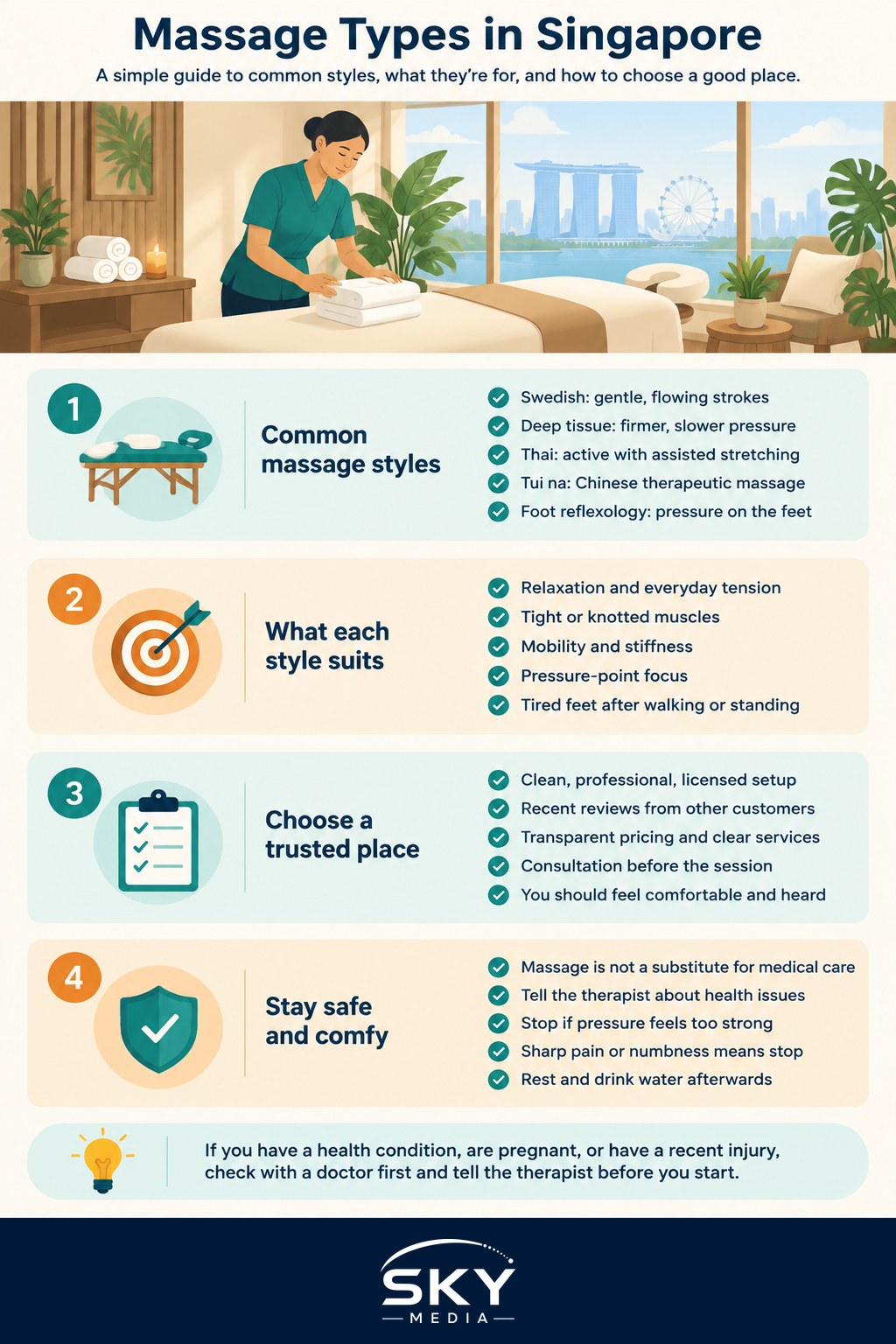
The Common Types You Will Find Locally
Most places in Singapore offer a handful of well-known styles, sometimes under their own house names. In general terms, they differ in pressure, pace, and whether the focus is relaxation, specific muscles, or particular pressure points.
- Swedish massage. A gentle to moderate, flowing style using long strokes and kneading. It is often chosen for general relaxation, easing everyday tension, and simply winding down.
- Deep tissue massage. A firmer approach that works more slowly into deeper muscle layers. People often reach for it when they feel tight or knotted, though it can feel intense, so speak up about pressure.
- Thai massage. A more active style, usually done clothed on a mat, combining pressure with assisted stretching. It is often described as energising and good for mobility and stiffness.
- TCM tui na. A traditional Chinese therapeutic massage that works along the body’s meridians and pressure points, frequently offered alongside acupuncture and other TCM services.
- Foot reflexology. Pressure applied to points on the feet, widely available and popular as an affordable, relaxing treat after a long day of walking or standing.
- Sports massage. Aimed at active people, focusing on muscles used in training, and generally used around exercise to support recovery and comfort rather than to treat injuries.
There is a lot of overlap in practice, and many spas blend techniques. If you are unsure, tell the therapist what you are after, whether that is deep relaxation or attention to a stiff shoulder, and let them suggest a suitable option.
What Each Type Is Generally Good For
Choosing well is less about finding the single best massage and more about matching the style to how you feel and what you want out of the session. The table below compares the common types at a glance. It is a general guide to help you decide, not a medical recommendation.
| Type | Typical pressure | Often chosen for | Good to know |
|---|---|---|---|
| Swedish | Gentle to moderate | Relaxation, general tension | A calm, soothing introduction to massage |
| Deep tissue | Firm | Tight, knotted muscles | Can feel intense; guide the pressure |
| Thai | Varies, plus stretching | Mobility, stiffness | Usually clothed on a mat, quite active |
| TCM tui na | Moderate to firm | Pressure-point focus | Often paired with other TCM services |
| Foot reflexology | Moderate | A relaxing treat, tired feet | Affordable and widely available |
| Sports massage | Moderate to firm | Support around training | Best paired with sensible recovery habits |
If you are new to massage, a Swedish or reflexology session is often a comfortable starting point. If a specific area feels tight, mention it, and remember that firmer is not automatically better. The right pressure is one you can relax into.
Choosing a Reputable Place
A good experience starts with a trustworthy establishment. You do not need insider knowledge, just a few sensible checks.
- Look for a clean, professional, licensed setup. Reputable spas and massage establishments in Singapore operate openly, keep their premises tidy, and are clear about their services and prices.
- Read recent reviews. Consistent feedback about skilled, professional therapists and a comfortable environment is a reassuring sign.
- Check that pricing is transparent. Clear menus and no pressure to add on treatments you did not ask for are good indicators.
- Notice the consultation. A quality place will ask about your health, any injuries, and your preferences before starting, and will listen when you give feedback during the session.
- Trust your comfort. You should feel at ease, be able to adjust the pressure, and never feel rushed or pushed into anything.
If anything feels off, you are always free to stop or decline. A professional therapist welcomes feedback and adjusts to keep you comfortable throughout.
How Massage Licensing Works in Singapore
Massage establishments in Singapore are licensed by the Singapore Police Force under the Massage Establishments Act, which is why licensing is the most useful thing to check when you choose a place.
- Licence categories. Under the current framework, only Category 1 outlets and exempted businesses may operate in residential areas such as HDB estates. Category 1 criteria include CaseTrust accreditation and a capital investment of at least S$50,000, while exempted businesses cover lower-risk set-ups such as open-concept foot reflexology outlets and physiotherapy clinics.
- Changes announced in 2026. In April 2026 the Police announced that the exemption for open-concept outlets will be replaced by a new Category 3 licence, and that every licensee must display a Police-issued poster at the shopfront showing its licence number, key licence conditions and a link for reporting breaches. These changes take effect from the second half of 2026, with a grace period for existing open-concept operators.
- TCM and physiotherapy. Tui na given at a TCM clinic should be done by a practitioner registered with the TCM Practitioners Board, and physiotherapy is a separate, clinical service for assessing and treating injuries.
If an outlet has no visible licence details, unclear pricing or closed cubicles in an open-concept shop, it is wiser to go elsewhere.
Staying Safe and Comfortable
Massage is generally gentle, but a little care helps you get the most from it. Speak to the therapist beforehand about any health conditions, recent injuries, surgery, skin problems, or if you are pregnant, so they can adapt or advise a more suitable option. During the session, tell them if the pressure is too strong, if anything hurts sharply, or if you feel unwell, and they should ease off at once.
Some general points worth keeping in mind:
- Massage is not a substitute for medical care. If you have pain, an injury, or a health concern, see a doctor, and consider physiotherapy for assessment and treatment of specific problems.
- Certain situations call for a doctor’s go-ahead first. If you are pregnant, have a heart condition, blood-clotting issues, recent injuries or surgery, skin infections, or another medical condition, check with your doctor before booking, and choose a therapist experienced with your situation.
- Sharp pain is a stop signal. Mild post-massage soreness can be normal, but sharp pain, numbness, or feeling faint means the session should stop.
- Ease back in gently. Give yourself a little time to rest afterwards, and drink some water.
Used sensibly, and with professional care for anything medical, massage can be a lovely way to relax and look after yourself. Listen to your body, choose a reputable place, and pick the style that fits how you want to feel when you walk out.
Massage in Singapore: Common Questions
Are massage chat groups and listing websites safe to use?
Be careful. Ads in chat groups, social media pages and listing sites are not vetted, and operating a massage establishment without a licence is an offence. Book with an outlet that has fixed premises, clear prices and a visible licence number.
Which type should a first-timer choose?
Foot reflexology or a Swedish massage is a gentle, comfortable start. Leave deep tissue and sports massage until you know how your body responds to firmer pressure.
What should I wear?
For oil-based massages you will usually be given a towel or disposable wear, and only the area being worked on is uncovered. Thai massage and tui na are often done fully clothed, so loose, comfortable clothes help.
Can massage replace physiotherapy?
No. Massage is for comfort and relaxation. For pain, an injury or a condition that keeps coming back, see a doctor or a registered physiotherapist for proper assessment.
How long should a massage session last? It depends on the service and what you want, so check the menu when you book. Shorter sessions suit a specific area such as a stiff shoulder, while longer ones suit full-body relaxation. Tell the therapist your goal, and ask for the exact duration and price upfront.
Is it normal to feel sore after a deep tissue massage? Mild soreness after a massage can be normal, especially after firmer work. Sharp pain, numbness or feeling faint is not, and the session should stop. Drink some water and rest afterwards. If pain lasts or worsens, see a doctor.
Can I get a massage if I am pregnant? Check with your doctor first, and tell the therapist before you start. Pregnancy, heart conditions, blood-clotting issues, recent injuries or surgery and skin infections are all times to get a doctor’s go-ahead and an experienced therapist.
Is tui na the same as other massage? Not exactly. Tui na is a traditional Chinese therapeutic massage that works along the body’s meridians and pressure points, often offered alongside TCM services. If it is for treatment, choose a practitioner registered with the TCM Practitioners Board.
How do I check that a massage place is licensed? Look for visible licence details, clear pricing and proper premises. Massage establishments are licensed by the Singapore Police Force, and from the second half of 2026 licensees must display a Police-issued poster with the licence number. Avoid places with no licence information.
Explore more
If you are ready to book, our roundup of the best massage spas in Singapore is a good place to start, with tips on what to expect. And if you are curious about the traditional side, our guide to TCM and acupuncture in Singapore explains how tui na fits alongside other treatments.
Further reading: Sports Massage in Singapore for Runners and Gym-Goers · Prenatal Massage in Singapore: What to Know Before You Book · Cupping Therapy Explained