

Hiring a migrant domestic worker (often called a helper or maid) comes with paperwork, and insurance is one of the parts families most often rush. Agencies frequently bundle a plan into the hiring package, and it is tempting to sign and move on. But the maid insurance Singapore agencies sell is not one product. It is a combination of a security bond, personal accident cover and medical cover, each with its own rules and its own small print.
This guide walks employers through what each part does and what to check before you pay. It is general information, not financial or insurance advice. The Ministry of Manpower (MOM) sets the mandatory requirements and minimum coverage, and these are reviewed from time to time, so always confirm the current rules on the MOM website and read the policy wording itself.
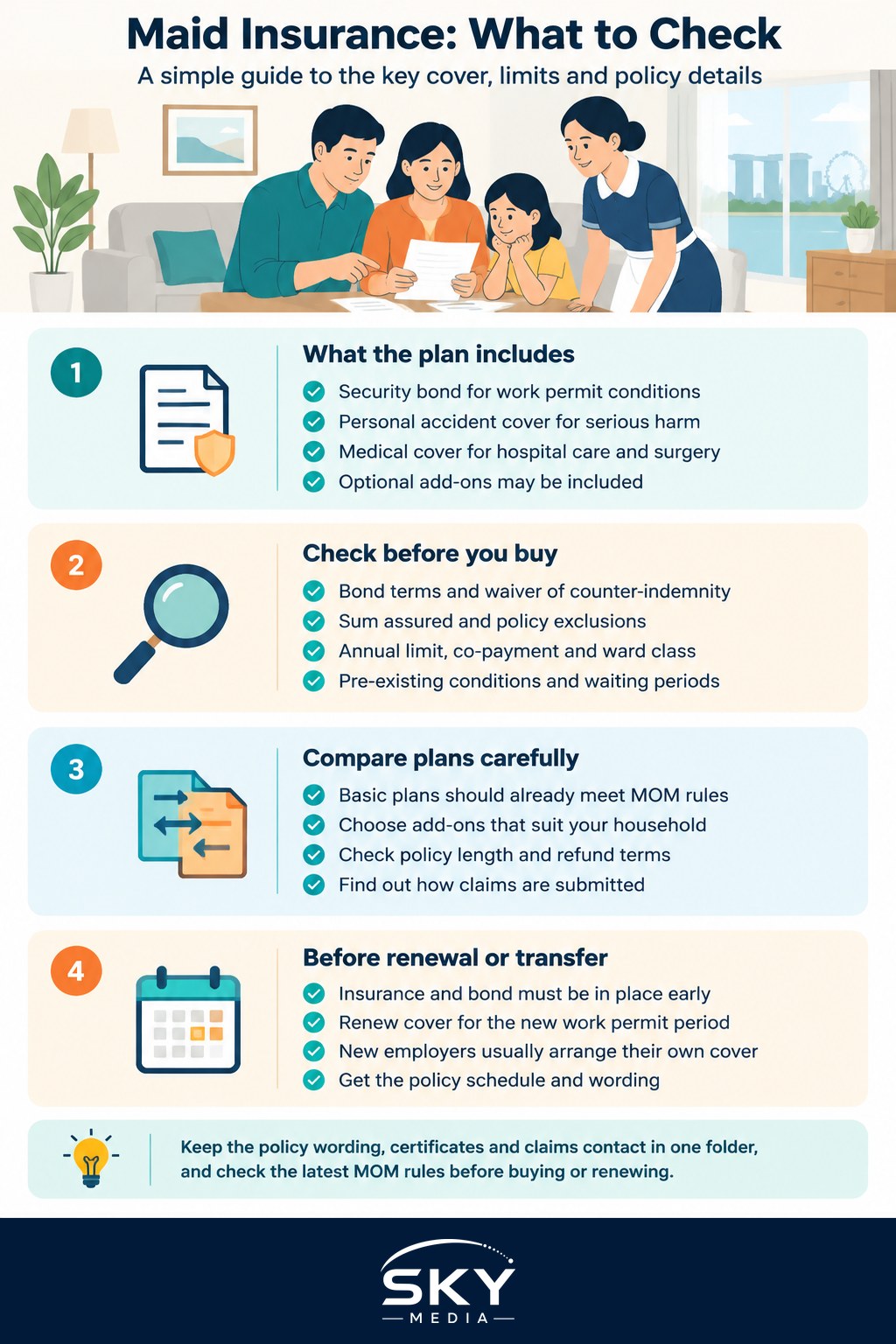
The Three Parts of a Typical Maid Insurance Plan
Most plans sold to employers combine three elements. Two are about protecting your helper, and one is about your obligations to the government.
- Security bond. A guarantee, usually provided through an insurer or a bank, that you will comply with the conditions of the work permit. It is required for most helpers before the work permit is issued. Bond requirements can differ by nationality, so check MOM’s current rules.
- Personal accident insurance. Pays out if your helper suffers accidental death or permanent disability. MOM sets a minimum sum assured.
- Medical insurance. Covers inpatient care and day surgery, so that hospital bills do not fall entirely on you. MOM sets a minimum annual coverage level and rules on how costs above certain levels are shared.
On top of these, many plans add optional extras such as outpatient benefits, wage reimbursement while your helper is hospitalised, repatriation costs or employer’s liability. These are where plans differ most, and where you should read carefully.
What to Check in Each Part Before You Buy
The table below gives a quick checklist. Use it when comparing quotes from agencies or insurers.
| Component | Why it matters | What to check before buying |
|---|---|---|
| Security bond | You may have to pay the bond amount to the government if work permit conditions are breached | Whether the guarantee has a waiver of counter-indemnity, and exactly what situations the insurer can still recover from you |
| Personal accident | Supports your helper or her family after a serious accident | Sum assured meets the MOM minimum, exclusions for certain activities, how quickly claims are paid |
| Medical (hospitalisation and day surgery) | Hospital bills can be large and employers are responsible for helpers’ medical costs | Annual limit meets MOM rules, how co-payment works, whether pre-existing conditions are excluded, which wards are covered |
| Optional add-ons | Fill gaps the mandatory cover does not reach | Whether outpatient cover, repatriation or wage benefits are actually useful to you, and whether they justify the extra premium |
The security bond and the counter-indemnity question
This is the part employers misunderstand most. When an insurer issues the bond guarantee on your behalf, it may still have the right to recover the money from you if the bond is forfeited. A waiver of counter-indemnity means the insurer agrees not to come after you in specified situations, commonly when your helper runs away or goes missing despite your having taken reasonable steps.
Check exactly which events the waiver covers and which conditions apply. Some waivers require you to report a missing helper within a set time or to have complied with every work permit condition. If those conditions are not met, the waiver may not help.
Personal accident cover
Confirm the sum assured, the list of covered injuries and the exclusions. Some policies exclude injuries from activities outside normal domestic duties or from specific high-risk tasks. Make sure you understand whether claims are paid to the helper, her beneficiaries or you as employer.
Medical cover and co-payment
Under MOM’s rules, employers bear responsibility for their helper’s medical costs. Insurance reduces that burden, but it does not remove it. Look at:
- The annual limit and whether it meets the current minimum.
- Co-payment terms, meaning how much of a large bill the insurer pays and how much falls on you.
- Ward class. Many plans assume a subsidised or lower class ward in a public hospital.
- Pre-existing conditions and waiting periods, which can affect claims in the first months.
Mandatory medical cover is mainly about inpatient and day surgery. Routine clinic visits for coughs and colds are often not included unless you buy an outpatient add-on. If you are used to how outpatient claims through employer insurance work in an office job, do not assume a helper plan behaves the same way.
Comparing Plans Without Being Upsold
Agencies often offer a “basic”, “enhanced” and “premium” plan. Before choosing, ask yourself:
- Does the basic plan already meet every MOM requirement? It should. Upgrades are for extras, not compliance.
- Which add-ons address real risks in your household? If your helper has a long journey home, repatriation cover may matter. If you are worried about clinic bills, an outpatient rider may help.
- How long is the policy, and does it match the work permit? Most plans run for the length of the contract. Check what happens if you transfer the helper or the contract ends early, and whether any premium is refunded.
- How are claims made? Ask whether hospitals can bill the insurer directly or whether you must pay first and claim later.
- Who is the actual insurer? The agency is often an intermediary. Know which insurer underwrites the policy so you can contact them directly if needed.
Get the policy schedule and full wording in writing before paying, not just a summary brochure.
Timing, Renewal and Changes of Employer
Insurance and the security bond usually need to be in place before MOM issues the work permit, so start early. When you renew your helper’s work permit, check that the insurance and bond are renewed for the new period and that the coverage still meets current requirements, since minimums may have changed since your last purchase.
If your helper transfers to a new employer, the new employer generally needs to arrange their own cover. If you are taking over a transfer helper, do not assume the previous employer’s insurance carries over.
How Maid Insurance Fits Your Wider Responsibilities
Helpers are employed under the Employment of Foreign Manpower Act and its work permit conditions, rather than under most parts of the general Employment Act for employers, so the rules on rest days, medical costs and insurance come from MOM’s work permit requirements. Insurance is one piece of that picture, alongside proper housing, regular salary payment, rest days and medical check-ups.
A good habit is to keep a single folder, paper or digital, with the work permit, insurance certificates, policy wording and the insurer’s claims contact. If something happens at night or on a weekend, you will know exactly where to look.
Key Points for Employers
- Maid insurance is a bundle: security bond, personal accident and medical cover, plus optional add-ons.
- The waiver of counter-indemnity on the security bond is worth reading closely.
- Medical cover reduces but does not eliminate your responsibility for hospital bills.
- MOM’s minimum requirements change over time, so check the latest figures before buying or renewing.
When in doubt, ask the insurer to explain any term in writing, and confirm current requirements directly with MOM.
Official sources: Ministry of Manpower (MOM)